
Starting solids: a calm guide for 6–12 months
Everything you need for the first bites, in six short steps.
Quick answer
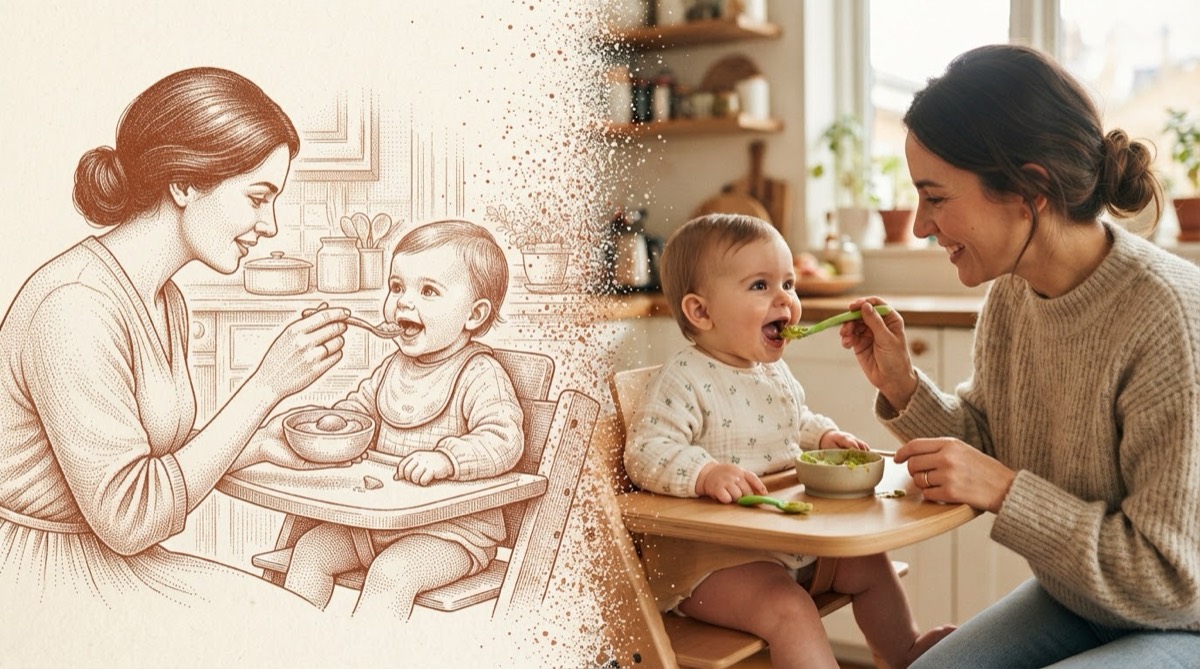
Start solids around 6 months, once baby can sit with little support, hold their head steady and bring food to their mouth. Never before 4 months. Breast milk or formula stays the main food until about 12 months, so the first weeks are about practice, not quantity.
- Begin with one meal a day, build to 2 by about 7–8 months and 3 meals by about 9 months, adding 1–2 snacks by 12 months
- Offer an iron-rich food at most meals, and introduce the top allergens early, one at a time, then keep them going
- Seat baby fully upright and stay within arm’s reach. Gagging is normal; silent choking is an emergency

STEP 1
Is baby ready?
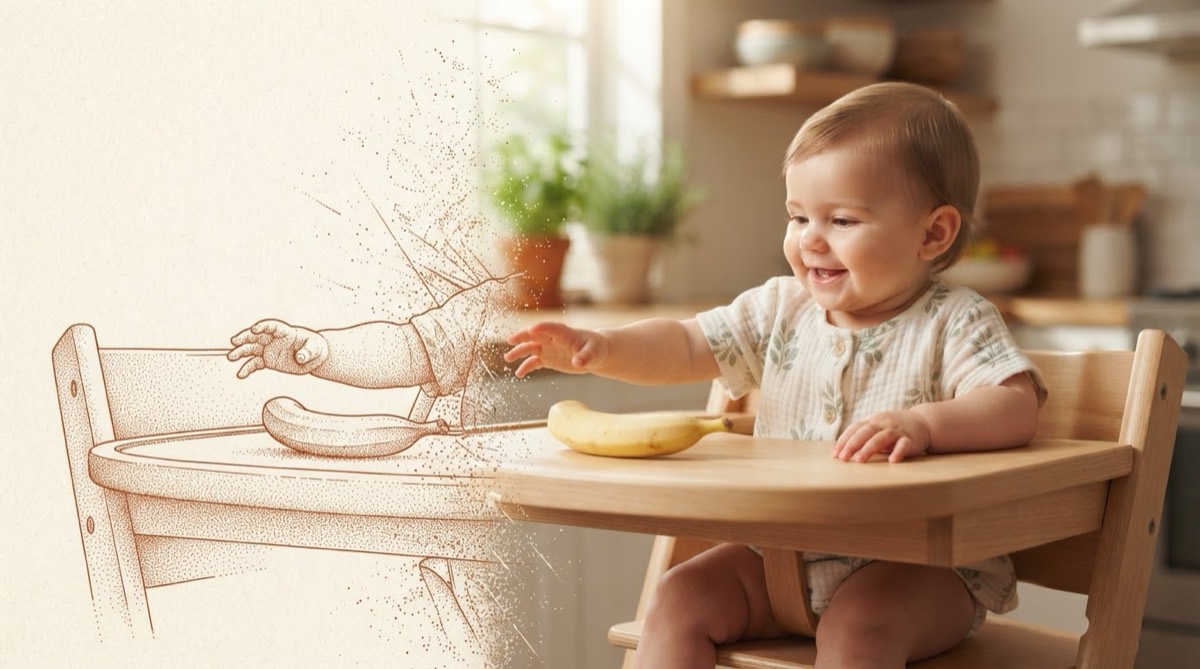
- •Sits upright with little support
- •Holds their head steady
- •No longer pushes food straight back out with the tongue
- •Reaches for food and brings it to the mouth
What “ready” looks like in real life
“Little support” means baby can sit upright in a high chair, or on your lap, without slumping or tipping sideways, and can hold their head steady for the length of a meal (about 15 minutes). Some babies get there at 5½ months, others closer to 7. Both are normal.
Starting before 4 months is not recommended: the gut, the swallow and the posture simply aren’t ready. Starting much later than 7 months without a reason can make new textures harder to accept, so if baby is past 7 months and still not showing the signs, talk to your pediatrician.
These are not signs of readiness on their own
- Teeth. Babies chew with their gums, and many start solids with none
- Waking at night or wanting more milk. That is usually a growth spurt or sleep phase, and solids don’t fix it
- Chewing on fists and toys. This starts around 3–4 months as part of teething and play
- A certain weight. Weight helps your pediatrician, but posture and hand-to-mouth skills decide readiness
STEP 2
Purees, baby-led weaning, or both
Spoon-fed purees
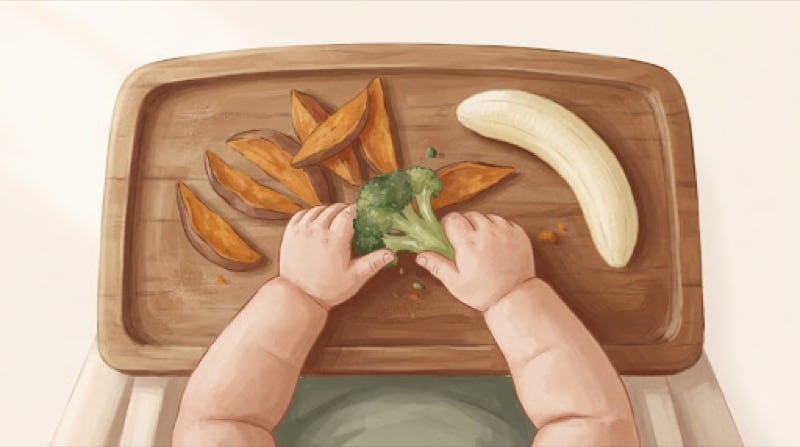
Baby-led weaning
| Spoon-fed purees | Baby-led weaning | Combination | |
|---|---|---|---|
| First texture | Smooth, then mashed | Soft finger-length strips | Both at the same meal |
| Who controls the pace | Parent offers, baby accepts or refuses | Baby | Baby, with a preloaded spoon |
| Best for | Families who want to see intake | Building chewing and hand skills early | Most families |
| Watch for | Staying on smooth purees too long | Pieces that are too hard or round | Offering too many choices at once |
Whichever route you choose, the goal is the same: by around 12 months, baby eats soft versions of family foods. A typical texture path looks like this:
- 6 months: smooth or thick purees, plus large soft pieces baby can hold, about the size of two adult fingers
- 7–8 months: mashed and lumpy textures, soft-cooked strips, ground meat, flaked fish
- 9–10 months: pincer grasp appears, so move to small soft pieces about the size of a chickpea
- 12 months: chopped family meals with the usual safety cuts
Try to offer lumps by about 8–9 months. Babies who only have smooth purees until late in the first year often find texture harder later on.

STEP 3
Gagging vs choking
Gagging: normal
Choking: act now
Always seat baby upright and stay with them while they eat. A first aid class is worth it.
Set up every meal for safety
- Baby sits fully upright (hips, knees and ankles at about 90°), ideally in a high chair with a footrest
- You are within arm’s reach and watching, not in the next room
- No eating in a car seat, stroller, bouncer, while crawling or while lying back
- Let baby feed at their own pace; don’t put food in their mouth while they are crying or laughing
Common choking hazards before age 1
- Whole nuts, seeds and globs of nut butter (thin it or spread it thinly)
- Whole grapes, cherry tomatoes, blueberries and olives (quarter or flatten them)
- Hot dog or sausage rounds, and hard raw vegetables like carrot or apple
- Popcorn, hard candy, chips, marshmallows and chewing gum
More on what gagging looks like and how to respond is in gagging vs choking.

STEP 4
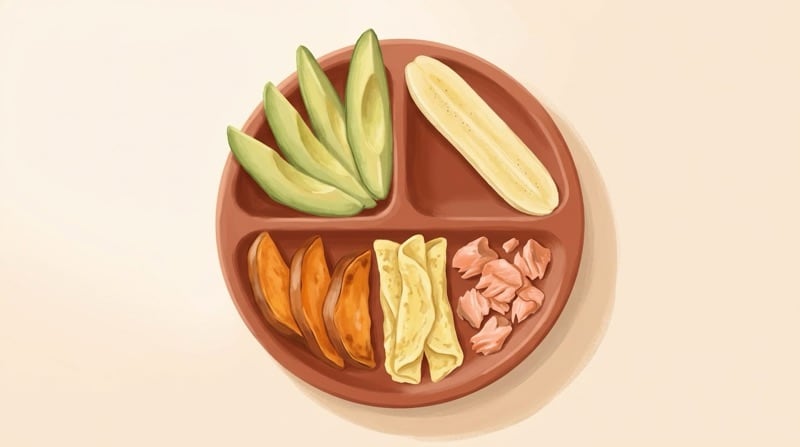
Great first foods
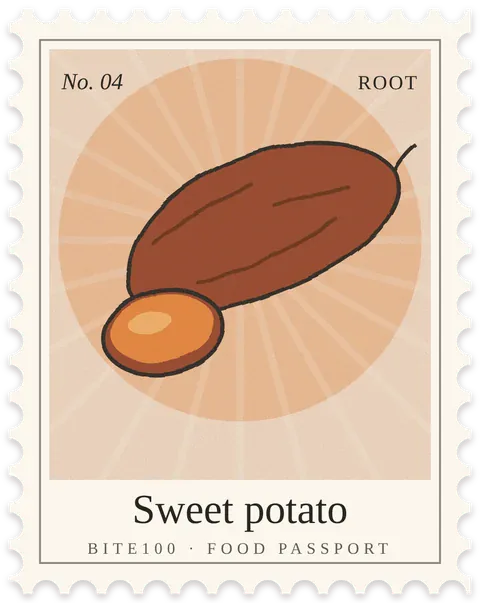
Thick wedge, skin on as a handle
Soft roasted strips
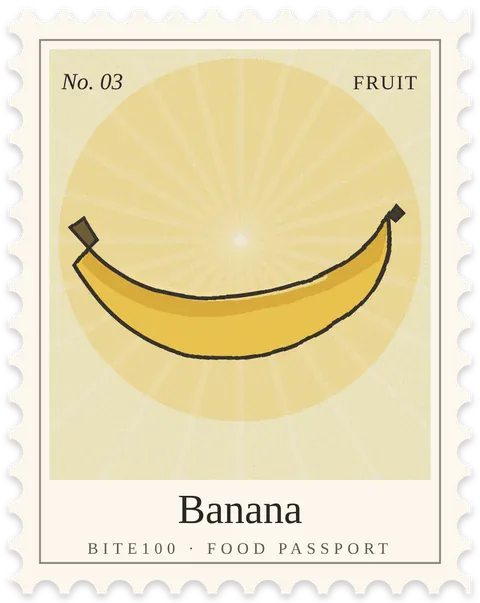
Half, peel as a handle
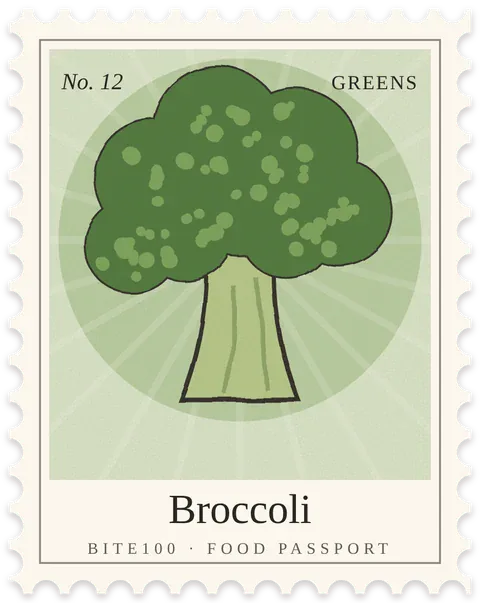
Steamed floret with stalk
Lead with iron
Around 6 months, the iron stores baby was born with start to run low, and breast milk alone doesn’t contain much. That is why the AAP recommends iron- and zinc-rich foods early. Aim to include one at most meals, and pair it with a fruit or vegetable high in vitamin C to help absorption.
| Food group | Easy first options | 6-month serving idea |
|---|---|---|
| Iron-rich protein | Beef, chicken thigh, lentils, tofu, salmon | Large strip of slow-cooked beef to suck on; lentils mashed or in a thick puree |
| Grains | Iron-fortified oatmeal or baby cereal, soft toast strips | Thick oatmeal on a preloaded spoon |
| Vegetables | Sweet potato, broccoli, carrot (cooked soft) | Roasted wedges, steamed florets with a stalk handle |
| Fruit | Avocado, banana, ripe pear | Thick wedges, or mashed onto a spoon |
| Dairy and eggs | Plain whole-milk yogurt, well-cooked egg | Yogurt on a spoon; omelet strips |
Offer a wide range of colors and flavors in the first months, including mildly bitter vegetables and spices like cumin or cinnamon. Babies often need 8 to 15 tries before they accept a new food, so a scrunched face on day one is not a “no”.
If you use baby cereal, rotate oat, barley and multigrain rather than relying on rice cereal, which can contain more arsenic.
Skip these before 12 months
- Honey, raw or baked into foods, because of the risk of infant botulism
- Cow’s milk or plant milks as a main drink (small amounts in cooking, yogurt and cheese are fine)
- Juice, sweet drinks, and foods with added sugar
- Salty foods like deli meats, stock cubes and salty snacks; don’t add salt to baby’s portion
- High-mercury fish such as shark, swordfish, marlin, king mackerel and bigeye tuna
- Unpasteurized milk, cheese or juice, and undercooked egg, meat or fish
The full list, with reasons, is in foods to avoid for babies. For more ideas by week, see the best first foods for baby and iron-rich foods for babies.
STEP 5
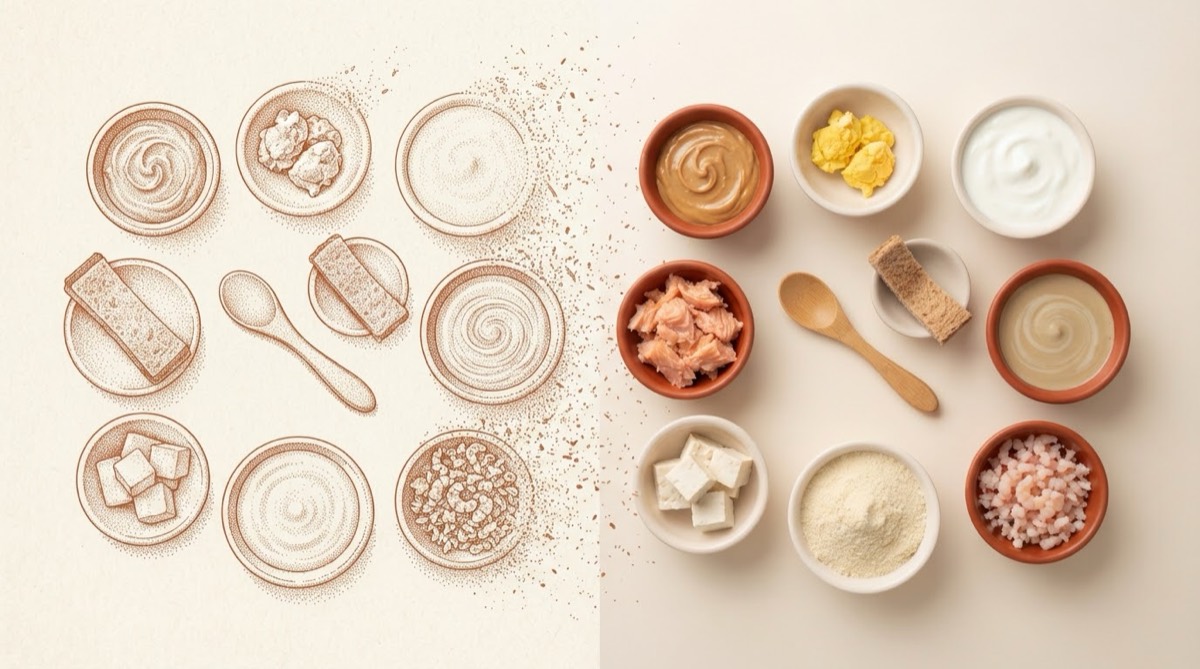
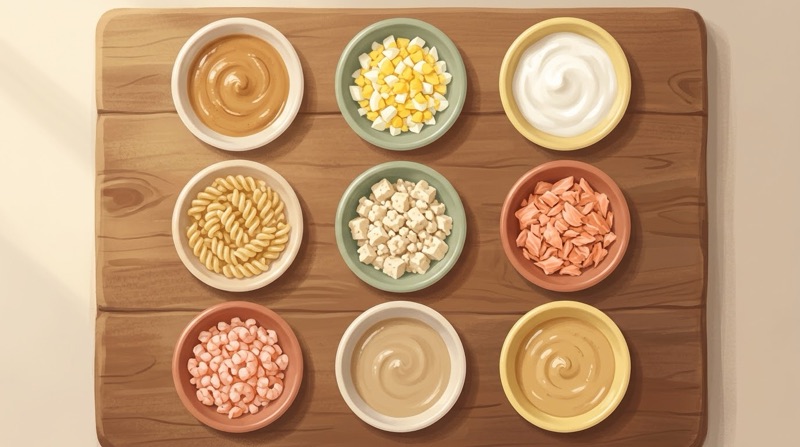
Introducing the Top 9 allergens
- •Offer one new allergen on a morning when baby is well
- •Start with a small taste mixed into a food baby already eats
- •Give it a few days in a row, then keep it on the menu 2–3 times a week
- •Watch for hives, vomiting or swelling, and call your pediatrician if you see them
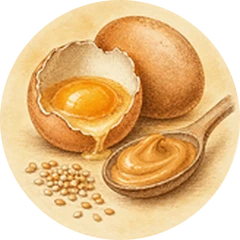
The nine most common food allergens are peanut, egg, cow’s milk, tree nuts, wheat, soy, fish, shellfish and sesame. Delaying them past 6 months doesn’t prevent allergy, and large studies of peanut and egg found the opposite: early, regular exposure lowered the risk.
| Allergen | A safe first form |
|---|---|
| Peanut | Smooth peanut butter thinned with water, breast milk or puree; never whole peanuts |
| Egg | Well-cooked egg, scrambled or as omelet strips; no runny yolk |
| Cow’s milk | Plain whole-milk yogurt or pasteurized soft cheese |
| Tree nuts | Thinned nut butter or finely ground nuts stirred into oatmeal |
| Wheat | Soft toast strips, well-cooked pasta, wheat cereal |
| Soy | Tofu strips or unsweetened soy yogurt |
| Fish and shellfish | Flaked salmon or cod; finely chopped cooked shrimp |
| Sesame | Tahini thinned into yogurt or hummus |
Is your baby higher risk?
If baby has severe eczema or has already reacted to egg, talk to your pediatrician before offering peanut. They may suggest allergy testing or a first taste in the office, often between 4 and 6 months. Babies with mild or moderate eczema can usually start peanut at home around 6 months.
Mild vs serious reactions
- Mild: a few hives or redness around the mouth, a single vomit. Stop the food and call your pediatrician the same day
- Serious: swelling of lips, face or tongue, hives spreading over the body, wheezing, coughing, trouble breathing, repeated vomiting, or baby suddenly pale and floppy
Some babies react hours later, with repeated vomiting 1 to 4 hours after a food. That needs a same-day call to your pediatrician, or emergency care if baby looks very unwell. See signs of an allergic reaction, how to introduce peanut and how to introduce egg.

STEP 6
A sample day
6–8 months
9–12 months
| Age | Solid meals a day | A typical meal | Milk |
|---|---|---|---|
| 6 months | 1, building to 2 | A few spoonfuls or a few bites | Still the main food; feed on demand |
| 7–8 months | 2–3 | A few tablespoons of 2–3 foods | Still most of baby’s calories |
| 9–12 months | 3, plus 1–2 snacks | Small portions of family foods | Gradually a little less as meals grow |
| 12 months | 3, plus 2 snacks | Soft, chopped family meals | Whole cow’s milk in a cup can start |
How much should baby eat?
The numbers are a rough guide, not a target. Baby’s appetite will swing day to day. Your job is to offer the food; baby decides whether and how much to eat.
Signs baby wants more: leaning toward the spoon, opening the mouth, reaching for food. Signs baby is done: turning away, closing the mouth, pushing food away, arching back or throwing food. End the meal calmly when you see them.
Drinks
From 6 months, offer a few sips of water in an open or straw cup with meals, about 4 to 8 ounces (120 to 240 ml) a day at most. Don’t replace milk feeds with water or food. Read when babies can have water and open cup and straw drinking.
Month-by-month plans: 6 months, 8 months, 9 months, 10–11 months and 12–14 months.
GOOD TO KNOW
Common mistakes when starting solids
Almost every family makes a few of these. None is a disaster, and each one is easy to fix.
- Starting early to help sleep. Solids before 4 months don’t make babies sleep longer and can crowd out milk.
- Feeding in a reclined seat. Bouncers and car seats tip baby back and raise choking risk. Upright, every time.
- Adding cereal to a bottle. It isn’t needed, can cause choking and skips the practice baby needs with a spoon or hands.
- Staying on smooth purees too long. Bring in mashed and lumpy foods by around 8–9 months.
- Trying an allergen once, then stopping. Protection seems to come from keeping it in the diet, roughly 2–3 times a week.
- Cutting milk too fast. Breast milk or formula is still the main food until about 12 months.
- Pressuring “one more bite”. Coaxing, praise for clean plates and screens at the table make picky eating more likely.
- Giving up after a no. Babies often need 8–15 tries of a food. Offer it again another day, prepared a new way.
- Seasoning baby’s plate like yours. Herbs and spices are great; added salt, sugar and honey are not.
SAFETY
When to call your pediatrician
Call your pediatrician’s office (same day for reactions) if:
- Baby has hives, a rash, or vomits after a new food, even if it settles
- Baby vomits again and again 1–4 hours after eating a particular food
- Baby has severe eczema or a known egg allergy and you haven’t started peanut yet
- Baby is past 7 months and still can’t sit with little support or isn’t interested in food
- Baby coughs, sputters or has a wet, gurgly voice at most meals, which can point to a swallowing problem
- Gagging stays intense and frequent after 1–2 months of practice, or baby refuses all textures
- Hard, painful stools, blood in the stool, or fewer wet diapers than usual
- You are worried about weight gain, or baby seems to be eating far less milk than before
Starting solids: questions parents ask
What age should a baby start solids?
Most babies are ready for solids around 6 months, when they can sit with little support, hold their head steady, bring food to their mouth and show interest in eating. The AAP, CDC and WHO all point to about 6 months. Readiness signs matter more than the exact date, and starting before 4 months is not recommended.
Can I start solids at 4 months?
Not as a routine. Most 4-month-olds can’t sit upright or move food to the back of the tongue safely yet, and early solids don’t improve sleep or growth. The exception is a baby at high risk of food allergy, where a pediatrician may advise introducing peanut or egg as early as 4–6 months in a smooth, safe form.
What should be baby’s first food?
There is no single right first food. A good choice is soft, easy to hold or mash, and ideally rich in iron, such as soft-cooked beef or lentils, iron-fortified oatmeal, egg, avocado or roasted sweet potato. Starting with fruit does not make babies dislike vegetables later.
How much should a 6-month-old eat?
At first, very little: a few spoonfuls or a few bites once a day is plenty, and some days it will be mostly tasting and squishing. Breast milk or formula still provides most of baby’s nutrition until around 12 months. Follow baby’s cues: leaning in and opening the mouth means more, turning away or closing the mouth means done.
Should I give milk before or after solids?
In the first months, many families offer breast milk or formula first and solids about 30 to 60 minutes later, so baby is calm but not starving. From around 9 months, as meals grow, you can offer solids first and milk after. Either way, milk feeds should not be cut back quickly.
Do I need to wait 3 to 5 days between new foods?
For common allergens like peanut, egg and sesame, yes: introduce one new allergen at a time and wait a couple of days before the next so you can spot a reaction. For other foods, the CDC still suggests 3 to 5 days, while many dietitians allow low-risk foods like vegetables and grains to be added more freely. Ask your pediatrician if your baby has eczema or a known allergy.
When should I introduce allergens like peanut and egg?
Around 6 months, once baby has started solids, and not later than needed. Research shows early and regular peanut and egg can lower the risk of allergy. Babies with severe eczema or a known egg allergy should see their pediatrician first, because they may need testing or a supervised first taste.
Is it normal for baby to gag a lot when starting solids?
Yes. Gagging is loud, common and a normal part of learning to eat, especially in the first weeks and whenever a new texture appears. Choking is different: it is silent, baby can’t cry or cough, and it needs emergency help. If gagging stays frequent after a month or two, mention it to your pediatrician.
Can babies drink water when starting solids?
Yes, from about 6 months you can offer small sips of water in an open or straw cup with meals. The AAP suggests keeping it to about 4 to 8 ounces (120 to 240 ml) a day before age 1 so it doesn’t replace milk. Babies under 6 months generally don’t need water.
What foods should babies not eat before age 1?
Skip honey, cow’s milk as a main drink, juice, added salt and sugar, high-mercury fish, unpasteurized foods, and anything that is a choking hazard, such as whole nuts, whole grapes, popcorn and hard raw vegetables. Cooked cow’s milk products like yogurt and cheese are fine from 6 months.
Keep reading
 The best first foods for baby
 Baby-led weaning, explained
 The Top 9 allergen plan
Recipe collectionsBaby purée recipesBaby oatmeal recipes
Reviewed by our dietitians. Based on AAP and NIAID guidance. This guide is written for healthy, full-term babies and doesn’t replace your pediatrician. If your baby was born early, has a medical condition, feeding or swallowing difficulties, or a known allergy, check with them first (medical disclaimer).
- AAP (HealthyChildren.org): Starting solid foods
- CDC: When, what, and how to introduce solid foods
- Togias A. et al. Addendum guidelines for the prevention of peanut allergy in the United States (NIAID expert panel). J Allergy Clin Immunol, 2017
- WHO: Complementary feeding
- NHS: Your baby’s first solid foods
- AAP (HealthyChildren.org): Choking prevention