
9-Month-Old Feeding Schedule: Three Meals and Tiny Pinches
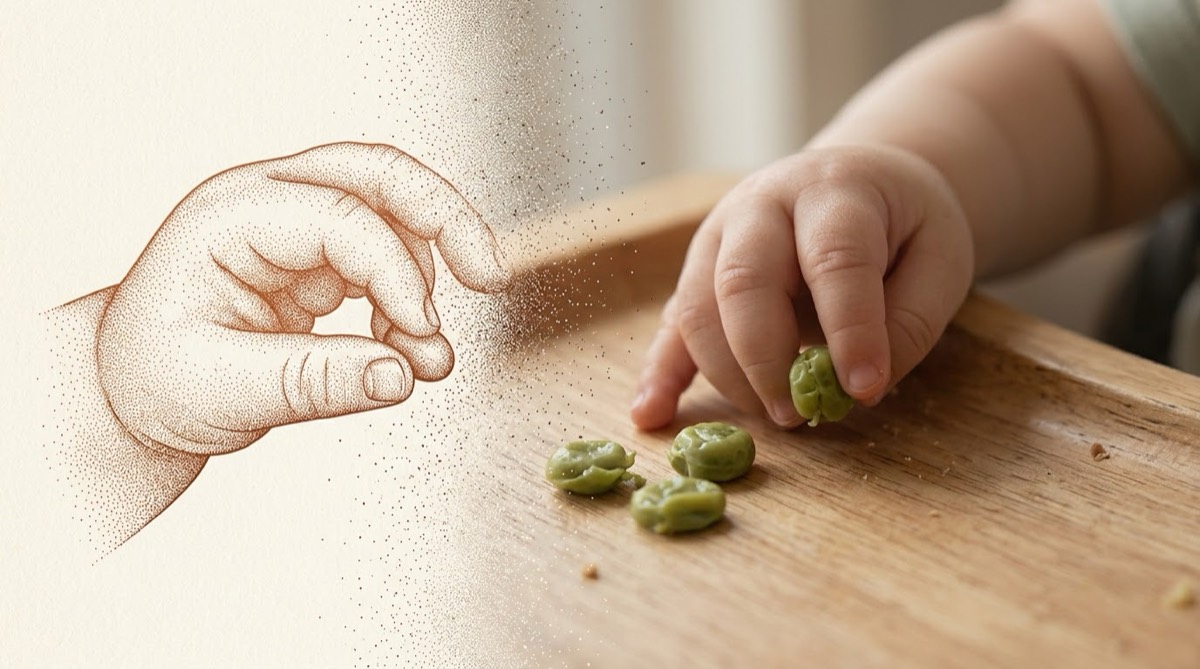
Around 9 months the pincer grasp arrives, meals become more regular, and many babies are ready for 3 meals a day, with an optional small snack.
Quick answer
Most 9-month-olds eat 3 meals a day, and some are ready for 1 small snack, alongside 3 to 4 milk feeds (about 24 to 30 oz / 710 to 890 mL of formula). Offer small, soft, bite-sized pieces for the new pincer grasp, keep lumpy textures going, and serve an iron-rich food at each meal. Most 9-month-olds take 2 naps with 3 to 3.5 hour wake windows.
- 3 meals a day, plus an optional small snack
- Milk: 3–4 feeds or about 24–30 oz formula
- Offer small, soft pieces for the new pincer grasp
Golden Rule • 2.5 to 3 Hours Between Eating
Spacing meals, snacks and milk about 2.5 to 3 hours apart lets baby arrive hungry at the table instead of grazing all day.
A sample day
A sample day for a 9-month-old: three meals, one small snack, milk around naps.
- 7:00AM
Milk feed 1
Morning Feed
Breast milk or formula (about 6–8 oz) on waking.
Morning light and play.
- 8:00AM
Meal 1
Breakfast
Scrambled egg pieces cooked firm, quartered raspberries and toast fingers.
 Egg
 Raspberry
Pincer practice
- 10:00to 11:15 AM
Nap 1 · 1.25 hrs
Morning Nap
After about 3 hours awake.
Wake window: ~3 hours.
- 11:15AM
Milk feed 2
Post-Nap Feed
Breast milk or formula after waking.
Then crawling and cruising.
- 12:30PM
Meal 2
Lunch
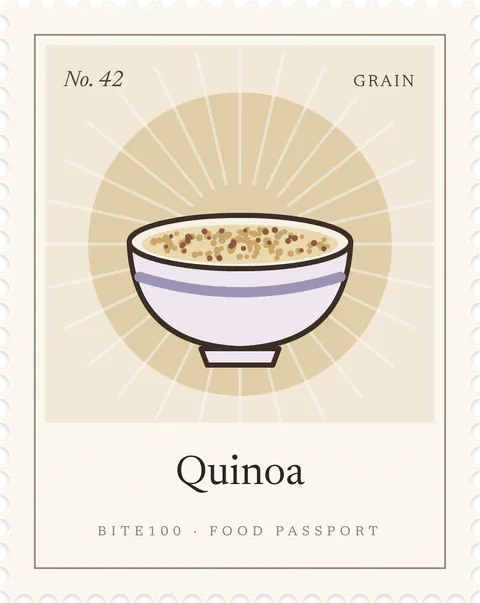
Soft black beans mashed slightly, avocado cubes and quinoa.
 Black Beans
 Quinoa
Water in an open or straw cup
- 2:15to 3:45 PM
Nap 2 · 1.5 hrs
Afternoon Nap
The longer nap.
Wake window: ~3.25 hours.
- 3:45PM
Milk feed 3
Afternoon Feed
Breast milk or formula after the nap, or a small snack instead.
Optional snack: yogurt + fruit
- 5:45PM
- 6:45PM
Milk feed 4
Bedtime Feed
Bath, story and a calm final feed.
Brush the first teeth.
- 7:15PM
Night sleep
11–12 Hour Night Sleep
Most 9-month-olds no longer need night feeds, but some still do.
Total daily sleep: 12–14 hours.
 Salmon
How much should a 9-month-old eat?
Rough guide only; baby’s hunger and fullness lead.
| Food | Typical amount | Notes |
|---|---|---|
| Formula | 24–30 oz (710–890 mL) a day | Usually 3–4 bottles |
| Breast milk | 3–5 feeds a day | On demand |
| Meals | 3 a day, about ¼–½ cup each | An iron-rich food at each meal |
| Snack | 0–1 a day | Fruit, yogurt, soft cheese, toast fingers |
| Water | Up to 4–8 oz (120–240 mL) a day | With meals, in a cup |
If baby fills up on milk and eats little at meals, try offering milk after meals instead of before. Don’t drop milk below what baby wants until 12 months.
Pincer Grasp Foods at 9 Months
Once baby can pick things up between thumb and finger, cut soft foods into small pieces, about the size of a chickpea. Larger strips are still fine too.
Smashed Peas
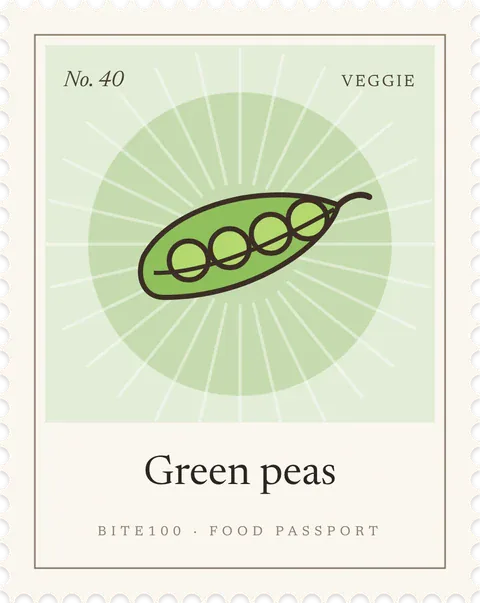
Cook until soft and lightly smash so they don’t roll. Great pincer practice.
Shredded Cheese
Grated or thin-sliced mild cheese, pasteurized; choose lower-salt options like Swiss or fresh mozzarella and keep cheddar small.
“Nine months is a skill month. Expect slow, messy meals as baby practices picking up one piece at a time. That focus is the point.”
A few pieces at a time
Put a few pieces on the tray and add more as they go, so baby isn’t overwhelmed or tempted to swipe it all.
Snacks are optional
If baby eats well at three meals and milk, a snack isn’t needed yet. Add one if there is a long gap.
Try a spoon
Pre-load a spoon with yogurt or oatmeal and hand it over. Baby will start to scoop soon.
What is the pincer grasp and why does it matter?
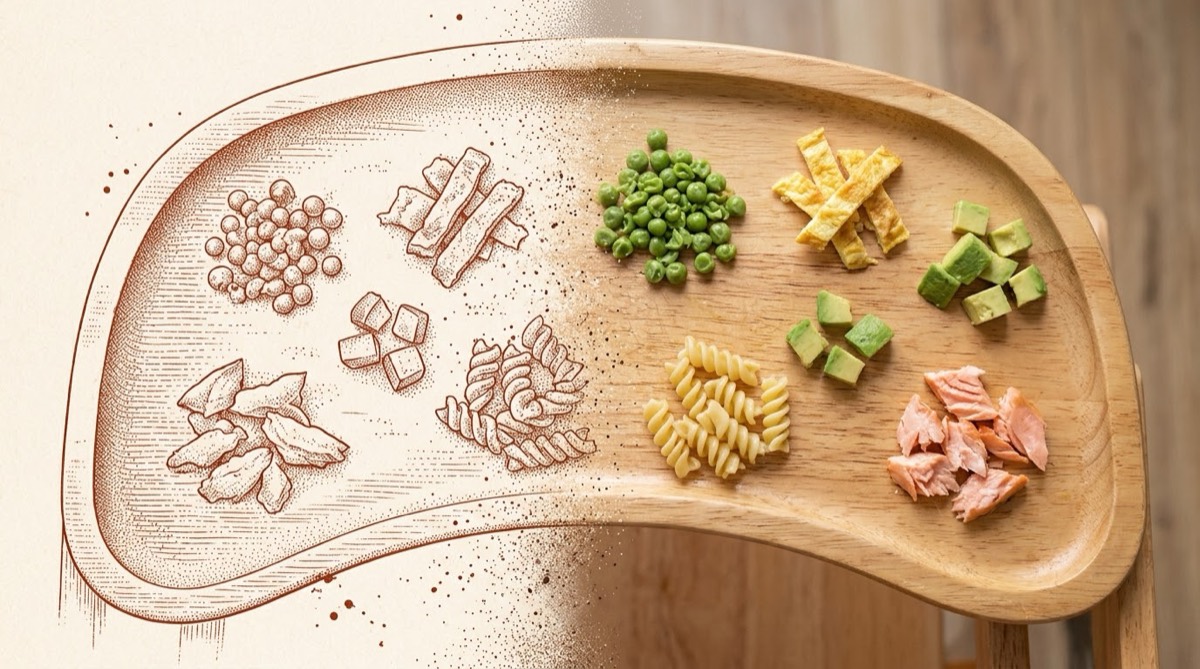
The pincer grasp is picking up small things between the thumb and index finger. It usually appears between 8 and 10 months and changes what you can serve.
Before it, babies grab with the whole hand, so long strips work best. Once it arrives, small soft pieces become easier to eat, and baby gets to practice a fine motor skill at every meal.
- Offer a mix: a few small pieces plus one larger strip
- Good pincer foods: smashed peas, flattened blueberries, small pieces of omelet, soft pasta
- Expect slow meals. Picking up one piece at a time is hard work
Common mistakes to avoid
- Snacks all day long, so baby arrives at meals full
- Cutting everything tiny before baby can pinch
- Skipping lumpy textures because purees are quicker
- Offering milk right before meals when baby eats little
- Serving whole round foods now that baby can pick them up
When to call your pediatrician
Every baby’s routine looks different. Call your pediatrician if:
- Baby isn’t gaining weight, or is losing weight
- Fewer than 4 to 6 wet diapers a day, or dark urine
- Baby coughs, chokes or vomits at most meals
- Baby refuses almost all solids for more than 1 to 2 weeks
- You see signs of an allergic reaction after a new food
9 month feeding schedule: questions parents ask
How much should a 9-month-old eat?
Most 9-month-olds eat 3 meals a day, roughly a quarter to half a cup each, plus 24 to 30 oz (710 to 890 mL) of formula or 3 to 5 breastfeeds. Some also have one small snack.
Does a 9-month-old need snacks?
Not always. If there is a long gap between meals or baby seems hungry, add one small snack, such as yogurt with fruit or toast fingers. Many babies are fine on 3 meals plus milk.
What finger foods are good for a 9-month-old?
Soft, small pieces that are easy to pinch: smashed peas, flattened beans, quartered berries, small pieces of omelet, shredded chicken, cubed avocado and soft pasta.
How much milk should a 9-month-old drink?
About 24 to 30 oz (710 to 890 mL) of formula, or 3 to 5 breastfeeds a day. Breast milk or formula is still important until the first birthday.
Can my 9-month-old eat table food?
Yes. Most family foods are fine, cooked soft, cut safely and without added salt or sugar. Skip honey and whole nuts.
How many naps does a 9-month-old need?
Most 9-month-olds take 2 naps with wake windows of about 3 to 3.5 hours.
My 9-month-old still eats only purees. What should I do?
Start adding lumps and soft finger foods now. Babies who meet lumpy textures late are more likely to struggle with them. If baby gags or vomits a lot, talk to your pediatrician.
When should my baby start using a cup?
From around 6 months. By 9 months, offer water in an open or straw cup with every meal. See our open cup and straw guide.
How long should meals take for a 9-month-old?
About 15 to 25 minutes is typical. Pincer practice slows meals down, which is fine. End the meal when baby shows they are full, rather than at a fixed time.
Keep reading
 8-month-old: how much food?
 10–11-month-old feeding schedule
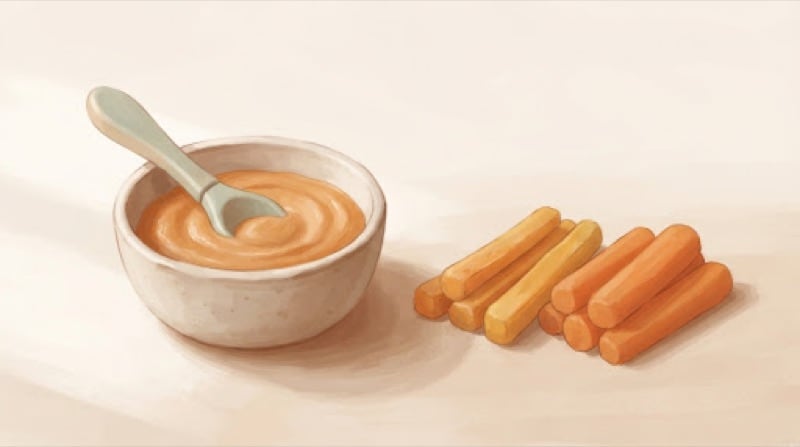 Purees to finger foods
Recipe collectionsBaby pancakesBaby oatmeal recipes
- AAP (HealthyChildren.org): Starting solid foods
- CDC: When, what, and how to introduce solid foods
- CDC: How much and how often to feed infant formula
- WHO: Complementary feeding
This guide is written for healthy, full-term babies and doesn’t replace your pediatrician. If your baby was born early, has a medical condition, feeding or swallowing difficulties, or a known allergy, check with them first (medical disclaimer). Reviewed by our dietitians.