
Infant CPR and first aid, step by step
A calm, step-by-step overview for babies under 12 months. Read it once now, and take a hands-on class before baby starts solids.
Quick answer
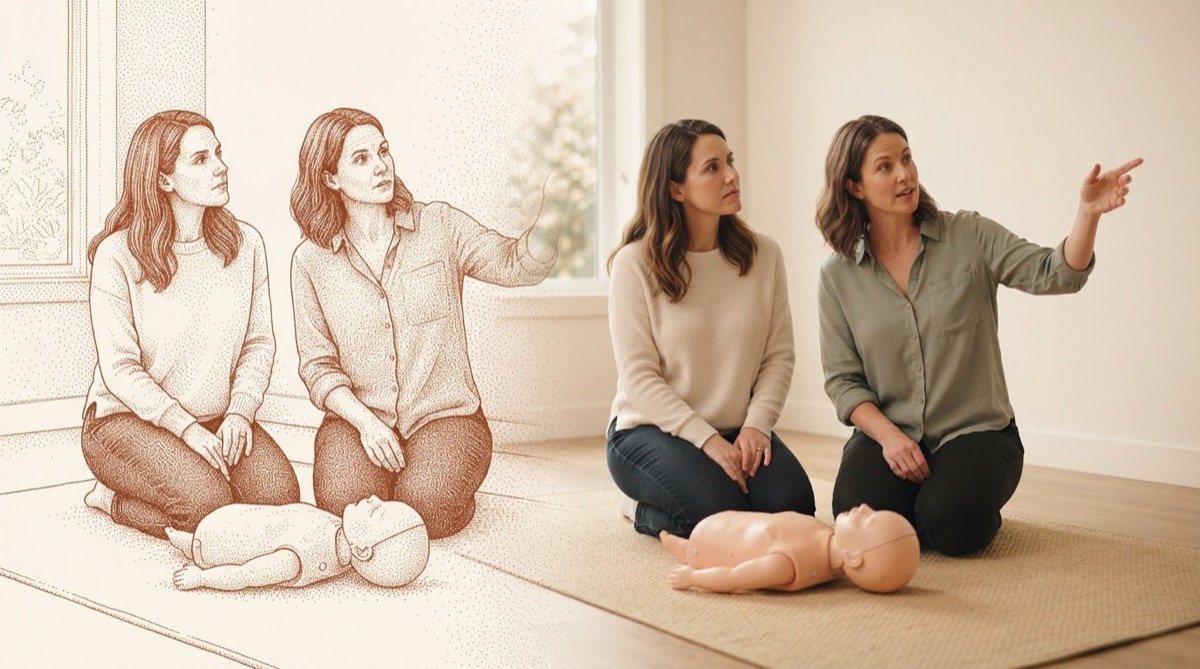
If a baby under 12 months is choking and can’t cry, cough or breathe, have someone call emergency services (911 in the US) and give 5 back blows and 5 chest thrusts, repeating until the object comes out. If baby stops responding, start infant CPR: 30 chest compressions and 2 gentle breaths, repeated until help arrives.
- Gagging (noisy, coughing) is normal: stay calm and let baby clear it
- Choking (silent, can’t breathe, turning blue) is an emergency: act and call 911
- Compress about 1.5 inches (4 cm) deep, 100 to 120 times a minute
- Never do a blind finger sweep, and never use abdominal thrusts on a baby
- Take a hands-on infant CPR class before baby starts solids

STEP 1
Gagging or choking?
Gagging: let baby work it out
Choking: act now
Gagging is a safety reflex. In young babies it is triggered near the front of the tongue, so it often happens with new textures. It pushes food forward and is usually over in seconds.
Choking means the airway is blocked and air can’t get in or out. The key test: if baby can cough, cry or make noise, air is moving. Stay close, keep them upright and let them cough. If they go silent or can’t breathe, act straight away.
| Sign | Gagging | Choking |
|---|---|---|
| Sound | Loud coughing, retching, sputtering | Silent, or a weak, high-pitched squeak |
| Breathing | Breathing between coughs | Can’t breathe, or chest pulls in hard with no air moving |
| Color | Red face | Lips or face turning blue or gray |
| Tongue | Pushed forward, may vomit | Panicked look, may go limp |
| What to do | Stay calm, don’t reach in, let baby clear it | Call 911 and start back blows and chest thrusts |
Want more detail? Read gagging vs choking.

STEP 2
If baby is choking (awake)
Call emergency services first
- 15 back blows. Lay baby face down along your forearm, head lower than the chest, supporting the jaw. Give 5 firm blows between the shoulder blades with the heel of your hand.
- 25 chest thrusts. Turn baby face up on your other arm, head lower than the chest. Give 5 quick, firm thrusts with the heel of one hand in the center of the chest, just below the nipple line.
- 3Repeat 5 back blows and 5 chest thrusts until the object comes out, baby cries or coughs strongly, or baby becomes unresponsive.
- 4Only remove an object you can see. Never do a blind finger sweep: it can push the object deeper.
Getting the position right
Sit or kneel and rest your forearm on your thigh for support. Baby’s head should be lower than their chest so gravity helps. Hold the jaw, not the soft throat, with your thumb and fingers.
Back blows are firm and quick, not gentle pats. Chest thrusts push down about 1.5 inches (4 cm), then let the chest come back up.
For children over 1 and adults, the steps are different: see choking first aid and the Heimlich maneuver.
Once the object comes out
Comfort baby and watch their breathing closely. Even if they seem fine, they still need to be checked by a doctor, because back blows and chest thrusts can cause injury and a small piece may still be in the airway.

STEP 3
If baby stops responding: infant CPR
- 1Place baby on their back on a firm, flat surface. Make sure emergency services are on the way.
- 230 chest compressions in the center of the chest, just below the nipple line, with two thumbs (hands wrapped around the chest) or the heel of one hand, about 1.5 inches (4 cm) deep, at 100 to 120 a minute. Let the chest rise fully between pushes.
- 3Open the airway by tilting the head back slightly. Look in the mouth and remove an object only if you can see it.
- 42 gentle breaths, covering baby’s mouth and nose with your mouth. Each breath just enough to make the chest rise.
- 5Keep going with 30 compressions and 2 breaths until help arrives or baby starts breathing.
Hand position and technique are updated by the American Heart Association from time to time. A certified class teaches the current method on an infant manikin.
Before you start
Tap baby’s foot and shout their name. If there is no response and no normal breathing, shout for help and start CPR. Gasping is not normal breathing.
| Situation | What to do first |
|---|---|
| Someone else is with you | They call 911 and find an AED while you start CPR |
| Alone, with a phone | Call 911 on speaker and start CPR straight away. The dispatcher will coach you |
| Alone, no phone | Give about 2 minutes (5 rounds) of CPR, then call, carrying baby with you if you can |
The numbers to remember
- Depth: about 1.5 inches (4 cm), about one third of the chest
- Speed: 100 to 120 a minute, roughly the beat of “Stayin’ Alive”
- Ratio: 30 compressions, then 2 breaths, each breath about 1 second
- Breaths: small puffs, just enough to see the chest rise
- Pauses: keep breaks under 10 seconds
If baby became unresponsive while choking, look in the mouth each time before you give breaths, and remove the object only if you can see it.
Rescue breaths matter for babies, because most infant emergencies start with a breathing problem. If you can’t or won’t give breaths, chest compressions alone are still much better than doing nothing.
Using an AED
An AED can be used on a baby. Use child pads if there are any; if not, use adult pads, one on the front of the chest and one on the back so they don’t touch. Turn it on and follow the voice prompts.
If baby starts breathing
Stop CPR. Hold baby in your arms, slightly turned on their side with the head a little lower than the body, and watch their breathing until help arrives.
STEP 4
Lower the risk at every meal
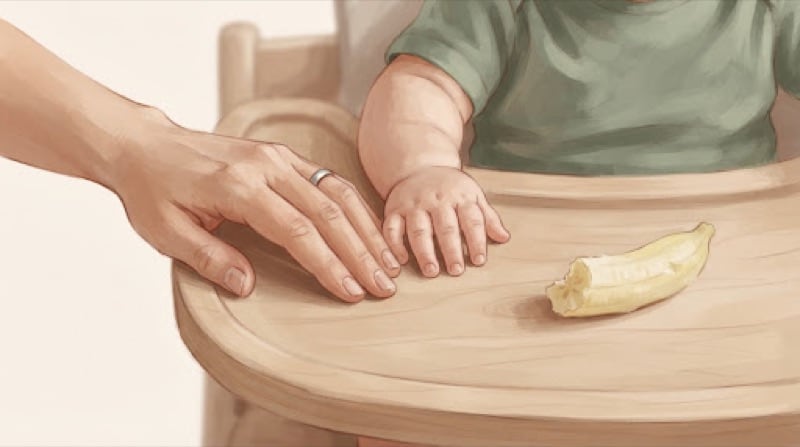
- •Seat baby upright, strapped in, and stay within arm’s reach
- •No eating in the car, stroller or while crawling around
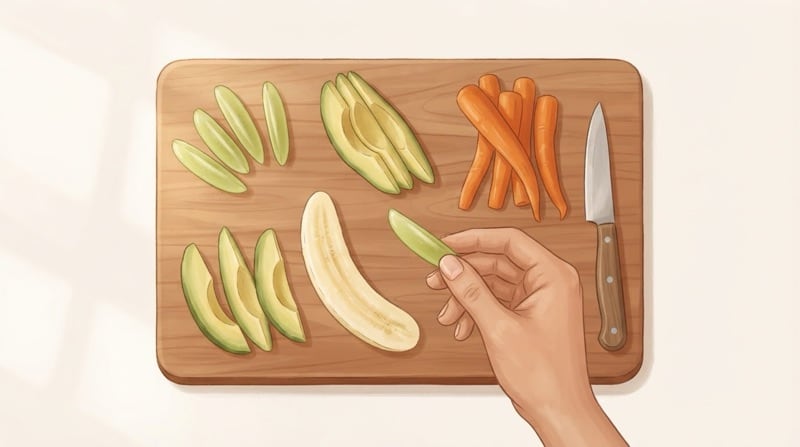
- •Serve foods soft enough to squash between your fingers
- •Quarter round foods like grapes and blueberries lengthwise; flatten or mash larger berries
- •Avoid whole nuts, popcorn, hard raw vegetables, hot dog rounds and spoonfuls of nut butter
Foods that cause the most choking in babies
| Food | Why it’s risky | Safer way to serve |
|---|---|---|
| Grapes, cherry tomatoes, blueberries | Round, the size of a baby’s airway | Quarter lengthwise, or flatten blueberries |
| Hot dogs and sausages | Coin shapes plug the airway | Quarter lengthwise into thin strips |
| Whole nuts and popcorn | Hard, small, easy to inhale | Finely ground nuts or thinned nut butter instead; no popcorn under 4 |
| Spoonfuls of peanut butter | Sticky, can coat the throat | Thin with water, yogurt or puree, spread thinly |
| Raw apple and carrot | Hard pieces snap off | Steam until soft, or grate |
| Hard candy, marshmallows, gum | Hard or sticky | Avoid in the first years |
Non-food hazards
Many choking emergencies aren’t food at all. Anything that fits through a toilet paper tube is small enough to choke a baby.
- Button batteries and magnets: also cause serious internal burns or injuries if swallowed
- Balloons, especially pieces of popped latex balloons
- Coins, small toy parts, bottle caps, older siblings’ building bricks
- Food pouches with loose caps, and dog or cat food
See our foods to avoid list for the full picture.

STEP 5
Take a hands-on class
What a good class covers
- Back blows, chest thrusts and CPR practised on an infant manikin
- The current hand technique (updated in 2025)
- How to use an AED on a baby
- First aid for falls, burns, poisoning and allergic reactions
Certifications usually last 2 years, so plan a refresher. Many classes are also available as a short online module plus an in-person skills check.
Be ready at home
Save 911 and Poison Control (1-800-222-1222 in the US) in your phone and post them on the fridge. Tell every caregiver where you live, in case they need to give the address to a dispatcher.
AVOID THESE
Common mistakes in an emergency
- Reaching in for food you can’t see. A blind finger sweep can push it deeper
- Treating gagging like choking. Patting or lifting a gagging baby can make them inhale the food
- Waiting too long to call. If baby can’t breathe, call emergency services straight away
- Using abdominal thrusts on a baby. Under 1 year, use back blows and chest thrusts only
- Holding baby upside down by the legs or shaking them
- Gentle pats instead of firm back blows. Back blows need to be strong and quick
- Big breaths. Infant breaths are small puffs, just enough to lift the chest
- Skipping the doctor afterwards because baby seems fine
GET HELP
When to call your pediatrician
Call your pediatrician or get same-day care if baby:
- Needed back blows, chest thrusts or CPR, even if they now seem fine
- Has a cough, wheeze, noisy breathing or drooling that doesn’t settle after a choking scare
- Refuses to eat or drink, or seems to hurt when swallowing
- Has a fever in the days after a choking episode, which can be a sign of an inhaled piece of food
- Gags so often at meals that eating is very hard
Infant CPR: questions parents ask
What do I do if my baby is choking?
If baby can’t cry, cough or breathe, have someone call 911 (or your local emergency number) and start first aid. Give 5 firm back blows between the shoulder blades, then 5 chest thrusts with the heel of one hand, and repeat until the object comes out or baby becomes unresponsive.
How do I know if my baby is choking or gagging?
Gagging is noisy: coughing, retching and a red face, and baby is still breathing. Choking is quiet: baby can’t cry or cough, may make a high-pitched sound and may turn blue. If baby can’t breathe, treat it as choking.
Can you do the Heimlich maneuver on a baby?
No. Abdominal thrusts are not recommended for babies under 1 year because they can injure the liver and other organs. Use back blows and chest thrusts instead.
How deep should chest compressions be on an infant?
About 1.5 inches (4 cm), which is about one third of the depth of baby’s chest. Push at 100 to 120 compressions a minute and let the chest come all the way back up between pushes.
Do you still use two fingers for infant CPR?
Not anymore. The 2025 American Heart Association and AAP guidelines dropped the two-finger method because it often doesn’t push deep enough. Use two thumbs with your hands wrapped around the chest, or the heel of one hand.
What is the ratio for infant CPR?
For a parent or single rescuer, give 30 chest compressions and then 2 gentle breaths, and keep repeating. Each breath should last about 1 second and be just enough to make the chest rise.
Should I call 911 before starting CPR on my baby?
If someone is with you, they call while you start. If you are alone with a phone, put 911 on speaker and start CPR at once. If you have no phone, do about 2 minutes of CPR first, then go and call.
Does my baby need to see a doctor after choking?
Yes, if you needed to give back blows, chest thrusts or CPR, even if baby seems fine afterwards. Get same-day care for any lingering cough, wheeze, noisy breathing or fever.
When should I take an infant CPR class?
Ideally before baby is born or before they start solid foods at around 6 months. Classes from the American Red Cross, the American Heart Association or your hospital often take 2 to 3 hours, and certification usually lasts 2 years.
Can I use an AED on a baby?
Yes. Use child pads if the AED has them; if not, adult pads are fine, placed on the front and back of the chest so they don’t touch. Turn the AED on and follow its voice prompts.
Keep reading
 Gagging vs choking: how to tell
 How to cut food by age
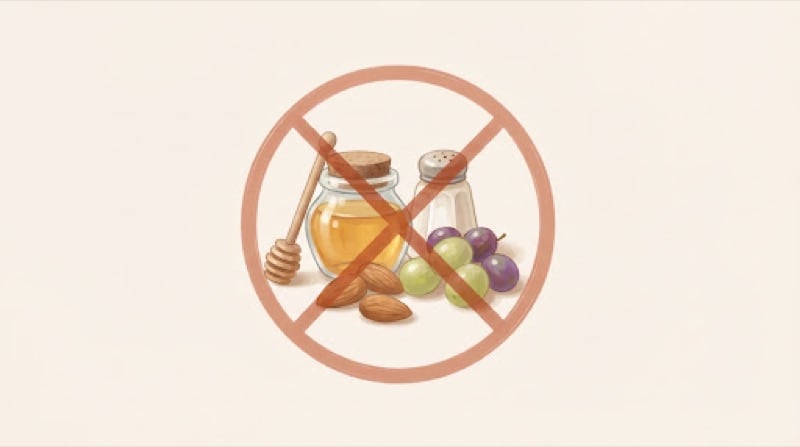 Foods to avoid for babies
Based on American Heart Association, American Red Cross and AAP guidance. This guide is written for healthy, full-term babies and doesn’t replace your pediatrician. If your baby was born early, has a medical condition, feeding or swallowing difficulties, or a known allergy, check with them first (medical disclaimer).
- AAP (HealthyChildren.org) — AHA and AAP release updated CPR guidelines (2025)
- American Heart Association — 2025 Guidelines for CPR and ECC
- American Red Cross — Infant CPR and choking
- AAP (HealthyChildren.org) — Choking prevention for children
- CDC — Choking hazards for infants and toddlers
- NHS — How to stop a child from choking