
When can babies have water?
Short answer: small sips from about 6 months, when baby starts solids. Here is how much, and why not sooner.
Quick answer
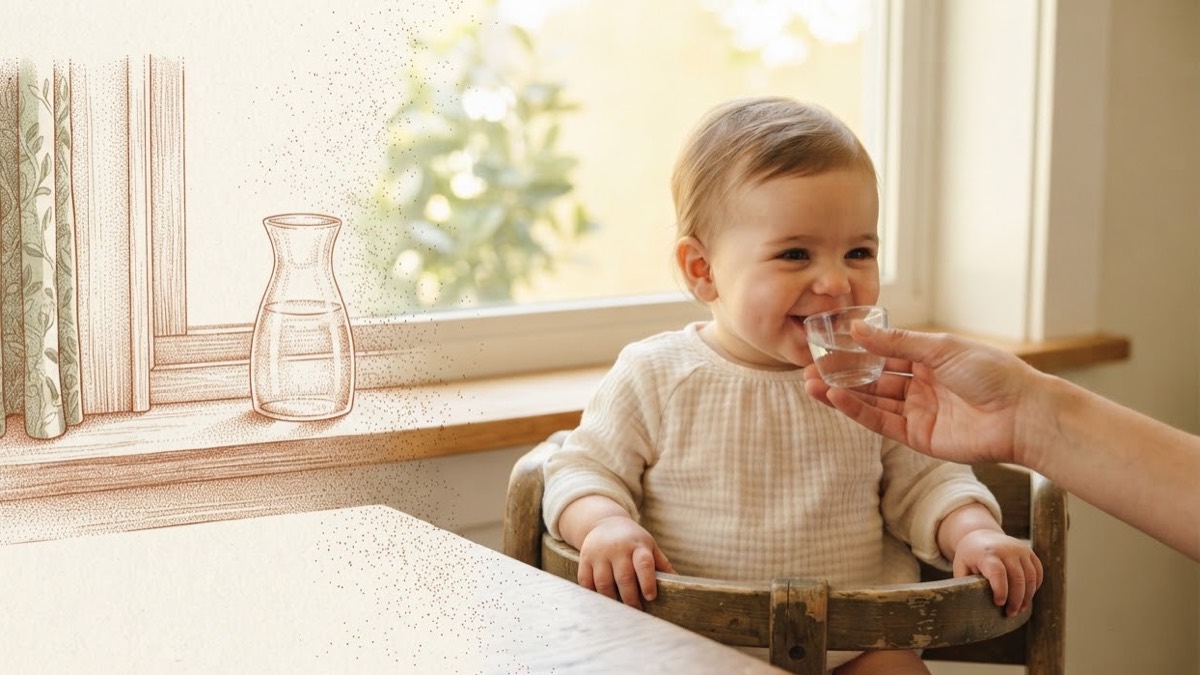
Babies can start having small sips of water at about 6 months, when they start solid foods. Before 6 months, breast milk or formula covers all of a baby’s fluid needs, even in hot weather. From 6–12 months, keep water to about 4 to 8 oz (120 to 240 ml) a day in total; after age 1, water becomes a main drink.
- Under 6 months: no water, juice or tea. Offer extra breast milk or formula feeds instead
- 6–12 months: a few sips in an open or straw cup with meals, building up to 4 to 8 oz a day
- 12–24 months: about 1 to 4 cups (8 to 32 oz) of water a day, plus whole milk
- Never dilute formula with extra water

STEP 1
Under 6 months: no water needed
Never dilute formula
Why water isn’t needed (or safe) before 6 months
Breast milk is about 88% water and formula mixed to the label is designed to be the right balance of fluid, calories and salts. A young baby’s tummy is tiny, so even a couple of ounces of water can crowd out the breast milk or formula they need to grow.
Young kidneys also can’t get rid of extra water quickly. Too much plain water can dilute the sodium in the blood, a rare but serious problem called water intoxication (hyponatremia). Warning signs include unusual fussiness or sleepiness, puffiness in the face, a low body temperature and, in severe cases, seizures.
What to do in hot weather
Offer the breast or bottle more often. Breastfed babies get thirst-quenching foremilk at the start of each feed, so shorter, more frequent feeds work well. Keep baby in the shade, dress them lightly and watch the wet diapers.
- No water, juice, herbal teas, gripe water or sugar water to “settle” a young baby
- No water to stretch the time between feeds or to help a baby sleep longer
- No “just a few sips” to practise before 6 months. Cup practice can wait until solids
STEP 2
6–12 months: small sips
How much
Milk comes first
How to start
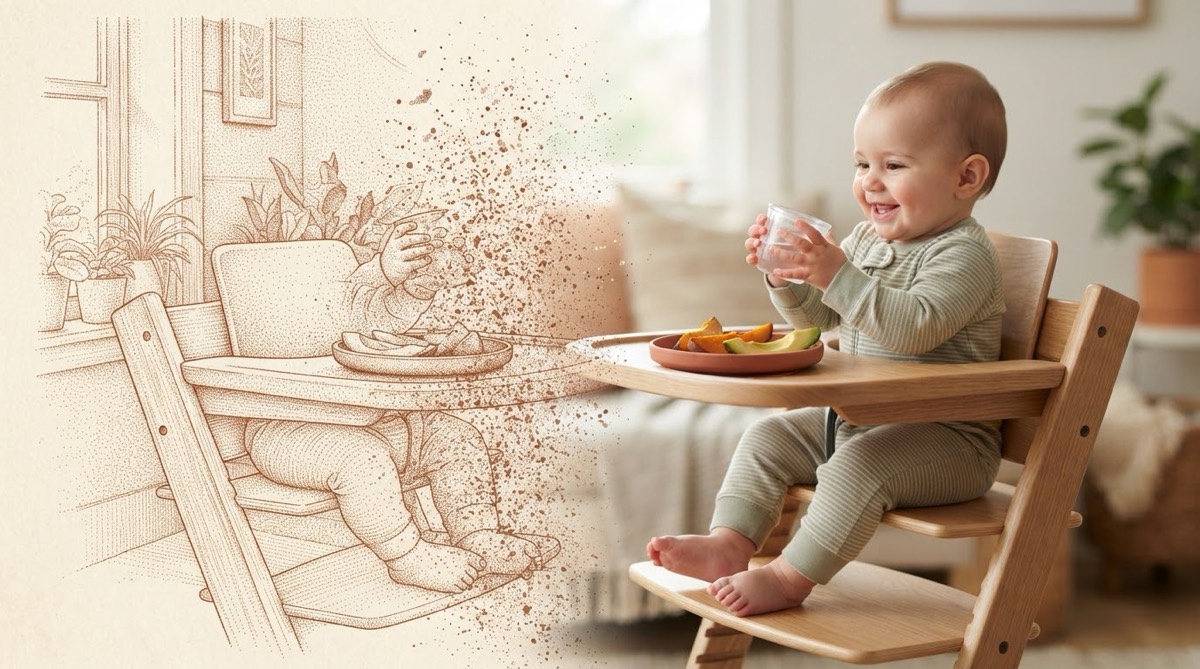
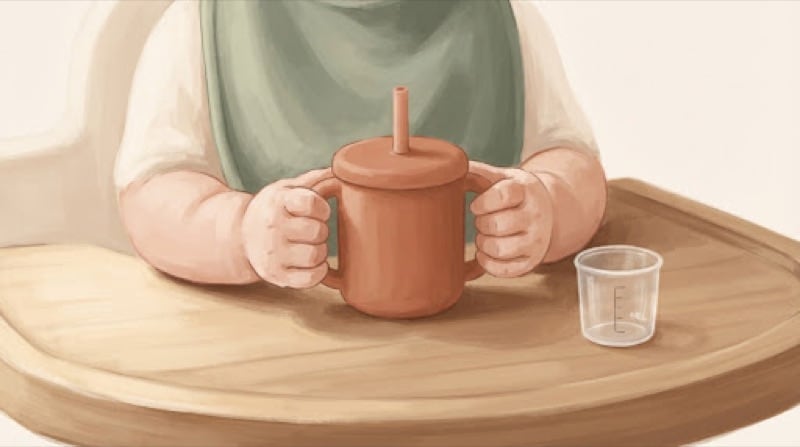
Pour about 1 to 2 oz (30 to 60 ml) into a small open cup or a straw cup and offer it with each meal. Most babies take a few sips, dribble most of it and cough a little. That is normal practice, not a problem.
Water at meals helps baby learn cup skills and washes food down. It is not there for hydration yet: milk still does that job.
| Age | Water a day | Main drink | What it looks like |
|---|---|---|---|
| 0–6 months | None | Breast milk or formula on demand | Milk feeds only, even when it’s hot |
| 6–9 months | A few sips, up to about 4 oz (120 ml) | Breast milk or formula | 1 to 2 oz in a cup at each meal, most of it spilled |
| 9–12 months | Up to about 8 oz (240 ml) | Breast milk or formula | A cup with every meal and snack |
| 12–24 months | About 1 to 4 cups (8 to 32 oz) | Water and whole milk | Water offered through the day, milk 2 to 3 times |
| 2 to 3 years | About 1 to 5 cups (8 to 40 oz) | Water and milk | Water as the default drink |
These are rough guides, not targets. Babies who eat juicy foods like watermelon, cucumber or soups get fluid from food too.
Keep milk first
If baby starts drinking a lot of water and taking less breast milk or formula, cut back the water. Offer milk feeds before meals and water with meals, not the other way round.

STEP 3
12–24 months: more water
After the first birthday, water and milk are the only drinks a child needs. The AAP suggests that 1- to 3-year-olds need about 4 cups of fluid a day in total, more when they are active or it is hot.
Milk, juice and the rest
- Whole cow’s milk: about 16 to 24 oz (2 to 3 cups) a day from 12 months. More than 24 oz can fill a toddler up and crowd out iron-rich food. See cow’s milk
- Juice: none before 12 months. From 1 to 3 years, no more than 4 oz of 100% juice a day, ideally none. Whole fruit is better. See juice
- Sugary and sweetened drinks: skip soda, sports drinks, flavored milk, sweetened water and diet drinks for young children
- Sparkling water: plain, unflavored sparkling water is fine as an occasional sip after 12 months, but it can cause gas and fill a small tummy. Plain water is the everyday choice
Making water a habit
Keep a cup of water at the table and in the diaper bag. Drink water yourself in front of your toddler. Toddlers who drink water as their default drink are less likely to fill up on milk or juice.

STEP 4
Which cup, and which water
- •An open cup builds drinking skills. Start with a small cup and a few sips
- •A straw cup is great for on the go
- •Skip sippy cups with valves for everyday use: they work like a bottle
- •Plain tap or bottled water is fine. Ask your pediatrician if you use well water
Open cup, straw cup or sippy cup?
Start with a tiny open cup (a shot-glass-sized cup is perfect) and hold it to baby’s lips at first. Tip it slowly so a small sip reaches the lip, then let them close their mouth. Around 9–12 months, many babies can hold the cup themselves.
A straw cup is a good second option for outings. Valved sippy cups work like a bottle and don’t teach mature drinking. Our open cup and straw guide has step-by-step tips.
Is my water safe for baby?
| Water source | OK from 6 months? | Notes |
|---|---|---|
| City tap water | Yes | Fluoridated tap water helps protect new teeth. If you have old pipes, use cold water and run the tap until it’s cold |
| Well water | Test first | Have it tested for nitrates and bacteria before using it for baby. Boiling does not remove nitrates |
| Bottled water | Yes | Plain still water is fine. Choose low-sodium options and skip flavored waters |
| Mineral water | Not as a daily drink | Some brands are high in sodium and minerals |
| Sparkling or flavored water | Wait until after 12 months | Bubbles can cause gas; flavored water may contain sugar or sweeteners |
Fluoride
Fluoride in tap water helps prevent tooth decay. If you mix formula with fluoridated water, there is a small chance of faint white marks on adult teeth (mild fluorosis). The AAP says fluoridated tap water is fine; some parents use low-fluoride bottled water for some bottles. If your water has no fluoride, ask your pediatrician or dentist whether baby needs a supplement.
Travel and swimming
When traveling, use bottled or boiled-and-cooled water if you don’t know the local water quality. In the pool or bath, try to stop baby gulping lots of water: swallowed water counts too.
STEP 5
Signs baby needs more fluid
Signs of dehydration in babies
- Fewer wet diapers than usual, or no wet diaper in about 6 hours (under age 1)
- Dark yellow, strong-smelling urine
- Dry, sticky mouth or cracked lips
- No tears when crying
- A sunken soft spot on top of the head
- Unusual sleepiness, floppiness or fussiness
Babies dehydrate faster than adults, especially with fever, vomiting or diarrhea. Keep offering breast milk or formula. If baby is sick, plain water is not the right fix: your pediatrician may recommend an oral rehydration solution and will tell you how much.
AVOID THESE
Common mistakes with water
- Giving water before 6 months “because it’s hot” or to soothe hiccups. Offer more milk feeds instead
- Adding extra water to formula to make it last longer or to help constipation. Always mix to the label
- Offering water before milk feeds in the 6–12 month stage, so baby fills up on water
- Serving water in a bottle. Use an open or straw cup so water time also builds drinking skills
- Swapping in juice because baby “won’t drink water”. Juice isn’t recommended before age 1
- Using plain water to treat dehydration when baby is sick. Ask your pediatrician about oral rehydration solution
- Using untested well water for baby or for mixing formula
- Worrying about tiny amounts. Most water spills in the early months, and that is fine
GET HELP
When to call your pediatrician
Call your pediatrician the same day if baby:
- Has fewer wet diapers than usual, or none in about 6 hours
- Is vomiting, has diarrhea or a fever and is feeding less than normal
- Was given a lot of water before 6 months, or formula that was mixed too thin, and seems fussy, sleepy or puffy
- Refuses milk feeds for most of the day
- Is still constipated after a few days of extra water and fiber
- Drinks very large amounts of water or seems thirsty all the time
Water for babies: questions parents ask
When can babies drink water?
Babies can start drinking small amounts of water at about 6 months, when they start solid foods. Before 6 months, breast milk or formula gives them all the fluid they need, even in hot weather.
How much water can a 6-month-old have?
Start with a few sips, about 1 to 2 oz (30 to 60 ml) in a cup at meals. Between 6 and 12 months, keep the daily total to about 4 to 8 oz (120 to 240 ml) so water doesn’t replace breast milk or formula.
Why can’t newborns have water?
A newborn’s stomach is tiny and their kidneys can’t handle extra water well. Water can fill them up instead of milk and, in larger amounts, dilute the sodium in their blood, which can cause water intoxication and even seizures.
Can I give my baby water in hot weather before 6 months?
In the US, the AAP advises offering extra breast milk or formula feeds instead of water, even when it’s hot. Some countries allow a little cooled, boiled water for formula-fed babies, so check with your pediatrician if you are worried.
Do I need to boil water for my baby?
From 6 months, safe tap water doesn’t need to be boiled for drinking. If you aren’t sure your water is safe, or you use it to mix formula for a very young or premature baby, the CDC suggests boiling it for 1 minute and letting it cool.
Is tap water safe for babies?
Yes, city tap water is usually safe from 6 months, and fluoride helps protect teeth. Use cold water, run the tap if your pipes are old, and have well water tested for nitrates and bacteria before giving it to baby.
Can babies have sparkling water?
It’s best to wait until after 12 months. Plain sparkling water isn’t harmful in small sips, but the bubbles can cause gas and fill a small tummy, so still water is the better everyday drink.
Should I give water in a bottle or a cup?
Use an open cup or a straw cup. Water time is a great chance to practise cup skills, and bottles and valved sippy cups don’t teach mature drinking.
How much water should a 1-year-old drink?
Toddlers aged 1 to 2 usually need about 1 to 4 cups (8 to 32 oz) of water a day, along with about 2 to 3 cups of whole milk. Needs go up when they are active or it is hot.
Can water help my baby’s constipation?
Once baby is eating solids, a few extra sips of water with meals plus fiber-rich foods like pears and prunes can help. For babies under 6 months, don’t give water: talk to your pediatrician instead.
Keep reading
 Open cup and straw drinking
 Constipation and starting solids
 Starting solids: the complete guide
Based on AAP (HealthyChildren.org) guidance and CDC infant nutrition guidance. This guide is written for healthy, full-term babies and doesn’t replace your pediatrician. If your baby was born early, has a medical condition, feeding or swallowing difficulties, or a known allergy, check with them first (medical disclaimer).
- AAP (HealthyChildren.org) — Choose water for healthy hydration
- AAP (HealthyChildren.org) — Recommended drinks for young children ages 0–5
- CDC — Foods and drinks to encourage: water
- CDC — Water for formula preparation
- NHS — Drinks and cups for babies and young children
- AAP (HealthyChildren.org) — Dehydration in children