
Open cup and straw drinking
Teaching baby to sip, from the first tiny cup to a confident straw drinker.
Quick answer
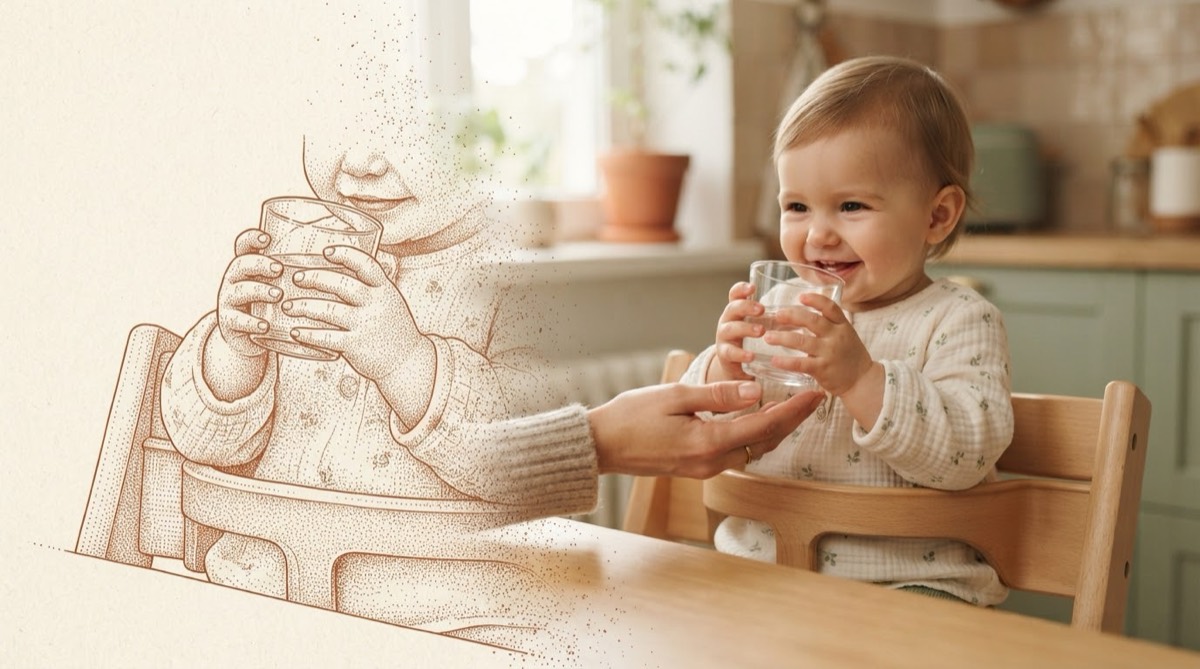
Start both an open cup and a straw cup at around 6 months, when baby starts solids. Offer a small amount of water, about 1 to 2 oz (30 to 60 mL), with meals, up to 4 to 8 oz (120 to 240 mL) a day before 12 months. Hold the open cup at first and let baby take tiny sips; teach the straw by letting a little water flow into baby’s mouth. Skip spouted sippy cups. Aim to move off bottles between 12 and 18 months.
- Start open and straw cups around 6 months
- Offer 1–2 oz of water with meals, up to 4–8 oz a day before 12 months
- Move off bottles between 12 and 18 months

STEP 1
When can babies drink from a cup?
Around 6 months, alongside solids. Cup drinking is a skill like self-feeding, and early practice means an easier switch from bottles later. At this age the goal is practice, not hydration: breast milk or formula still covers baby’s fluid needs.
| Age | Cup skills | Water a day |
|---|---|---|
| 6 months | Sips from an open cup with help; first straw attempts | Sips, up to 4–8 oz (120–240 mL) by 12 months |
| 9 months | Holds a small cup with two hands; many can use a straw | As above |
| 12 months | Drinks from open and straw cups; milk moves to cups | Freely with meals |
| 18 months | Bottles phased out | Freely |
STEP 2
How to teach baby to drink from an open cup
- 1Use a tiny cup, about the size of a shot glass, or a small cup made for babies.
- 2Pour in just a little water, about 1 oz (30 mL), so spills are small.
- 3Hold the cup to baby’s lower lip and tip it slowly so water just touches the lip.
- 4Let baby take a sip and swallow, then pause. Don’t pour.
- 5As baby gets the hang of it, let them hold it with you, then alone.
Expect dribbles and spills for weeks. A thicker liquid, like a little smoothie or thinned yogurt, moves slower and can make learning easier.

STEP 3
How to teach baby to use a straw
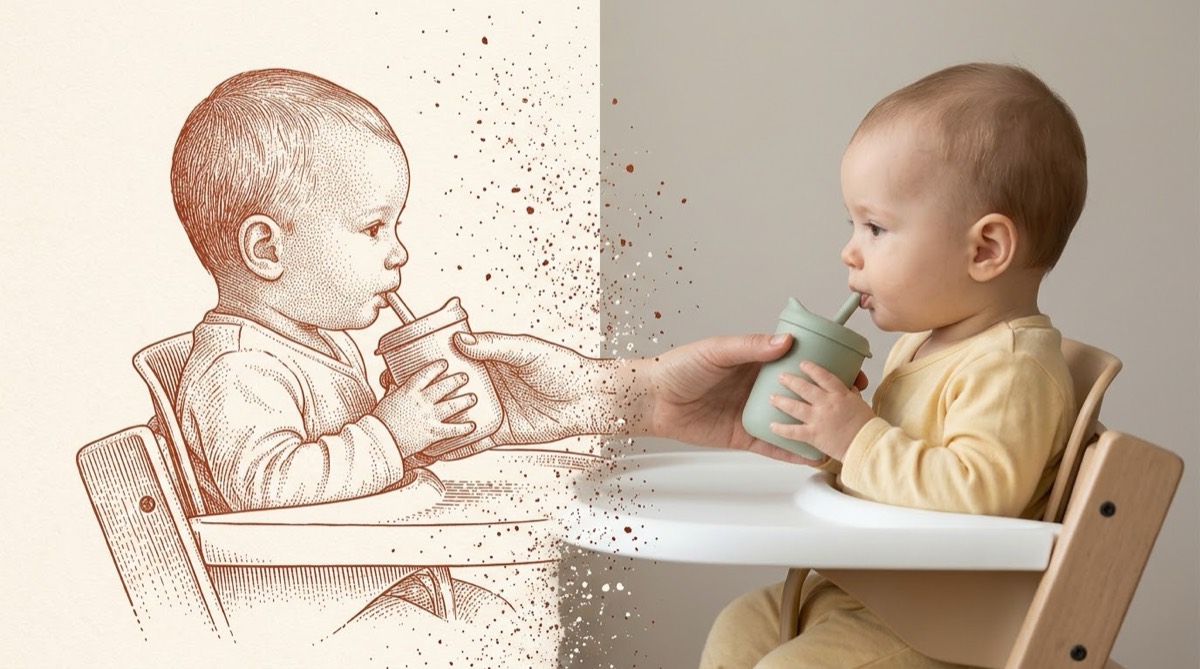
- 1The pipette trick: dip a regular straw in water, cover the top with your finger, and release a few drops into baby’s mouth. Repeat so baby learns that water comes from the straw.
- 2Squeeze-cup help: use a soft cup or bottle with a straw that lets you gently squeeze a little water up the straw as baby closes their lips on it.
- 3Short and easy: a short, soft straw is easiest at first.
- 4Model it: sip from your own straw while baby watches.
Some babies get straws in a day; others take a few months. Most have it by 9–12 months with regular practice.

STEP 4
Are sippy cups bad for babies?
Spouted sippy cups aren’t harmful, but they don’t teach much. The hard spout keeps the tongue forward in a sucking pattern similar to a bottle, so many feeding and speech therapists suggest going straight to open and straw cups.
Best choices
Skip or limit
STEP 5
What to look for in a baby cup
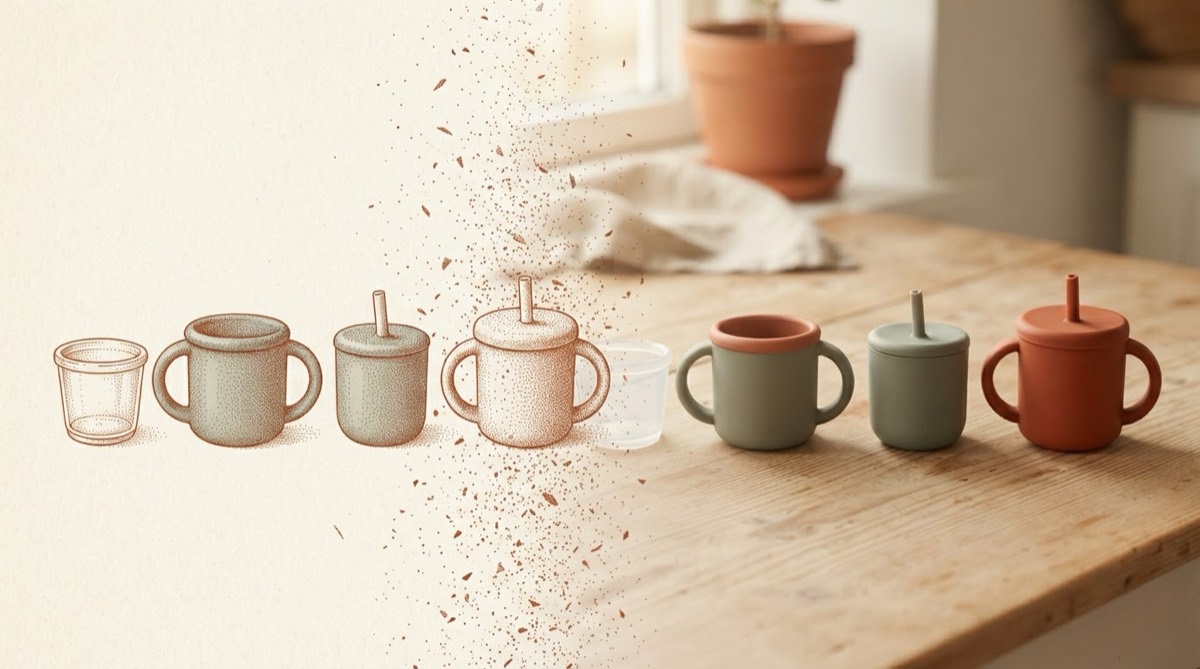
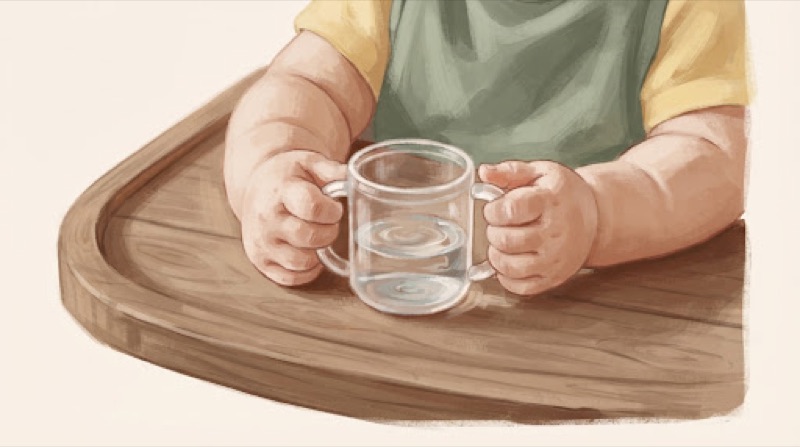
You don’t need many cups. One small open cup and one straw cup cover the first year.
| Feature | Why it helps |
|---|---|
| Small and light | Easy for little hands; less to spill |
| Wide base or two handles | Steadier on the tray |
| Short, soft straw | Easier to seal lips around |
| Valve-free straw | Liquid flows with a gentle suck |
| Dishwasher-safe, few parts | Straws and valves can grow mold |
Clean straws with a small brush after each use, and check silicone parts for cracks.

STEP 6
What should babies drink from a cup?
- 6–12 months: water with meals, and expressed breast milk or formula if you like
- From 12 months: water and whole cow’s milk (16 to 24 oz a day), served in cups
- Not needed: juice, sweetened drinks, flavored milk
STEP 7
How to move from bottles to cups
The AAP suggests finishing the switch from bottles to cups between 12 and 18 months.
- 1Start by serving milk in a cup at one meal a day, usually lunch.
- 2Every few days, replace another bottle with a cup of milk with a meal or snack.
- 3Drop the bedtime bottle last, and brush teeth after the last milk.
AVOID THESE
Common mistakes to avoid
- Waiting until 12 months to introduce any cup
- Using a spouted sippy cup as the only cup
- Filling the cup too full, so every spill is big
- Letting baby carry a cup of milk around all day
- Putting juice in the cup
- Giving up on the straw after a few tries
GET HELP
When to call your pediatrician
Most babies learn cup drinking with practice. Talk to your pediatrician if baby:
- Coughs or splutters every time they drink, even small sips
- Has a wet or gurgly voice after drinking
- Still can’t drink from any cup by 15 months
- Has fewer wet diapers after switching to cups
Open cup and straw drinking: questions parents ask
When should a baby start drinking from a cup?
Around 6 months, when baby starts solids. Offer small sips of water from an open cup and a straw cup with meals. It is practice; breast milk or formula still provides baby’s fluids.
How much water can a 6-month-old drink?
Just sips at first. Between 6 and 12 months, babies usually need only about 4 to 8 oz (120 to 240 mL) of water a day in total, offered with meals.
Is an open cup or a straw cup better?
Both are useful, and many experts suggest practicing both from 6 months. The open cup builds lip control and is used for life; a straw cup is handy on the go and spills less.
Should I use a sippy cup?
You can, but it’s not needed. Spouted sippy cups keep a bottle-like sucking pattern. Open cups and straw cups teach more mature drinking skills.
How do I teach my baby to use a straw?
Try the pipette trick: dip a straw in water, cover the top with your finger, and release a few drops into baby’s mouth. Squeezable straw cups also help baby learn that liquid comes through the straw.
When should my baby stop using a bottle?
The AAP recommends moving from bottles to cups between 12 and 18 months. Swap one bottle at a time for a cup of milk with a meal, dropping the bedtime bottle last.
Can I put breast milk or formula in a cup?
Yes. Offering a little breast milk or formula in an open cup is a fine way to practice before 12 months.
My baby spills everything. Is that normal?
Completely. Spills and dribbles are part of learning. Use a tiny amount of liquid, sit baby upright and keep a towel nearby. Most babies are much tidier by 12–18 months.
What is the best first cup for a baby?
A small, light open cup that holds 1 to 2 oz is best for learning, along with a simple straw cup with a short, soft straw. Avoid cups with hard spouts or strong valves.
Can babies drink milk from a straw cup?
Yes. Before 12 months you can offer a little breast milk or formula in a straw or open cup for practice. From 12 months, whole cow’s milk should be served in cups rather than bottles.
Keep reading
 When can babies have water?
 12–14-month-old feeding schedule
 6-month-old feeding schedule
- AAP (HealthyChildren.org): Discontinuing the bottle
- CDC: Foods and drinks to encourage
- AAP (HealthyChildren.org): Fruit juice and your child’s diet
- AAP (HealthyChildren.org): Starting solid foods
This guide is written for healthy, full-term babies and doesn’t replace your pediatrician. If your baby was born early, has a medical condition, feeding or swallowing difficulties, or a known allergy, check with them first (medical disclaimer). Reviewed by our dietitians.