
Foods to never feed babies
Most foods are fine from 6 months with the right shape and texture. These are the real no’s, and why.
Quick answer
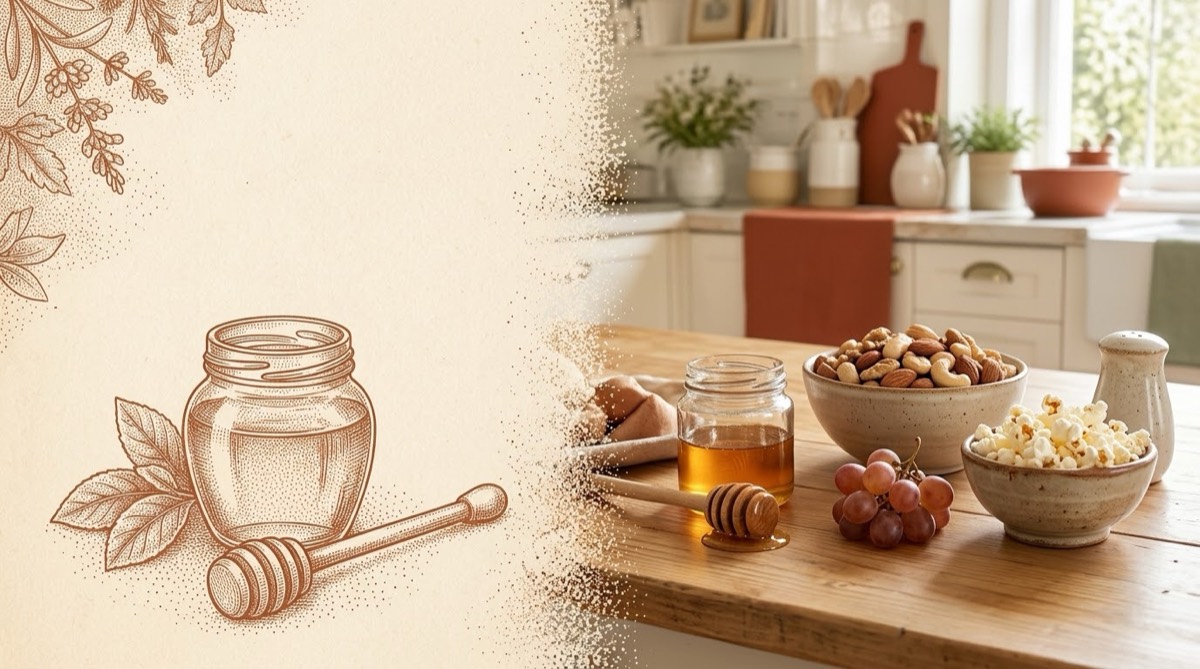
Before 12 months, never give babies honey (risk of infant botulism), cow’s milk as a main drink, juice or sugary drinks, added salt or added sugar. Until age 4, avoid round, hard and sticky choking hazards like whole nuts, whole grapes, popcorn and globs of nut butter unless they are modified. At any age, skip raw or undercooked eggs, meat and fish, unpasteurized dairy and juice, and high-mercury fish such as shark and swordfish.
- No honey, juice or added salt before 12 months, and no added sugar before age 2
- Modify round, hard and sticky foods until age 4
- Skip raw or undercooked eggs, meat and fish, unpasteurized foods and high-mercury fish
STEP 1
Why can’t babies have honey?
Honey can contain spores of Clostridium botulinum. A baby’s gut can’t yet stop the spores from growing, which can cause infant botulism, a rare but serious illness that weakens the muscles. Cooking or baking does not reliably destroy the spores.

STEP 2
Which foods are choking hazards for babies?
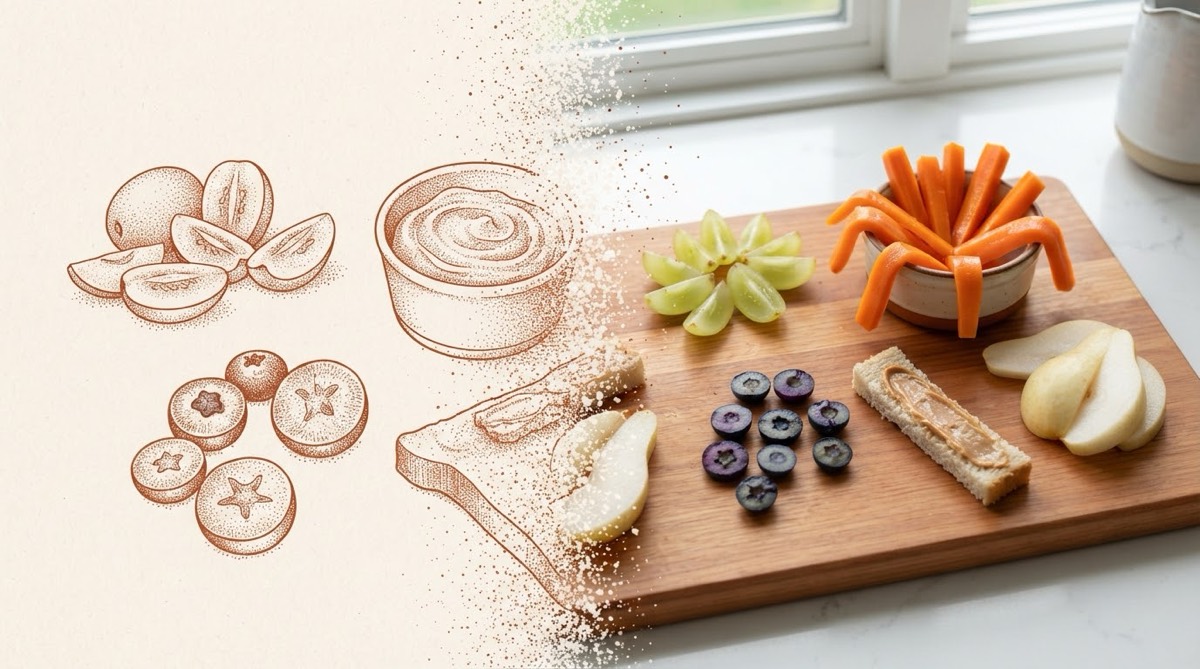
The AAP advises avoiding or modifying these until about age 4:
| Food | Make it safer |
|---|---|
| Whole nuts and seeds | Grind finely, or use thinly spread nut butter |
| Whole grapes, cherry tomatoes, large berries | Quarter lengthwise or flatten |
| Popcorn, chips, hard crackers | Skip until age 4 |
| Raw carrot, apple, celery | Steam until soft, or grate |
| Hot dogs, sausages | Skip, or cut into thin lengthwise strips |
| Spoonfuls of peanut butter | Spread thinly or thin into purees |
| Hard candy, gum, marshmallows | Skip |
| Chunks of meat or cheese | Shred, or cut into thin strips |
STEP 3
Can babies have salt and sugar?
Babies’ kidneys can’t handle much salt, and early sweet foods shape taste preferences.
Salt
Added sugar
Cook baby’s portion before you salt the family pot. Herbs, spices, garlic and lemon add flavor without salt.

STEP 4
What drinks should babies avoid?
- Cow’s milk as a drink before 12 months. It is low in iron and can upset the gut. Small amounts in cooking, yogurt and cheese are fine from 6 months.
- Juice before 12 months. The AAP advises none, even 100% fruit juice. Serve whole fruit instead.
- Plant milks as a main drink. Oat, almond and rice drinks lack the protein and nutrients babies need. The UK advises no rice drinks under age 5 because of arsenic.
- Soda, sweet tea, sports and energy drinks, coffee and caffeine.
- Herbal teas and remedies, unless your pediatrician recommends them.

STEP 5
Raw, unpasteurized and high-mercury foods
Babies are more vulnerable to food poisoning. Avoid:
- Raw or runny eggs, including homemade mayonnaise and raw cookie dough. Cook eggs until yolk and white are firm
- Raw or undercooked meat, poultry, fish and shellfish, including sushi and raw oysters
- Unpasteurized milk, cheese and juice
- Raw sprouts such as alfalfa and bean sprouts
- High-mercury fish: shark, swordfish, king mackerel, marlin, orange roughy, tilefish and bigeye tuna
Low-mercury fish like salmon, sardines, cod and canned light tuna are great choices, about 1–2 small servings a week.

STEP 6
Foods to limit, not ban
- Rice and rice products: rice can carry inorganic arsenic. Rotate grains like oats, quinoa and barley rather than serving rice cereal or rice cakes every day.
- Processed and cured meats such as deli meat, bacon and ham, which are high in salt.
- Fried and highly processed snacks, which crowd out iron-rich foods.
Allergens like peanut, egg, wheat and sesame are not on the avoid list. Introducing them early, from about 6 months, lowers the chance of allergy. See how to introduce peanut.
STEP 7
A quick checklist before you serve
Before putting any food on baby’s tray, run through these five questions. It takes seconds and covers most of the risks on this page.
- 1Is it soft enough? It should squash between your thumb and finger.
- 2Is it a safe shape? No coins, no whole round foods, no sticky globs.
- 3Is it fully cooked? Eggs firm, meat and fish cooked through, no raw shellfish.
- 4Is it low in salt and sugar? Baby’s portion taken out before seasoning.
- 5Is the drink right? Breast milk, formula or water before 12 months.
If a food fails one of these, change it rather than skip it: cook it longer, cut it differently, or thin it into something else. Most foods can be made baby-safe.
AVOID THESE
Common mistakes to avoid
- Giving honey in baked goods, thinking cooking makes it safe
- Serving “toddler” snacks and puffs with added sugar as everyday foods
- Adding salt or stock cubes to baby’s portion
- Offering juice to help with constipation without asking your pediatrician
- Avoiding peanut, egg and other allergens instead of introducing them early
- Assuming baby food pouches are always safe for sucking straight from the spout all day
GET HELP
When to call your pediatrician
Call your pediatrician if baby has eaten something on this list and you notice:
- Constipation with poor feeding, a weak cry, drooping eyelids or floppiness (possible infant botulism)
- Vomiting, diarrhea or fever after raw or undercooked food
- Any rash, swelling or vomiting after a new food
- A cough or noisy breathing that continues after a choking scare
Foods to avoid for babies: questions parents ask
What foods should babies not eat before 1 year?
Before 12 months, avoid honey, cow’s milk as a main drink, juice, added salt, added sugar, raw or undercooked eggs, meat and fish, unpasteurized foods, high-mercury fish, and choking hazards such as whole nuts, whole grapes and popcorn.
Why is honey dangerous for babies?
Honey can contain Clostridium botulinum spores, which can grow in a baby’s gut and cause infant botulism. Cooking does not reliably destroy the spores, so avoid honey in any form, including baked goods, until 12 months.
When can babies have honey?
From 12 months. By then the gut is mature enough to handle the spores. Small amounts in food are fine from the first birthday, though added sugars, including honey, are still best kept low until age 2.
Can babies eat eggs?
Yes, from about 6 months, as long as the egg is fully cooked with a firm yolk and white. Egg is a top allergen, and introducing it early may lower allergy risk. See our guide on how to introduce egg.
Can babies have cow’s milk?
Not as a main drink before 12 months. Cow’s milk is fine in cooking, yogurt and cheese from about 6 months. From 12 months, whole cow’s milk can become a drink, around 16 to 24 ounces a day.
When can babies eat whole nuts?
Not until about age 4, because whole nuts are a choking hazard. Babies can have nuts much earlier as thinly spread nut butter, nut butter thinned into purees, or finely ground nuts.
Can babies have salt?
Don’t add salt to baby’s food before 12 months. Babies get the small amount of sodium they need from breast milk, formula and food. Watch salty foods like ham, bacon, stock cubes and some cheeses.
Can babies eat tuna?
Yes. Canned light tuna (skipjack) is a low-mercury choice. Avoid bigeye tuna, and limit albacore (white) tuna to about once a week. Mash or flake it well.
Are grapes safe for babies?
Only when cut. Whole grapes are a leading choking hazard for young children. Quarter grapes lengthwise, or flatten and chop them, until about age 4.
Can babies eat spicy food?
Yes, mild spices and herbs are fine and help babies enjoy a wide range of flavors. Start gently with very hot chili and watch for discomfort.
Keep reading
 Gagging vs choking
 How to introduce peanut
 When can babies have water?
- CDC: Foods and drinks to avoid or limit
- CDC: Choking hazards for infants and toddlers
- CDC: Botulism prevention (no honey before age 1)
- FDA: Advice about eating fish
- AAP (HealthyChildren.org): Fruit juice and your child’s diet
- NHS: Foods to avoid giving babies and young children
This guide is written for healthy, full-term babies and doesn’t replace your pediatrician. If your baby was born early, has a medical condition, feeding or swallowing difficulties, or a known allergy, check with them first (medical disclaimer). Reviewed by our dietitians.