
How to introduce egg to your baby
Well-cooked egg, from a first tiny taste to a regular breakfast.
Quick answer
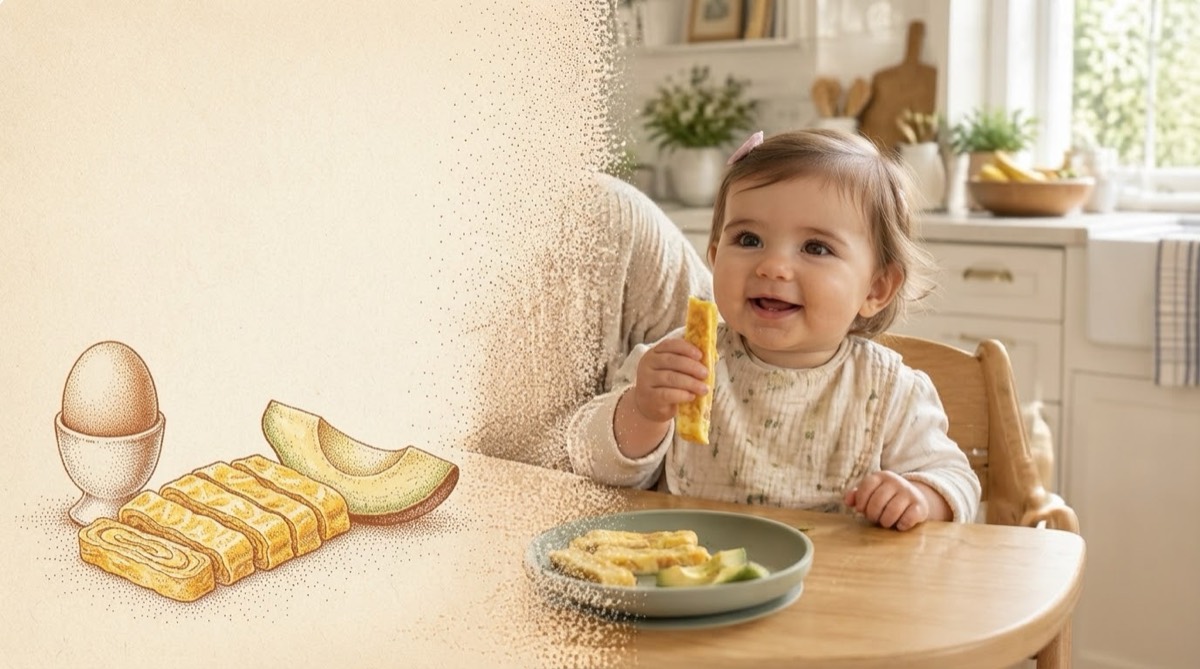
Introduce egg at around 6 months, once baby has started solids, as well-cooked whole egg: hard-boiled and mashed, or omelet strips. Start with a small amount, watch for 2 hours, and if all is well serve egg regularly, about 2 to 3 times a week, to keep it in the diet. Serve yolk and white together. No runny or raw egg. If baby has severe eczema, ask your pediatrician first.
- Introduce well-cooked whole egg around 6 months
- Start with a small taste, then watch baby for 2 hours
- Keep egg in the diet about 2 to 3 times a week
STEP 1
Why introduce egg early?
Egg is one of the most common food allergies in babies. Studies such as PETIT and EAT suggest that regular early egg may lower the chance of egg allergy, and the AAP advises not delaying egg past around 6 months. Egg is also a great baby food: protein, iron, choline and vitamin B12 in a soft, cheap package.
Babies with severe eczema are more likely to have food allergies. Talk to your pediatrician before introducing egg, and see our peanut guide for the NIAID advice that applies to these babies.
STEP 2
How to serve egg to babies by age
| Age | How to serve |
|---|---|
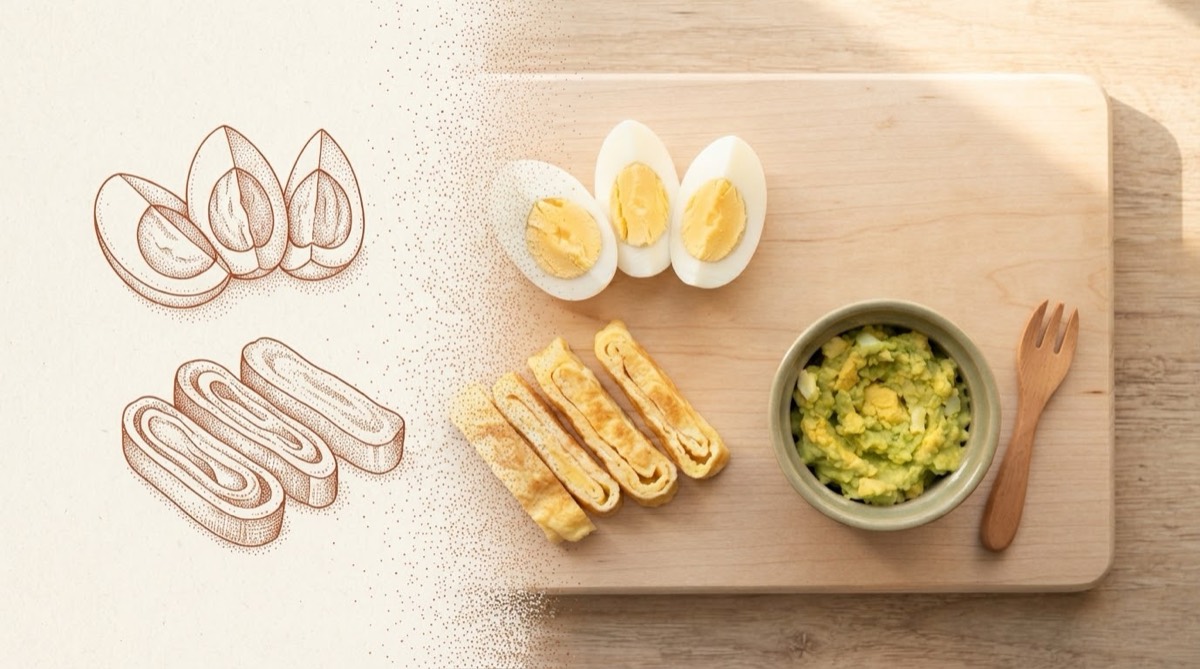
| 6 months | Hard-boiled egg mashed smooth with breast milk, formula or yogurt, on a spoon or preloaded spoon |
| 7–8 months | Fork-mashed egg with soft lumps; omelet cut into finger-length strips; hard-boiled egg in lengthwise quarters |
| 9–12 months | Bite-sized pieces of omelet or scrambled egg cooked firm; chopped hard-boiled egg; egg in pancakes or muffins |
| 12 months + | Scrambled, boiled, baked or fried eggs, cooked through, as part of family meals |

STEP 3
How to introduce egg for the first time
- 1Choose a day when baby is healthy, at home, early in the day.
- 2Cook the egg fully, so yolk and white are firm.
- 3Offer a small amount first, about a quarter teaspoon of mashed egg or a small piece of omelet.
- 4Wait about 10 minutes and watch for hives, swelling or vomiting.
- 5If all looks well, let baby eat more at their own pace.
- 6Watch for at least 2 hours afterward. Serve egg again within a few days.
Over the next servings, build up to around a quarter to half an egg at a meal, or whatever baby wants.

STEP 4
How to cook egg for a baby
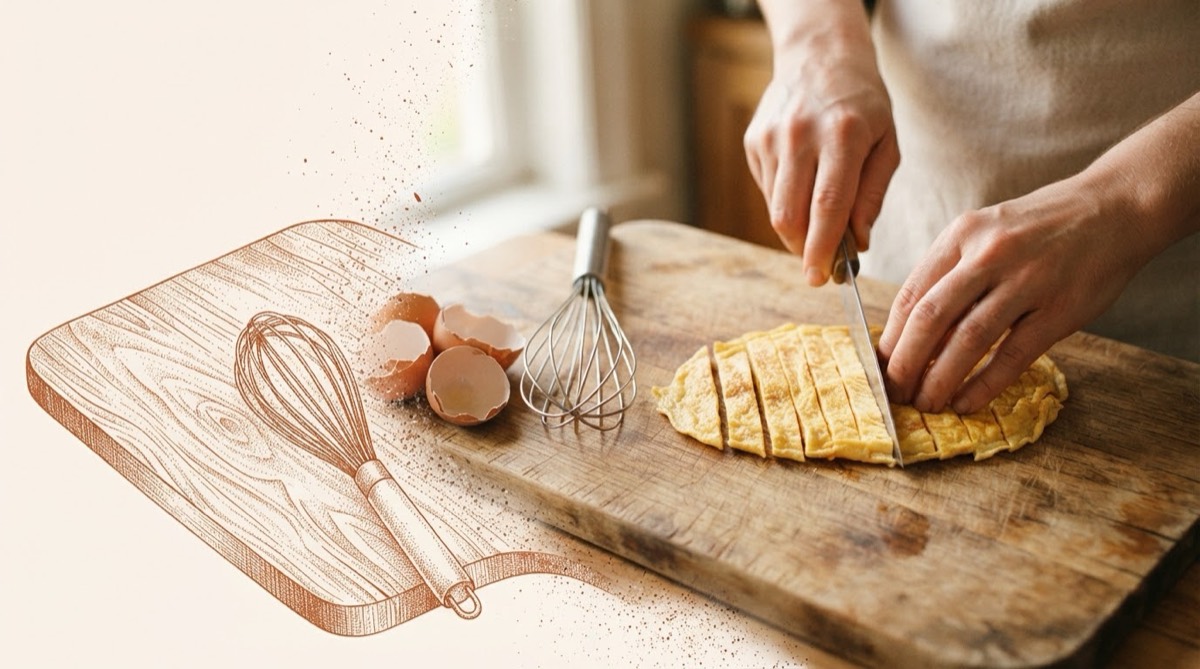
Every method below cooks the egg fully, so both yolk and white are firm. That matters for food safety and gives baby a texture they can manage.
| Method | How | Best for |
|---|---|---|
| Hard-boiled | Simmer 10–12 minutes, cool, peel | Quarters to hold, or mashed with yogurt |
| Thin omelet | Whisk 1 egg, cook in a little oil until set both sides, cut into strips | Finger food from 6 months |
| Egg muffins | Egg plus grated veg, baked 15–20 minutes | Batch cooking and freezing |
| Scrambled | Cook until no wet parts remain | Clumps at 6–9 months, pieces from 9 months |
| Egg in pancakes | 1 egg with banana and oats | Baked egg exposure |
STEP 5
How often should babies eat egg?
There is no official gram target for egg like there is for peanut. Allergy experts generally suggest serving egg regularly, about 2 to 3 times a week, once it is introduced. Stopping and starting can make it harder for the body to stay tolerant.

STEP 6
Is baked egg the same as cooked egg?
Not quite. Egg baked into muffins or cake for 20 minutes or more is less allergenic than scrambled or boiled egg, because heat and wheat change the egg proteins. Many children with egg allergy can tolerate baked egg but still react to scrambled egg.
So baked egg counts as a start, but try to also serve well-cooked whole egg, like omelet or hard-boiled, regularly.
STEP 7
What does an egg allergy look like in babies?
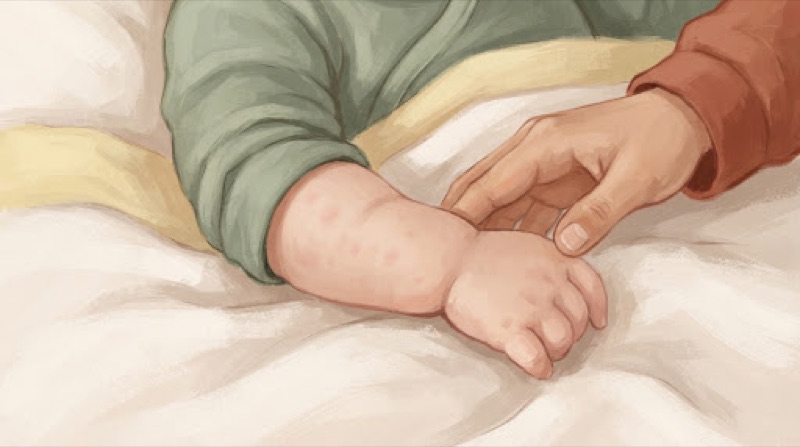
A few hives around the mouth only: stop egg, take a photo and call your pediatrician. Repeated, heavy vomiting 1 to 4 hours after egg, often with paleness and floppiness, can be a delayed reaction called FPIES. Seek medical care the same day.
AVOID THESE
Common mistakes to avoid
- Serving egg runny or soft-boiled before 12 months
- Giving only the yolk “to be safe”. The white matters for allergy prevention too
- Relying on baked goods alone for egg exposure
- Trying egg once, then waiting weeks before the next serving
- Introducing egg when baby is unwell or late in the day
- Serving dry crumbly yolk without mixing it with something moist
GET HELP
When to call your pediatrician
Call your pediatrician if, after egg, baby has:
- A few hives around the mouth with no other symptoms
- Repeated vomiting 1 to 4 hours later, especially with paleness (seek care the same day)
- An eczema flare within a day or two
- Blood or mucus in the stool over the following days
Introducing egg: questions parents ask
When can babies eat eggs?
Babies can eat eggs from around 6 months, once they have started solids. Serve egg fully cooked, with a firm yolk and white. Babies with severe eczema should check with their pediatrician before introducing egg.
Can babies eat the whole egg, or just the yolk?
Babies can eat the whole egg, yolk and white together, from around 6 months. Older advice to start with yolk only is no longer recommended.
How much egg should I give my baby the first time?
Start with a small taste, about a quarter teaspoon of mashed hard-boiled egg or a small piece of omelet. Wait about 10 minutes, then let baby eat more if there is no reaction. Over the next few servings, build up to a quarter to half an egg.
How often should babies eat egg?
Once egg is introduced, aim to serve it about 2 to 3 times a week. Regular exposure helps keep it in baby’s diet.
Can babies have scrambled eggs?
Yes, as long as they are cooked until firm with no runny parts. For babies under 9 months, offer scrambled egg in larger clumps or switch to omelet strips, which are easier to hold.
Can babies eat runny eggs?
In the US, babies should have eggs cooked until the yolk and white are firm, because of the risk of salmonella. Save runny yolks and soft-boiled eggs for later.
Does baked egg count as introducing egg?
It is a good first step, but baked egg is less allergenic than whole cooked egg. Try to also serve well-cooked whole egg, like omelet or hard-boiled, regularly.
What if my baby vomits a few hours after eating egg?
Repeated, heavy vomiting 1 to 4 hours after eating, especially with paleness or floppiness, can be FPIES, a delayed food allergy. Seek medical care the same day and don’t offer egg again until you have seen a doctor.
Is egg allergy common in babies?
Yes. Egg is one of the most common food allergies in infants, affecting around 1 to 2 in 100 young children. Many children outgrow it by school age.
Can babies with eczema eat egg?
Yes, most can, and introducing egg early may help. Babies with severe eczema are at higher risk of food allergy, so talk to your pediatrician before the first taste.
Keep reading
 How to introduce peanut
 Signs of an allergic reaction
 The Top 9 allergen plan
Recipe collectionsBaby pancakes
- AAP (HealthyChildren.org): Food allergies in children
- ACAAI: Food allergy
- FDA: Egg food safety
- NHS: Weaning and feeding
- CDC: When, what, and how to introduce solid foods
- Greer FR. et al. Early nutritional interventions and the development of atopic disease in infants and children (AAP clinical report). Pediatrics, 2019
This guide is written for healthy, full-term babies and doesn’t replace your pediatrician. If your baby was born early, has a medical condition, feeding or swallowing difficulties, or a known allergy, check with them first (medical disclaimer). Reviewed by our dietitians.