
10–11-Month-Old Feeding Schedule: Meals Take the Lead
At 10 and 11 months, solids start to carry more of the day. Most babies eat 3 meals plus 1 to 2 small snacks, and milk feeds naturally get a little smaller.
Quick answer
A typical 10- or 11-month-old eats 3 meals and 1 to 2 small snacks a day, with about 3 to 4 milk feeds (roughly 20 to 28 oz / 590 to 830 mL of formula). Milk often drops a little as baby eats more, but let baby lead; don’t cut milk on purpose before 12 months. Most 10- and 11-month-olds take 2 naps with 3 to 4 hour wake windows.
- 3 meals and 1–2 small snacks a day
- Milk: 3–4 feeds or about 20–28 oz formula
- Mostly chopped, soft family food
Golden Rule • Snacks Are Mini Meals
Treat snacks like small meals: seated, at the table, at set times. Grazing all day takes the hunger out of mealtimes.
A sample day
A sample day for a 10-month-old: three meals, two snacks, milk on waking and at bedtime.
- 7:00AM
Milk feed 1
Morning Feed
Breast milk or formula (about 6–8 oz) on waking.
Morning light.
- 8:00AM
- 10:00to 11:00 AM
Nap 1 · 1 hr
Morning Nap
Often getting shorter at this age.
Wake window: ~3 hours.
- 11:00AM
Milk feed 2
Post-Nap Feed
Breast milk or formula after waking. Some babies drop this feed.
Or water and a snack.
- 12:30PM
- 2:15to 3:45 PM
Nap 2 · 1.5 hrs
Afternoon Nap
The longer nap.
Wake window: ~3.25 hours.
- 4:00PM
- 5:45PM
- 6:45PM
Milk feed 3
Bedtime Feed
Bath, teeth, story and a calm final feed.
Dim the lights.
- 7:15PM
Night sleep
11–12 Hour Night Sleep
Most 10-month-olds can sleep through without night feeds.
Total daily sleep: 12–14 hours.
 Pancakes
 Yogurt
 Turkey
 Green Beans
 Lentils
 Zucchini
How much should a 10-month-old eat?
Rough guide only; appetite can swing a lot from day to day.
| Food | Typical amount | Notes |
|---|---|---|
| Formula | ~20–28 oz (590–830 mL) a day | 3–4 feeds; follow baby’s lead |
| Breast milk | 3–4 feeds a day | On demand |
| Meals | 3 a day, about ¼–¾ cup each | Iron-rich food at each meal |
| Snacks | 1–2 a day | Fruit, yogurt, cheese, soft crackers |
| Water | Up to 4–8 oz (120–240 mL) a day | With meals, in a cup |
Too much milk can take away appetite for iron-rich foods. If baby barely eats at meals, offer milk after meals rather than before, and talk to your pediatrician about intake.
Family Food, Baby-Sized
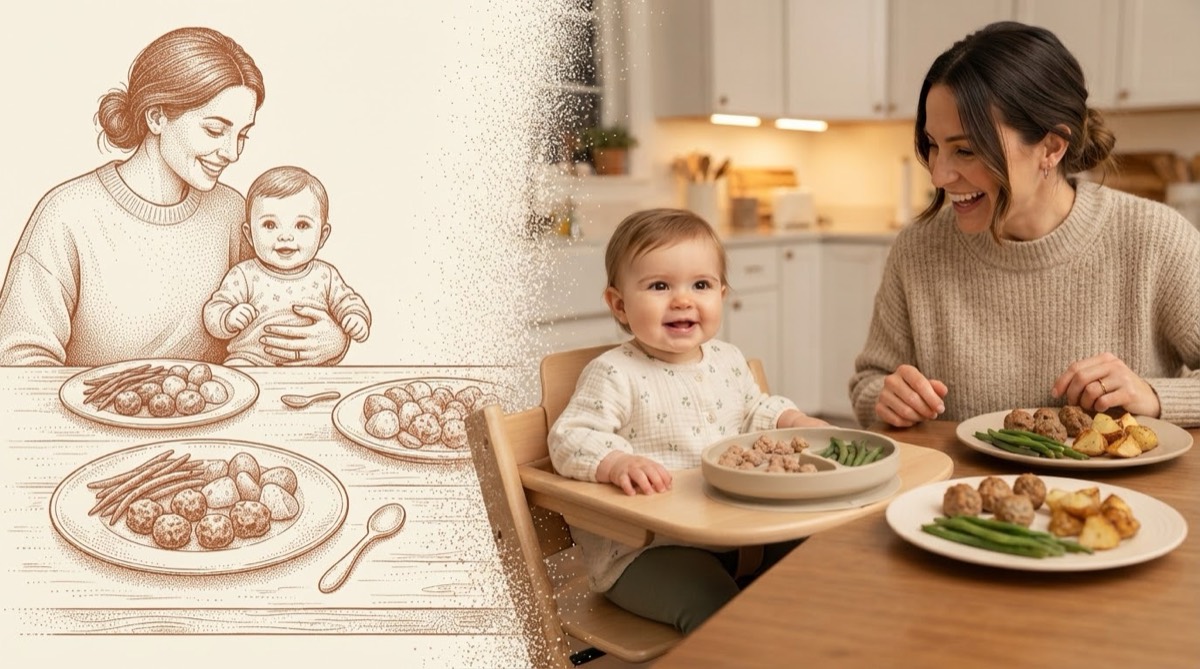
Most 10-month-olds can manage soft, chopped family food: bite-sized pieces, soft meatballs, pasta, and mixed dishes. Keep it soft and safe; skip whole nuts and hard raw foods.
“Ten months is the bridge to toddler meals. The routine you build now, with meals and snacks at the table, makes the year ahead easier.”
Same plate, smaller portion
Offering the family meal helps baby learn to eat what you eat.
Milk is still welcome
Don’t force milk down to “make room” for food; it tapers naturally as meals grow.
Let them use a fork
A short, blunt fork with soft food on it is fun practice at this age.
Healthy snacks for a 10-month-old
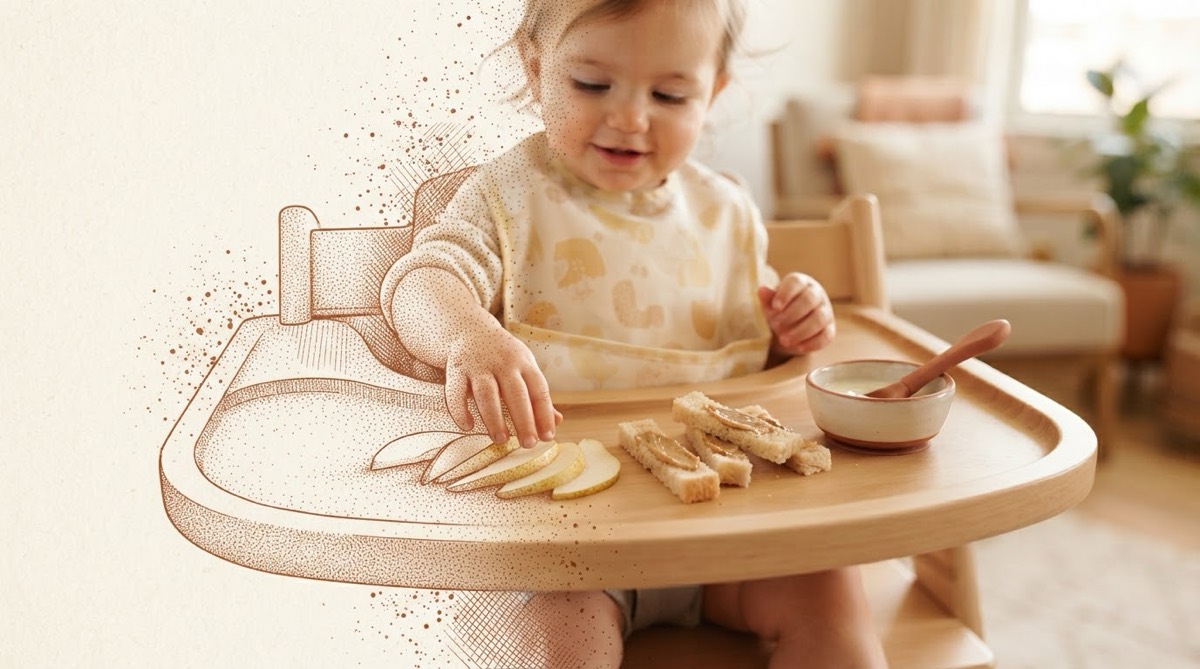
Snacks at this age are mini meals. Aim for two food groups, served at the table, about 2 to 3 hours after the last meal.
- Plain full-fat yogurt with mashed raspberries
- Soft pear slices with a thin spread of nut butter
- Toast fingers with hummus
- Shredded or thinly sliced cheese and soft cucumber (peeled, cut into thin sticks)
- Mini pancakes made with banana and oats
- Leftover pasta with vegetables
Skip packaged snacks with added sugar or salt. They fill baby up without much iron or protein.
Self-feeding skills at 10 and 11 months
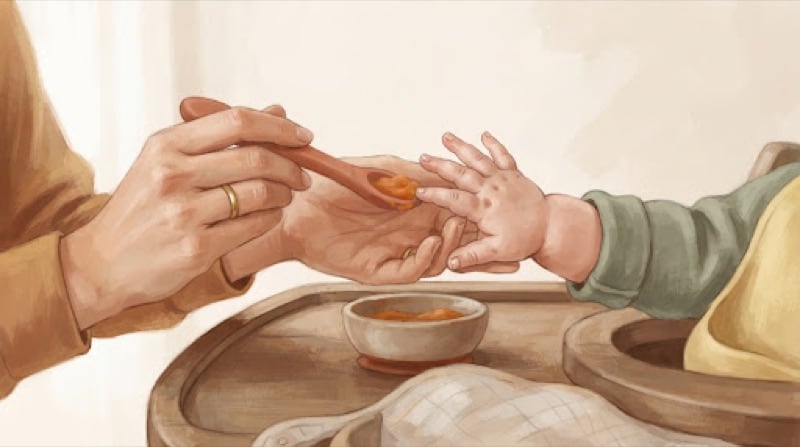
Most 10-month-olds pick up small pieces with a neat pincer grasp, bring a pre-loaded spoon to their mouth and drink a few sips from an open cup with help. Some will start stabbing soft food with a short fork.
Give baby time to practice at every meal. Self-feeding is messier and slower, but it builds hand skills and helps babies listen to their own hunger and fullness.
Common mistakes to avoid
- Cutting milk on purpose to make baby eat more
- Grazing between meals instead of set snack times
- Relying on packaged puffs and crackers for snacks
- Serving a separate “baby menu” instead of family food
- Spoon-feeding everything when baby wants to self-feed
When to call your pediatrician
Every baby’s routine looks different. Call your pediatrician if:
- Baby isn’t gaining weight, or is losing weight
- Fewer than 4 to 6 wet diapers a day, or dark urine
- Baby coughs, chokes or vomits at most meals
- Baby refuses almost all solids for more than 1 to 2 weeks
- You see signs of an allergic reaction after a new food
10–11 month feeding schedule: questions parents ask
How much should a 10-month-old eat?
Most 10-month-olds eat 3 meals and 1 to 2 snacks a day, with about 20 to 28 oz (590 to 830 mL) of formula or 3 to 4 breastfeeds. Meals are often around a quarter to three-quarters of a cup, but appetite varies.
What changes at 11 months?
Not much in the routine: most 11-month-olds keep 3 meals and 1 to 2 snacks with 3 to 4 milk feeds, and milk may drop a little more as they eat more. Many get better at chewing soft pieces, feeding themselves and sipping from an open cup. Keep breast milk or formula as the main drink until 12 months.
How much milk does a 10-month-old need?
Around 20 to 28 oz (590 to 830 mL) of formula, or 3 to 4 breastfeeds a day, is typical. Some babies still take more. Milk usually drops a little as baby eats more food, but don’t cut it on purpose before 12 months.
How many snacks should a 10-month-old have?
Usually 1 to 2 small snacks a day, timed about 2.5 to 3 hours after the last meal. Serve them seated at the table, like a mini meal.
What are good snacks for a 10-month-old?
Soft fruit, full-fat plain yogurt, cheese, toast fingers with thin nut butter, soft vegetable sticks, and leftovers from meals.
Can my 10-month-old drink cow’s milk?
Not as a main drink until 12 months. Cow’s milk in cooking, yogurt and cheese is fine.
My 10-month-old suddenly eats less. Is that normal?
Yes. Teething, illness, a growth slowdown or new skills like walking can all reduce appetite for a while. Keep offering meals without pressure. See our guide on when baby refuses food.
How many naps does a 10-month-old need?
Most 10-month-olds take 2 naps, with wake windows of 3 to 4 hours.
Should my 10-month-old feed themselves?
Yes, as much as possible. Let baby use fingers and a pre-loaded spoon or fork. Self-feeding builds skills and helps babies respond to their own fullness.
What can a 10-month-old eat for breakfast?
Good options include small pancakes made with banana and egg, iron-fortified oatmeal with fruit, omelet strips, or toast fingers with thin nut butter and yogurt.
Keep reading
 9-month-old feeding schedule
 12–14-month-old feeding schedule
 When baby refuses food
Recipe collectionsLunch ideas for a 1 year oldBaby pancakes
- AAP (HealthyChildren.org): Starting solid foods
- CDC: When, what, and how to introduce solid foods
- CDC: How much and how often to feed infant formula
- WHO: Complementary feeding
This guide is written for healthy, full-term babies and doesn’t replace your pediatrician. If your baby was born early, has a medical condition, feeding or swallowing difficulties, or a known allergy, check with them first (medical disclaimer). Reviewed by our dietitians.