
12–14-Month-Old Feeding Schedule: Family Meals and Whole Milk
From 12 to 14 months, food becomes the main source of nutrition. Most toddlers eat 3 meals and 2 snacks, switch to whole cow’s milk in a cup, and start saying goodbye to bottles.
Quick answer
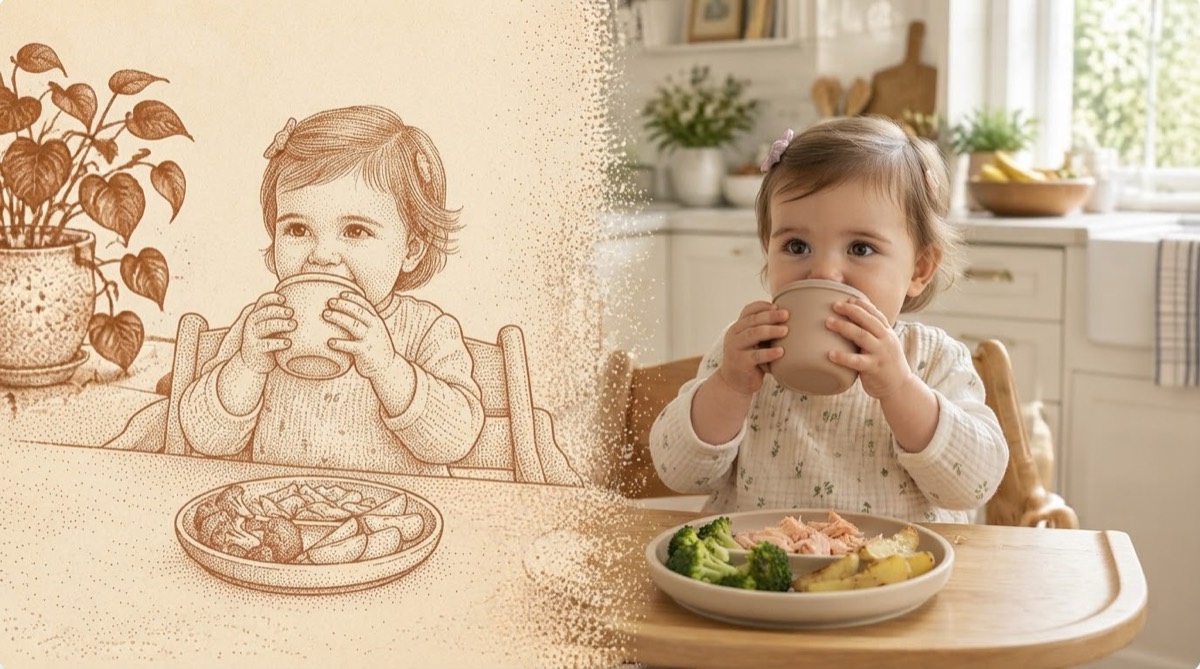
A typical 12- to 14-month-old eats 3 meals and 2 snacks a day, spaced about 2.5 to 3 hours apart. Formula can switch to whole cow’s milk, about 16 to 24 oz (470 to 710 mL) a day, served in an open or straw cup; more than 24 oz can crowd out food and lower iron. Breastfeeding can continue as long as you both like. The AAP suggests moving off bottles between 12 and 18 months. Most 12-month-olds still take 2 naps, moving to 1 nap between 12 and 18 months.
- 3 meals and 2 snacks, about 2.5–3 hours apart
- Whole cow’s milk 16–24 oz a day, in a cup
- Move off bottles between 12 and 18 months
Golden Rule • Milk With Meals, Not Instead of Them
Serve milk in a cup with meals or snacks rather than as separate big bottles. It keeps milk to 16–24 oz and leaves room for iron-rich food.
A sample day
A sample day for a 12-month-old: three meals, two snacks, milk in a cup with meals.
- 7:00AM
Meal 1
Breakfast + Milk
Wake and go straight to breakfast: oatmeal with smashed or halved blueberries, plus 4–6 oz whole milk in a cup. Breastfeed on waking if you are nursing.
 Oatmeal
 Blueberry
No more early bottle
- 9:30AM
Snack 1
Morning Snack
Soft pear slices and thin strips or shreds of cheese.
Water in a cup
- 10:00to 11:00 AM
Nap 1 · 1 hr
Morning Nap
Some toddlers drop this nap between 12 and 18 months.
Wake window: ~3 hours.
- 12:00PM
- 2:30to 4:00 PM
Nap 2 · 1.5 hrs
Afternoon Nap
On 1 nap, this becomes a single 2–3 hour midday nap.
Wake window: ~3.5 hours.
- 4:00PM
Snack 2
Afternoon Snack
Full-fat yogurt with mashed raspberries, or hummus with soft veggie sticks.
Seated at the table
- 5:45PM
- 6:45PM
Optional milk
Bedtime Routine
Bath, teeth, story. A breastfeed or small cup of milk if your toddler still wants one, then brush teeth.
No bottle in the crib
- 7:15PM
Night sleep
11–12 Hour Night Sleep
Toddlers don’t need night feeds for nutrition at this age.
Total daily sleep: 11–14 hours.
 Beef
 Avocado
 Salmon
 Broccoli
How much should a 12-month-old eat?
Toddler appetite is famously up and down. Look at the whole week.
| Food | Typical amount | Notes |
|---|---|---|
| Whole cow’s milk | 16–24 oz (470–710 mL) a day | In an open or straw cup; no more than 24 oz |
| Breast milk | As often as you both like | Plus food; no need for cow’s milk on top if nursing often |
| Meals | 3 a day, about ¼–1 cup each | Offer 2–3 foods, including one iron-rich food |
| Snacks | 2 a day | Fruit, dairy, whole grains, veggies |
| Water | Freely with meals and snacks | The main drink besides milk |
| Juice | None needed | If any, max 4 oz 100% juice a day |
Toddler formulas and growing-up milks aren’t needed for most children. Plant milks (except fortified soy) are not a direct swap for cow’s milk. Ask your pediatrician if your child can’t have dairy.
What a 1-Year-Old Can Eat
Most family foods are fine now, cut into small bite-sized pieces. Honey is OK from 12 months. Keep avoiding choking hazards like whole nuts, whole grapes and popcorn until age 4.
“Toddlers eat like the weather: a feast one day, a few bites the next. Keep serving balanced meals and trust the week to even out.”
Division of responsibility
You choose what, when and where. Your toddler chooses whether and how much.
Bottles out, gently
Drop one bottle at a time, starting with the midday one. Offer milk in a cup with meals instead.
Cups and spoons
Open cup, straw cup and toddler spoon at every meal build independence.
How to switch from formula to whole milk
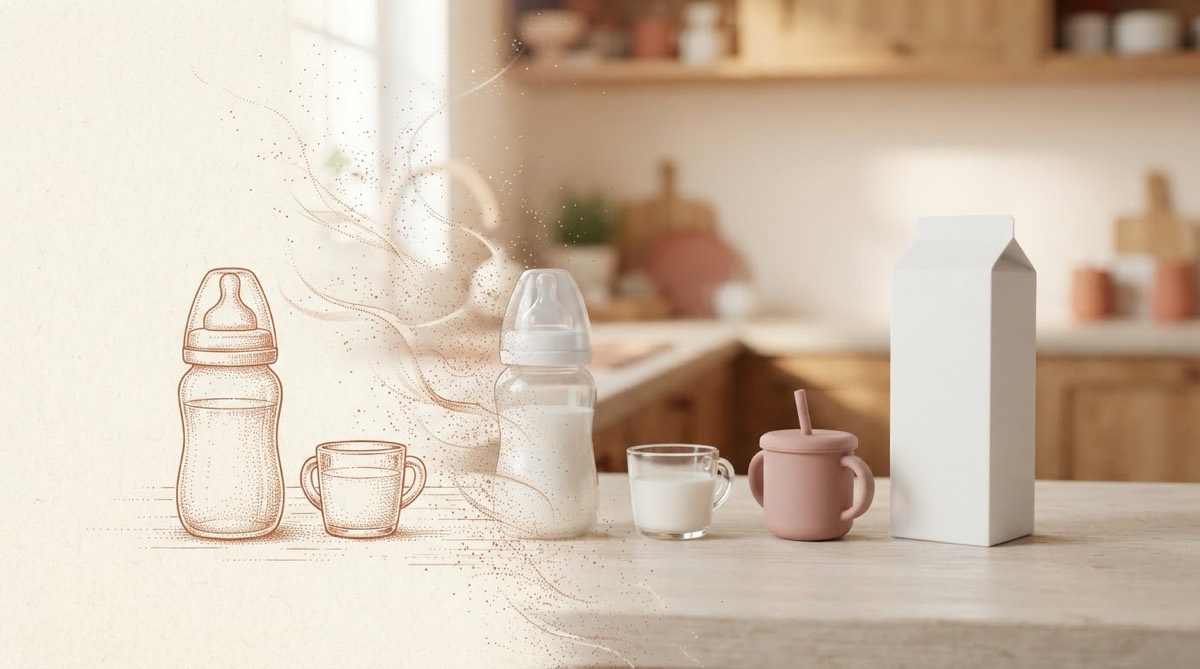
Most babies can switch straight from formula to whole cow’s milk at 12 months. If yours is hesitant, a short mix helps.
| Days | In the cup |
|---|---|
| 1–3 | ¾ formula, ¼ whole milk |
| 4–6 | ½ formula, ½ whole milk |
| 7–9 | ¼ formula, ¾ whole milk |
| 10+ | Whole milk only |
Serve milk cold or warm, whichever your toddler prefers, in an open or straw cup with meals. Breastfeeding can carry on alongside.
Common mistakes to avoid
- More than 24 oz of milk a day, which can lead to iron deficiency
- Keeping milk in bottles past 18 months
- A bottle in the crib at bedtime
- Switching to low-fat milk before age 2 without medical advice
- Worrying when appetite drops. It is normal after the first birthday
When to call your pediatrician
Call your pediatrician if your toddler:
- Isn’t gaining weight or is losing weight
- Drinks more than 24 oz of milk a day and eats very little
- Seems pale, very tired or irritable (possible iron deficiency)
- Accepts very few foods or gags on most textures
- Has signs of an allergic reaction after cow’s milk
12–14 month feeding schedule: questions parents ask
How much should a 12-month-old eat?
Most 12-month-olds eat 3 meals and 2 snacks a day, roughly a quarter to one cup of food per meal, plus about 16 to 24 oz (470 to 710 mL) of whole milk or continued breastfeeding. Appetite varies a lot from day to day.
What changes at 13 and 14 months?
The routine stays the same: 3 meals and 2 snacks, about 2.5 to 3 hours apart, with 16 to 24 oz (470 to 710 mL) of whole milk a day in a cup. Many toddlers still take 2 naps; some start moving to 1 nap closer to 15 months. Keep working on moving from bottles to cups, and expect appetite to vary more from day to day.
How much whole milk should a 1-year-old drink?
About 16 to 24 oz (470 to 710 mL), or 2 to 3 cups, of whole cow’s milk a day. More than 24 oz can fill a toddler up, crowd out iron-rich foods and raise the risk of iron deficiency.
How do I switch from formula to cow’s milk?
At 12 months, you can switch straight to whole cow’s milk, or mix formula and milk for a week or two if your baby is hesitant. Serve it in an open or straw cup with meals.
When should my baby stop using a bottle?
The AAP suggests moving from bottles to cups between 12 and 18 months. Drop one bottle at a time, starting with the midday bottle, and keep the bedtime bottle for last.
Does my 1-year-old still need formula?
Most healthy toddlers don’t. Whole cow’s milk and a varied diet cover their needs. Toddler formulas are not necessary unless your pediatrician recommends one.
Can I keep breastfeeding after 12 months?
Yes. The AAP and WHO support breastfeeding to age 2 and beyond, alongside family foods. Nursing toddlers don’t need cow’s milk on top if they nurse several times a day, but do talk to your pediatrician about vitamin D and iron.
Can a 12-month-old have honey?
Yes. Honey is safe from 12 months. Keep added sugars, including honey, low until age 2.
How many naps does a 12-month-old need?
Most 12-month-olds still take 2 naps. The switch to 1 nap usually happens between 12 and 18 months.
My 1-year-old eats less than before. Is that normal?
Yes. Growth slows after the first year, so appetite often drops. Keep offering balanced meals and snacks on a routine and let your toddler decide how much to eat.
Keep reading
 15–18-month-old feeding schedule
 10–11-month-old feeding schedule
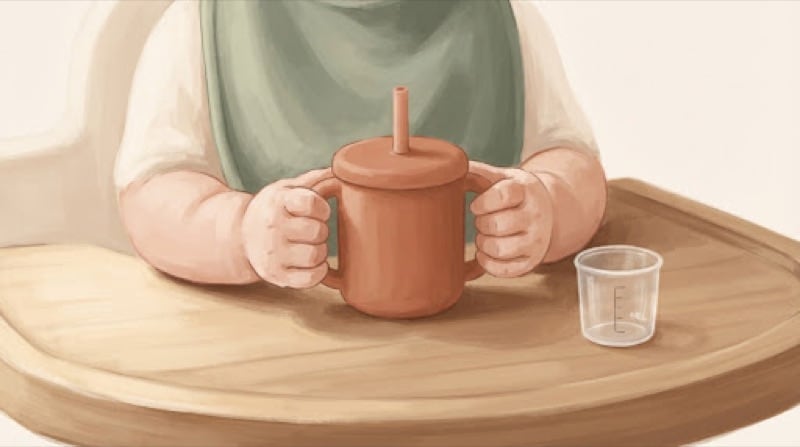 Open cup and straw drinking
Recipe collectionsLunch ideas for a 1 year oldToddler breakfast ideasToddler snacks
- AAP (HealthyChildren.org): Starting solid foods
- AAP (HealthyChildren.org): Discontinuing the bottle
- CDC: Foods and drinks to avoid or limit
- CDC: Iron for infants and toddlers
- WHO: Complementary feeding
This guide is written for healthy, full-term babies and doesn’t replace your pediatrician. If your baby was born early, has a medical condition, feeding or swallowing difficulties, or a known allergy, check with them first (medical disclaimer). Reviewed by our dietitians.