
Starting solids shopping list
Everything to get ready before the first bite, and what you can skip. Most of it you already own.
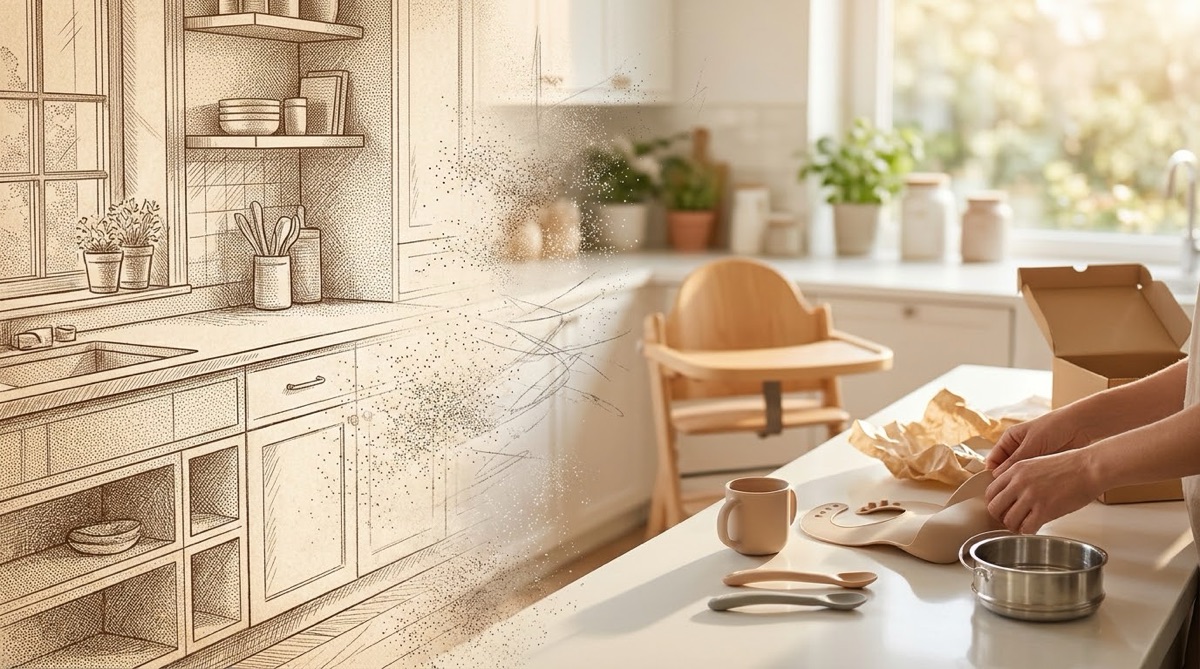
Quick answer
To start solids at around 6 months you only need a few things: a high chair with a footrest that keeps baby upright, 2 or 3 baby spoons, a small open cup, a couple of bibs, and a way to steam and mash food. Stock a few soft first foods, at least one iron-rich food, and the first Top 9 allergens you plan to introduce.
- Must-haves: high chair with footrest and harness, spoons, open cup, bibs, steamer basket or pot, fork or masher
- Nice to have: glass grater, suction bowl, straw cup, splat mat, blender, freezer trays
- Skip: baby food makers, juice, salty or sweet baby snacks, honey before 12 months
- Before day one: learn infant choking first aid and CPR
The complete starting solids checklist
Screenshot this list or print it before your shopping trip. Tap any photo to see it larger and swipe through the list.
Product photos are illustrative and AI-generated; any brand that meets the safety notes above works.
| Item | How many | Need it? |
|---|---|---|
| High chair with footrest and harness | 1 | Must-have |
| Baby spoons (short handle, soft tip) | 2–3 | Must-have |
| Small open cup | 1 | Must-have |
| Bibs (silicone or long-sleeved) | 2–3 | Must-have |
| Steamer basket or small pot | 1 | Must-have |
| Fork or potato masher | 1 | Must-have |
| Washcloths | 4–6 | Must-have |
| Iron-rich food and the first allergens | A little of each | Must-have |
| Glass grater | 1 | Nice to have |
| Suction bowl or plate | 1–2 | Nice to have |
| Straw cup | 1 | Nice to have |
| Splat mat | 1 | Nice to have |
| Blender or stick blender | 1 | Nice to have |
| Freezer trays with lids and labels | 2 | Nice to have |
| Crinkle cutter | 1 | Nice to have |
| Food thermometer | 1 | Nice to have |

STEP 1
A high chair that keeps baby upright
The high chair is the one item worth spending time on. Baby should sit upright at about a 90° angle, close to the tray or table, with hips, knees and ankles bent at right angles. Sitting upright makes chewing and swallowing easier and lowers choking risk.
- Adjustable footrest. Feet flat on a footrest help baby sit stable and focus on eating, the way your feet rest on the floor.
- A harness (3- or 5-point) and a crotch post, so baby can’t slide down or climb out.
- Easy to clean, with few seams and a tray that comes off, or a chair that pulls up to the family table.
- A wide, stable base, and a safety certification sticker (in the US, look for a chair that meets ASTM F404 or is JPMA certified).
Hook-on chairs that clip to the table are fine if your table is sturdy and the chair has a footrest. Buying second-hand? Look the model up on cpsc.gov/recalls and check that the harness, tray lock and footrest still work. Not sure baby is ready to sit up yet? Take the readiness quiz.
STEP 2
Spoons, plates and bibs
Babies learn by holding things themselves, so pick gear made for small hands.
- 2 or 3 baby spoons with a short, thick handle and a shallow, soft tip. You can “preload” the spoon with puree or mash and hand it to baby, so they practice feeding themselves from the first meals.
- A suction bowl or plate (nice to have). A clean high chair tray works just as well as a plate in the first weeks.
- 2 or 3 bibs. Silicone bibs with a pocket wipe clean in seconds; a long-sleeved smock bib saves outfits on messy days.
- Soft washcloths for hands and faces, and a splat mat or old shower curtain under the chair if you want an easy floor.
You don’t need divided plates, utensil sets with many pieces, or forks yet. A spoon comes first; a short, blunt-tipped toddler fork usually comes later, in the toddler months.

STEP 3
Cups for the first sips
Babies can start small sips of water from about 6 months, with meals. Offering a cup early helps baby learn to drink, so they’re ready to move off bottles around 12 months.
- A small open cup (about 1 to 2 oz). It looks messy at first, but it’s the best way to learn to sip.
- A straw cup (nice to have), ideally with a weighted straw, so baby can drink at any angle.
From 6–12 months, babies need only about 4 to 8 oz (120 to 240 ml) of water a day in total. Breast milk or formula stays the main drink. Read when can babies have water and open cup and straw drinking.

STEP 4
Kitchen tools you probably already have
Baby food is family food made soft and safe. A regular kitchen covers almost everything.
- A steamer basket or small pot to cook vegetables and fruit until they squish between your fingers.
- A fork or potato masher for mashes. A blender or stick blender is optional, useful if you want smooth purees.
- A grater for hard foods like raw apple, pear and carrot, which are too hard to serve in pieces. A glass fruit grater makes a fine, soft texture that is safe from 6 months.
- A sharp knife and a separate cutting board for raw meat, to cut foods into safe shapes for each age.
- A food thermometer (nice to have), to check meat and fish are cooked through (165°F / 74°C for chicken, 160°F / 71°C for ground meat).
- Ice cube trays with lids or small freezer containers, and labels with the date, for batch cooking.
A crinkle cutter is a nice extra once baby moves on to soft pieces at 7–8 months: ridged edges give slippery foods like avocado more grip. See how to cut food by age.

STEP 5
First foods to stock
Babies eat very small amounts at first, often just a few teaspoons. Buy a little of several foods rather than a lot of one.
| Shelf | What to buy | Why |
|---|---|---|
| Iron-rich | Iron-fortified infant cereal, beef or lamb, lentils, beans, tofu | Iron stores from birth run low around 6 months |
| Soft produce | Avocado, banana, sweet potato, broccoli, pear | Easy to cook soft and mash; soft pieces from 7–8 months |
| Top 9 allergens | Smooth peanut butter or peanut powder, eggs, plain full-fat yogurt, wheat pasta, tofu (soy), tahini (sesame), salmon, a smooth tree nut butter, shrimp | Introduce early and keep them in the diet |
| Healthy fats | Olive oil, unsalted butter, full-fat dairy | Babies need fat for energy and brain growth |
| Grains | Oats, rice, toast or soft bread | Easy bases to mix other foods into |
Ideas for the first week are in the best first foods for baby, and the allergen order is in the Top 9 allergen plan.
STEP 6
Safety prep before day one
The most important thing to prepare isn’t something you buy.
- Learn infant choking first aid and CPR. A short in-person or online course takes about an hour. Read choking first aid and infant CPR.
- Know gagging from choking. Gagging is loud and normal; choking is silent. See gagging vs choking.
- Save your pediatrician’s number and your local emergency number (911 in the US) in your phone.
- Ask your pediatrician whether to start allergens at home, and what to keep at home in case of a mild reaction.
- Know which foods to avoid, like whole grapes, nuts and popcorn. See foods to avoid.
Talk to your pediatrician first if baby:
- Has severe eczema, a known food allergy, or has reacted to a food before. They may suggest a plan for peanut and egg.
- Was born preterm, has trouble sitting up with support, or isn’t showing signs of readiness by about 7 months.
- Has reflux, trouble swallowing milk, or weight gain your pediatrician has been watching.
- Coughs, chokes or struggles with breathing while feeding.
What you can skip
Baby aisles are full of things you don’t need. Save your money on these:
- Baby food makers. A pot, a steamer basket and a fork or blender do the same job.
- Pouches as an everyday food. They are handy on the go, but babies learn to chew and handle food by eating from a spoon or their hands.
- Juice and “toddler milk”. Babies need breast milk or formula and a little water. Juice is not recommended before 12 months.
- Salty or sweet baby snacks and teething biscuits. Real food is better, and many snacks add sugar or salt.
- Mesh or silicone feeders. Optional at most. Lumpier mashes, and soft pieces from 7–8 months, teach more about texture and chewing.
- Lots of stage-based jars. Jarred food is fine for busy days, but family food made soft gives more variety.
Common mistakes
- Buying a high chair without a footrest, or one that reclines.
- Feeding in a bouncer, car seat or stroller “just this once”.
- Stocking up on lots of one food before you know what baby likes.
- Buying flavored yogurt, salted crackers or sweetened cereals instead of plain versions.
- Leaving allergens off the list. Peanut and egg early in the plan are linked to lower allergy risk.
- Skipping the first aid course because baby “only eats purees”. Babies can choke on any food.
Starting solids shopping list: questions parents ask
How long does homemade baby food keep?
Keep homemade baby food in the fridge for 1 to 2 days, or freeze it in small portions for up to 3 months. Label each container with the date, thaw it in the fridge, and throw away any leftovers that baby’s spoon has touched, because saliva lets bacteria grow.
What do I need to start solids?
You need a high chair with a footrest and harness, 2 or 3 baby spoons, a small open cup, a few bibs and washcloths, and a way to cook food soft, like a steamer basket or pot. Add a few soft first foods, an iron-rich food and the first Top 9 allergens you plan to introduce.
Do I need a baby food maker?
No. A steamer basket or pot and a fork, masher or regular blender do the same job. Start with smooth purees and mashes at 6 months, then lumpier mashes and soft pieces that squash between your fingers from 7–8 months, which need no special tools at all.
What should I look for in a high chair?
Look for a chair that keeps baby upright at about 90°, has an adjustable footrest, a 3- or 5-point harness, a stable base and parts that are easy to clean. In the US, check that it meets the ASTM F404 safety standard or is JPMA certified.
Does my baby really need a footrest?
A footrest is strongly recommended. With feet supported, baby sits more stable and can focus on chewing and swallowing. If your chair has no footrest, some can be added with an aftermarket footrest kit.
Which spoons are best for babies?
Pick spoons with a short, thick handle and a shallow, soft tip that baby can hold. Preloading the spoon and handing it to baby lets them practice feeding themselves from the first meals.
When should I buy a cup for my baby?
Have a small open cup ready when you start solids, at about 6 months. Babies can take small sips of water with meals, up to about 4 to 8 oz a day in total before age 1. A straw cup is a nice extra.
Which allergen foods should I buy first?
Many families start with smooth peanut butter or peanut powder and eggs, because the evidence for early introduction is strongest for those two. Over the following weeks, add plain yogurt, wheat, soy, sesame, fish, tree nuts and shellfish. Talk to your pediatrician first if baby has severe eczema or a known food allergy.
How much food should I buy for the first week?
Very little. Babies often eat just a few teaspoons per meal at first. Buy small amounts of 4 to 6 different foods, and cook extra from family meals instead of buying special baby food.
Are pouches okay for babies?
Pouches are fine now and then, for example when traveling, but they shouldn’t be an everyday food. Eating from a spoon or with their hands helps babies learn to chew and handle different textures. If you use a pouch, squeeze it onto a spoon.
What should I not buy for a baby starting solids?
Skip juice, toddler milk, honey (not safe before 12 months), salty or sweet baby snacks, whole nuts and hard round foods. A dedicated baby food maker and lots of single-purpose gadgets are also unnecessary.
Keep reading
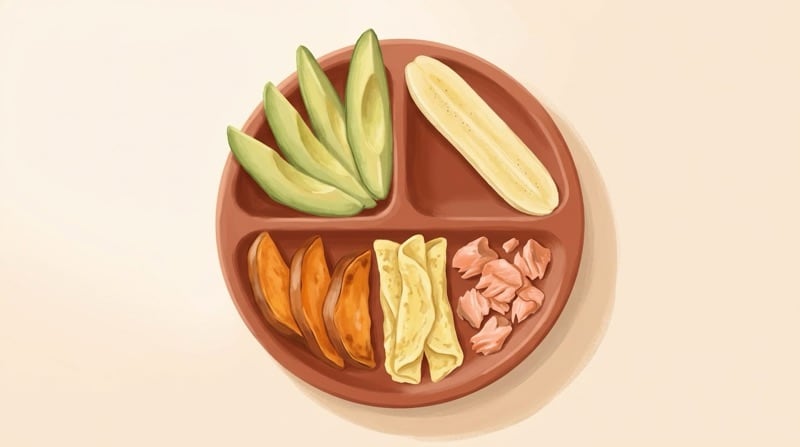 The best first foods for baby
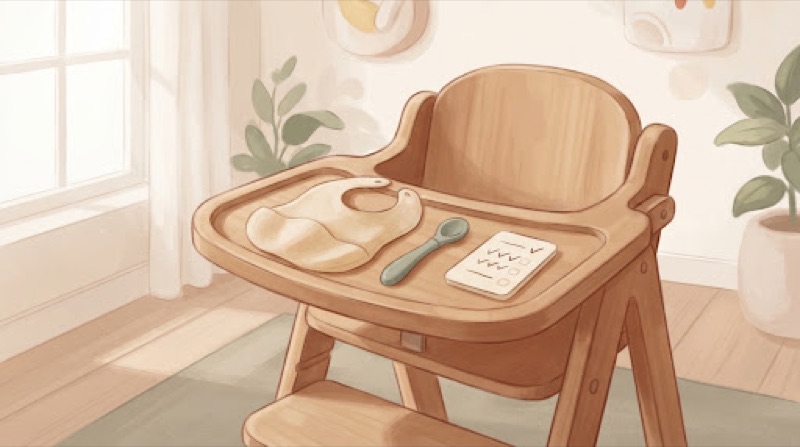 Is baby ready? Take the quiz
 Starting solids: the complete guide
Recipe collectionsBaby purée recipes
Based on AAP (HealthyChildren.org), CDC and NIAID guidance. This guide is written for healthy, full-term babies and doesn’t replace your pediatrician. If your baby was born early, has a medical condition, feeding or swallowing difficulties, or a known allergy, check with them first (medical disclaimer).
- AAP (HealthyChildren.org) — Starting solid foods
- CDC — When, what and how to introduce solid foods
- CDC — Choking hazards for babies and toddlers
- Togias A. et al. Addendum guidelines for the prevention of peanut allergy in the United States (NIAID expert panel). J Allergy Clin Immunol, 2017
- U.S. CPSC — High chair safety standard
- USDA FSIS — Safe minimum internal temperatures
- FoodSafety.gov — Food safety for children under five
- NHS — Your baby’s first solid foods
This guide is written for healthy, full-term babies and doesn’t replace your pediatrician. If your baby was born early, has a medical condition, feeding or swallowing difficulties, or a known allergy, check with them first (medical disclaimer). Reviewed by our dietitians.