
Gagging vs choking: how to tell the difference
Gagging is loud and normal. Choking is silent and an emergency. Here is how to tell them apart in seconds.
Quick answer
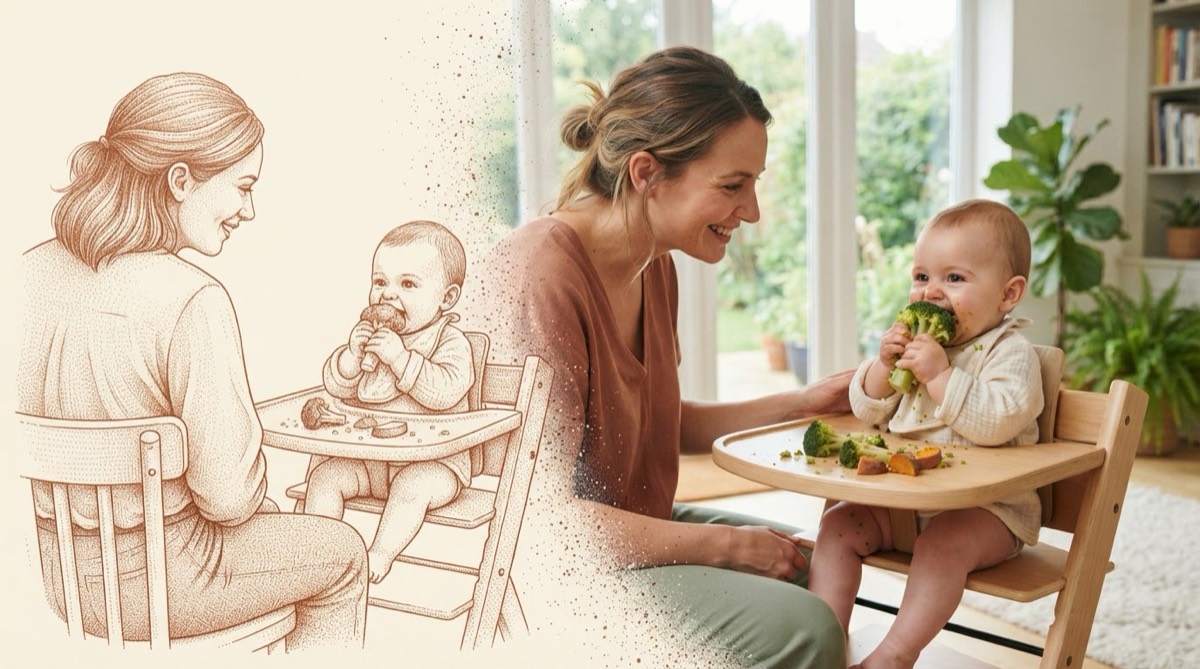
Gagging is noisy: baby coughs, sputters, retches, pushes the tongue out and may go red, but is still breathing and moving air. Stay calm and let them work it out. Choking is quiet: baby can’t cry, cough or breathe, may make a high-pitched sound or none at all, and may turn blue or gray. Choking is an emergency: call 911 (or your local number) and start 5 back blows and 5 chest thrusts.
- Gagging is loud: coughing, sputtering, red face. Let baby work it out
- Choking is silent: no cry or cough, blue or gray lips. Call 911
- For babies under 1: 5 back blows, 5 chest thrusts, repeat

STEP 1
What is the difference between gagging and choking?
Gagging: let baby work it out
Choking: act now
A quick rule many parents remember: loud and red, let them go ahead. Silent and blue, they need you.

STEP 2
Why do babies gag so much when starting solids?
A baby’s gag reflex is triggered much further forward on the tongue than an adult’s. It is a built-in safety system that pushes food forward before it gets near the airway. As baby practices with new textures over the first months of solids, the reflex becomes less sensitive and gagging usually becomes less frequent.
- Gagging is most common in the first weeks of solids and whenever a new texture appears
- It happens with purees, lumps and finger foods alike
- Some gagging leads to vomiting. That is still gagging, not choking

STEP 3
What does gagging look like in real life?
A typical gag looks dramatic. Baby’s eyes water, the tongue pushes forward, the face goes red and there is a loud retching or coughing sound. Food often comes forward onto the lips or tray, and some babies vomit a little. Then, within a few seconds, baby recovers and often goes straight back to eating.
Gagging tends to happen when a piece of food is too big to swallow yet, when a new texture arrives, or when baby pushes food too far back with their fingers. It is common with purees, lumps and finger foods.
Signs baby is breathing through it
- Coughing or crying out loud
- Taking breaths between gags
- Face red rather than blue or gray
- Moving, alert and looking at you
Silent struggling is the difference. If you can’t hear baby coughing, crying or breathing, treat it as choking.
STEP 4
What should I do when my baby gags?
- 1Stay calm and keep your face relaxed. Babies read our reactions.
- 2Keep baby sitting upright, leaning slightly forward.
- 3Don’t put your fingers in their mouth. A blind finger sweep can push food further back.
- 4Don’t pat their back or give water during the gag. Let the reflex do its work.
- 5When it passes, offer a smile and let baby decide whether to keep eating.

STEP 5
What to do if a baby is choking
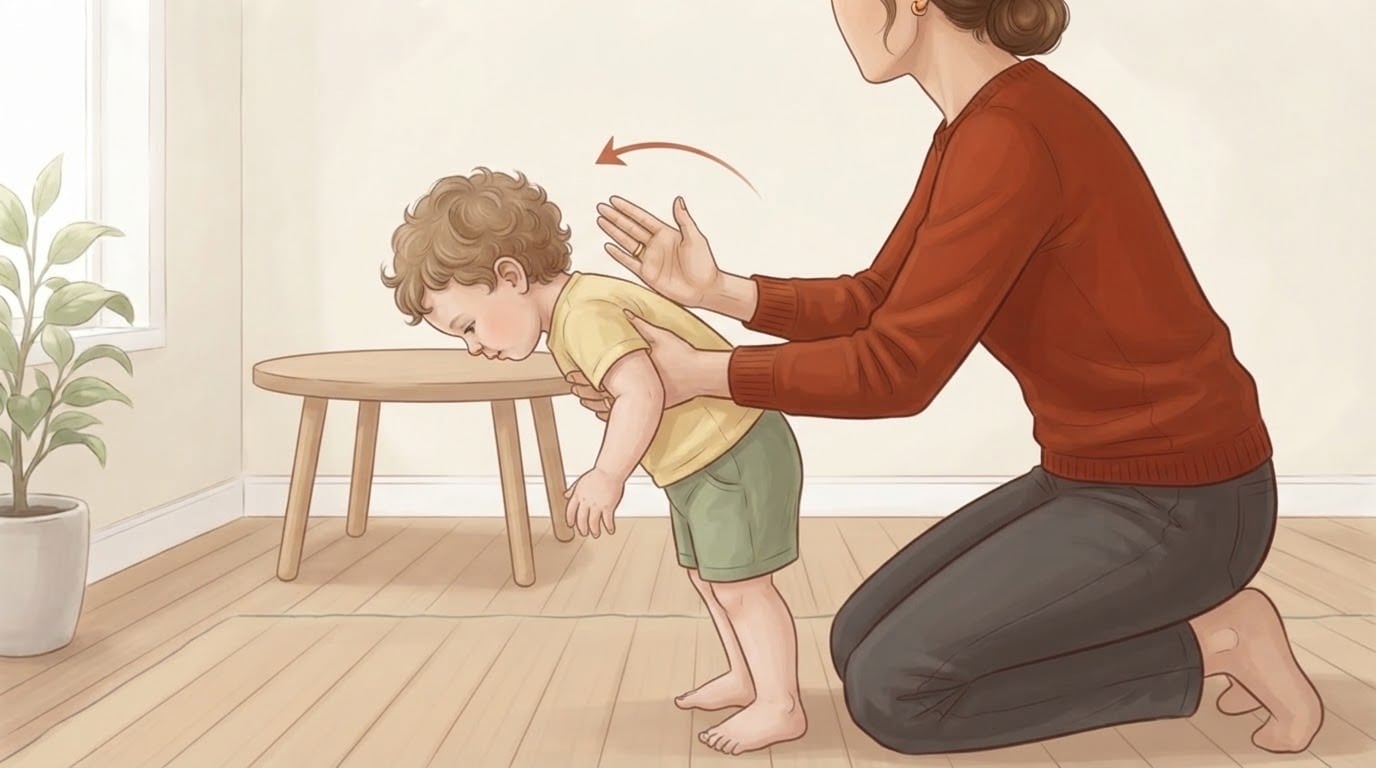
- 15 back blows. Lay baby face down along your forearm, head lower than the chest, supporting the jaw. Give 5 firm blows between the shoulder blades with the heel of your hand.
- 25 chest thrusts. Turn baby face up on your other arm, head lower than the chest. Give 5 quick pushes in the center of the chest, just below the nipple line, with the heel of one hand.
- 3Repeat back blows and chest thrusts until the object comes out or baby starts to cough, cry or breathe.
- 4If baby stops responding, start infant CPR and keep going until help arrives.
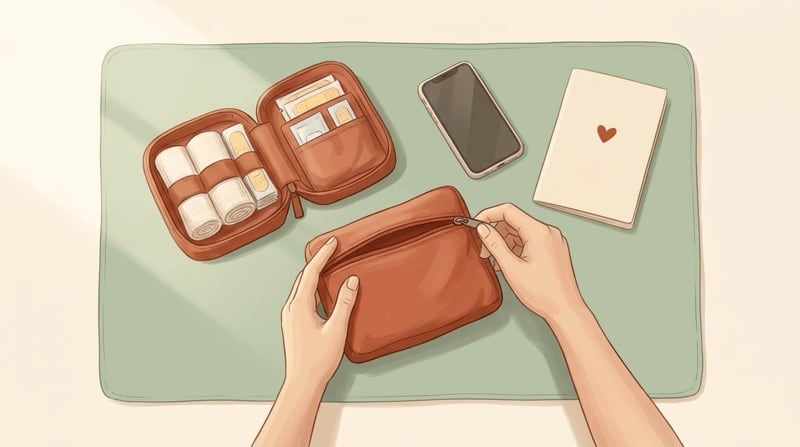
These steps are for babies under 12 months. Never do abdominal thrusts (the Heimlich maneuver) on a baby. Full steps for every age are in our choking first aid guide, and CPR in our infant first aid guide, and a hands-on class is the best preparation.

STEP 6
When should I call 911 or see a doctor?
Call your pediatrician the same day if, after any choking scare, baby keeps coughing, wheezes, breathes noisily or fast, drools and can’t swallow, or seems unusually sleepy. A small piece of food can slip into the lungs and cause trouble later.

STEP 7
How to lower choking risk at every meal

- Seat baby upright and strapped in, never reclined, and stay within arm’s reach
- No eating in the car seat, stroller, or while crawling or walking
- Serve food soft enough to squash between your fingers
- Quarter grapes and cherry tomatoes lengthwise; flatten blueberries
- Skip whole nuts, popcorn, hard raw vegetables, hard candy and hot dog rounds
- Spread nut butter thinly; never serve a spoonful or glob of it
- Let baby feed themselves. Don’t put food into their mouth for them

AVOID THESE
Common mistakes to avoid
- Reaching into baby’s mouth with a finger sweep during a gag
- Pulling baby out of the high chair or patting their back while they gag
- Gasping or shouting, which can make baby inhale sharply
- Letting baby eat while reclined, in a car seat or while crawling
- Offering whole grapes, whole nuts, popcorn or spoonfuls of nut butter
- Never learning infant first aid. A short hands-on class makes a big difference
Gagging vs choking: questions parents ask
How can I tell if my baby is gagging or choking?
Listen. A gagging baby is noisy: coughing, sputtering or retching, and still breathing. A choking baby is usually silent or makes a weak, high-pitched sound, can’t cry or cough effectively, and may turn blue. If baby can’t breathe or cry, treat it as choking and call 911.
Is it normal for a baby to gag on purees?
Yes. Babies can gag on smooth purees, especially in the first days of solids or when the puree is thicker than usual. It usually settles with practice over a few weeks.
Should I pat my baby’s back when they gag?
No. Patting or lifting baby during a gag can make them inhale sharply and draw the food backward. Keep them upright, stay calm and let the gag reflex push the food forward. Back blows are only for real choking.
Does baby-led weaning cause more choking?
Studies comparing baby-led weaning and spoon-feeding have not found a higher choking rate when parents serve safe, soft, age-appropriate foods and avoid high-risk foods. Babies on finger foods may gag more often early on, which is normal.
At what age does gagging stop?
Gagging usually becomes much less frequent after the first few months of solids as the gag reflex moves further back and baby gets better at moving food. Most babies gag less by around 9–12 months, but an occasional gag on a new texture is normal at any age.
Should I put my finger in my baby’s mouth to get food out?
No. A blind finger sweep can push food deeper into the throat. Only remove an object if you can clearly see it and easily pick it out.
My baby vomited after gagging. Is that okay?
Yes. Vomiting after a gag is common and usually harmless. Clean baby up, offer a sip of water if they want it and let them decide whether to keep eating. Call your pediatrician if baby vomits at most meals or vomits repeatedly hours after eating.
What should I do after my baby choked but is fine now?
If you had to do back blows or chest thrusts, call 911 or get baby checked by a doctor even if they seem fine. Also call your pediatrician if baby has a lingering cough, wheezing, fast or noisy breathing, or drooling after any choking scare.
Can babies choke on purees?
It is possible but uncommon. Thick, sticky foods like a spoonful of nut butter carry a higher risk. Thin nut butters into purees or spread them thinly.
Keep reading
 Choking first aid
 Infant first aid basics
 Foods to never feed babies
- AAP (HealthyChildren.org): Choking prevention for children
- CDC: Choking hazards for infants and toddlers
- American Red Cross: Infant choking
- American Heart Association: CPR and first aid
- AAP (HealthyChildren.org): Starting solid foods
This guide is written for healthy, full-term babies and doesn’t replace your pediatrician. If your baby was born early, has a medical condition, feeding or swallowing difficulties, or a known allergy, check with them first (medical disclaimer). Reviewed by our dietitians.