
Baby feeding schedule by month, 6 months to 2 years
How much milk, how many meals and when to eat, from first bites to the family table. Pick your baby’s age to see the day at a glance, then open the full schedule with sample days.
Quick answer
At 6 months, babies have milk on demand plus 1 small solid meal. Meals build to 2–3 a day by 8 months and 3 meals plus snacks by 9–10 months. At 12 months, most eat 3 meals and 2 snacks and switch to 16–24 oz of whole milk in a cup. From age 2, the AAP recommends low-fat or skim milk, about 16 oz a day.
- Breast milk or formula is the main food until 12 months
- An iron-rich food at every meal from 6 months
- Baby decides how much; you decide what and when
HOW OLD IS YOUR BABY?
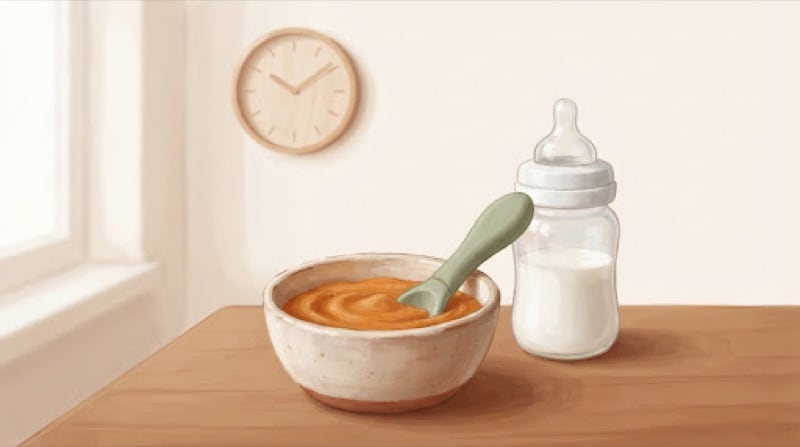
6 MONTHS · FIRST TASTES
One small meal a day, built around milk
- water_dropMilk
- On demand (often 6–8 feeds) or 24–32 oz formula
- restaurantSolids
- 1 meal, a few spoonfuls or munches
- bedtimeNaps
- 3 naps, 2–2.5 h wake windows
- starFocus
- Iron-rich foods and the top allergens early
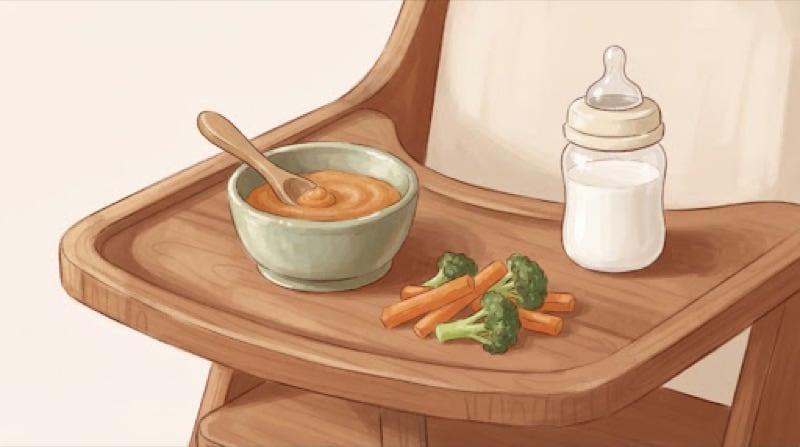
7 MONTHS · BUILDING ROUTINE
One to two meals, milk still first
- water_dropMilk
- 4–6 feeds or 24–32 oz formula
- restaurantSolids
- 1–2 meals, a few licks up to about ¼ cup
- bedtimeNaps
- 2 or 3 naps
- starFocus
- An iron-rich food at every meal, allergens in rotation
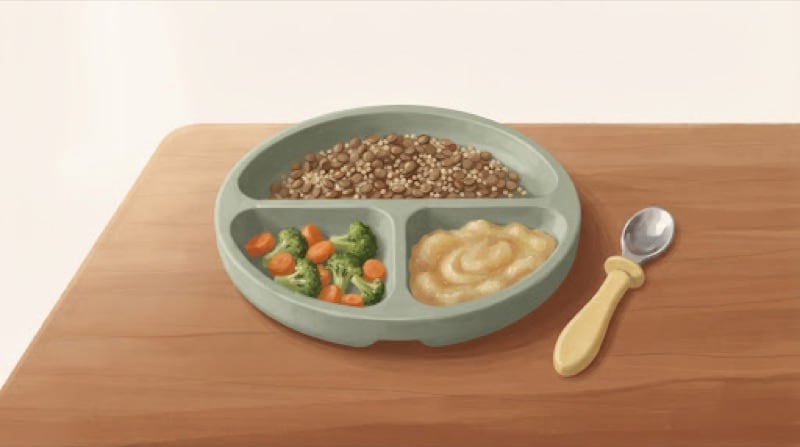
8 MONTHS · MORE MEALS
Two to three meals, with real portions
- water_dropMilk
- 3–5 feeds or 24–32 oz formula
- restaurantSolids
- 2–3 meals, about ¼–½ cup each
- bedtimeNaps
- 2 naps, 2.5–3.5 h wake windows
- starFocus
- 2–3 foods per meal, appetite decides
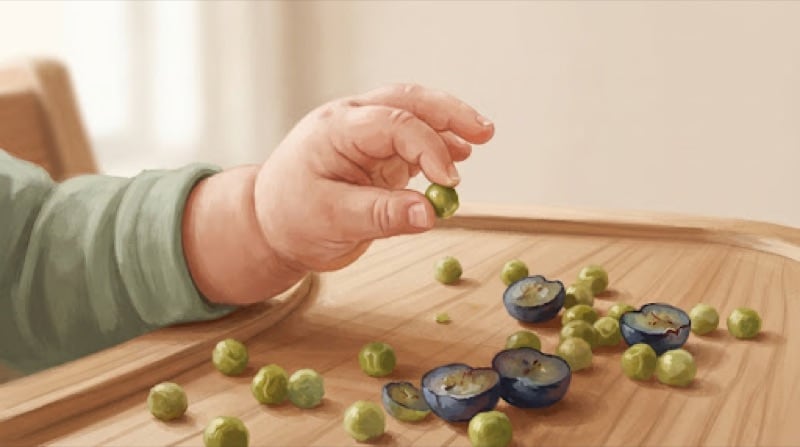
9 MONTHS · PINCER GRASP
Three meals, and maybe a snack
- water_dropMilk
- 3–4 feeds or about 24–30 oz formula
- restaurantSolids
- 3 meals + an optional small snack
- bedtimeNaps
- 2 naps, 3–3.5 h wake windows
- starFocus
- Small, soft pieces for the new pincer grasp
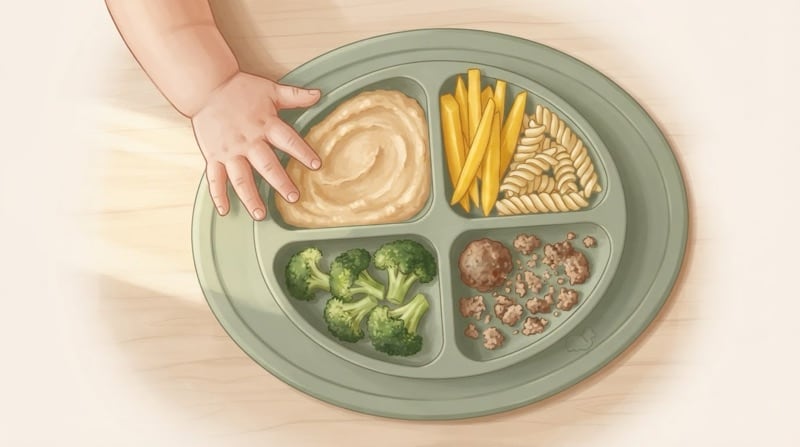
10–11 MONTHS · FAMILY FOOD
Three meals and one to two snacks
- water_dropMilk
- 3–4 feeds or about 20–28 oz formula
- restaurantSolids
- 3 meals + 1–2 small snacks
- bedtimeNaps
- 2 naps, 3–4 h wake windows
- starFocus
- Mostly chopped, soft family food; don’t cut milk on purpose yet
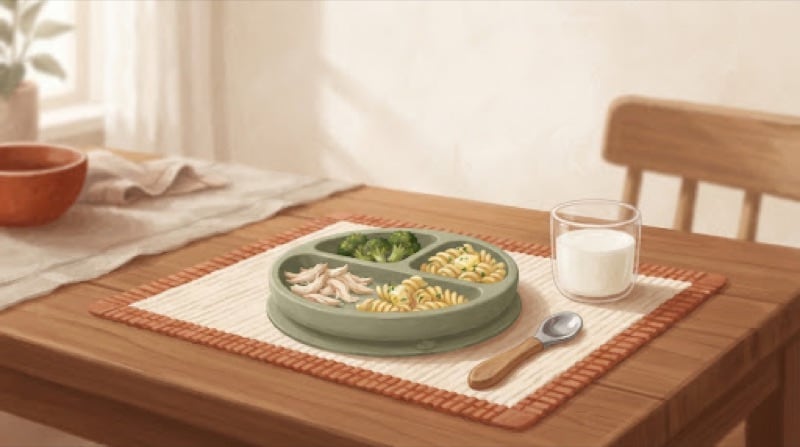
12–14 MONTHS · TODDLER TABLE
Family meals, whole milk in a cup
- water_dropMilk
- Whole cow’s milk 16–24 oz a day, in a cup (breastfeeding can continue)
- restaurantSolids
- 3 meals + 2 snacks, 2.5–3 h apart
- bedtimeNaps
- 2 naps, moving to 1 between 12 and 18 months
- starFocus
- Move off bottles between 12 and 18 months
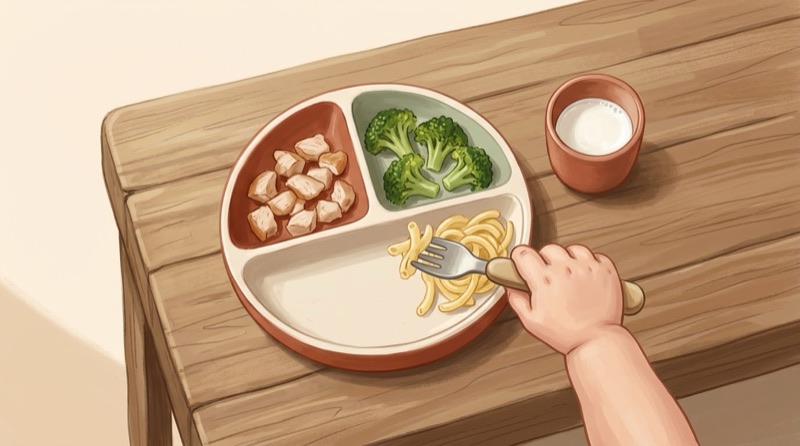
15–18 MONTHS · ONE NAP
Three meals, two snacks, no more bottles
- water_dropMilk
- Whole milk 16–24 oz a day, from a cup (breastfeeding can continue)
- restaurantMeals
- 3 meals + 2 snacks, 2–3 h apart, about ¼ of an adult portion
- bedtimeNaps
- 1 nap of about 2–3 hours
- starFocus
- Finish bottle weaning by 18 months; picky eating is normal
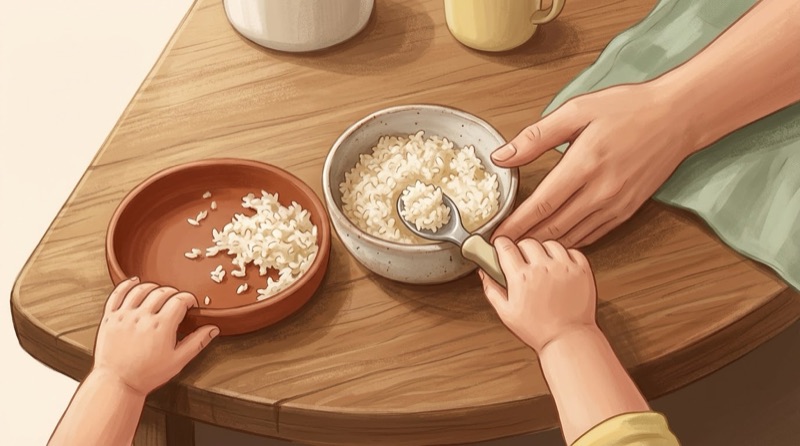
19–24 MONTHS · FAMILY TABLE
Family meals, and lower-fat milk from age 2
- water_dropMilk
- Whole milk 16–24 oz a day until age 2, then low-fat (1%) or skim, about 16 oz; water as the main drink
- restaurantMeals
- 3 meals + 2 snacks, 2.5–3 h apart
- bedtimeNaps
- 1 nap of about 1.5–2.5 hours
- starFocus
- One family meal, no pressure, no short-order cooking
AT A GLANCE
How the day changes from 6 months to 2 years
Typical ranges. Your baby’s appetite and your pediatrician’s advice come first.
| Age | Milk a day | Solid meals | Snacks | Naps |
|---|---|---|---|---|
| 6 months | On demand or 24–32 oz formula | 1 | None | 3 |
| 7 months | 4–6 feeds or 24–32 oz | 1–2 | None | 2–3 |
| 8 months | 3–5 feeds or 24–32 oz | 2–3 | None | 2 |
| 9 months | 3–4 feeds or 24–30 oz | 3 | 0–1 | 2 |
| 10–11 months | 3–4 feeds or 20–28 oz | 3 | 1–2 | 2 |
| 12–14 months | 16–24 oz whole milk, in a cup | 3 | 2 | 2 → 1 |
| 15–18 months | 16–24 oz whole milk, in a cup | 3 | 2 | 1 |
| 19–24 months | 16–24 oz whole milk; about 16 oz low-fat from age 2 | 3 | 2 | 1 |
Build a day around your baby’s wake-up time →
EVERY MONTH
Three rules that don’t change
Milk first in year one, food first after
Before 12 months, breast milk or formula is the main food, so don’t cut it on purpose. After the first birthday, food takes over and milk drops to 16–24 oz a day, in a cup.
Iron at every meal
Meat, fish, egg, beans, lentils and iron-fortified cereal. Keep the top allergens in the rotation once they’re in.
Baby decides how much
You choose what and when. Baby chooses how much, from a few licks to a full bowl. Both are normal.
THE FULL GUIDES
Sample days, amounts and menus for each age
6-month-old feeding schedule
One small meal a day, built around milk feeds.
7-month-old feeding schedule
Two meals, sample menus and how much milk to keep.
8-month-old: how much food?
Portion sizes, three meals and a sample day.
9-month-old feeding schedule
Pincer grasp foods and adding a snack.
10–11-month-old feeding schedule
Three meals, two snacks and less milk.
12–14-month-old feeding schedule
Family meals, whole milk and the switch from bottles.
15–18-month-old feeding schedule
One nap, three meals and goodbye to bottles.
19–24-month-old feeding schedule
Family meals, whole milk until 2 and picky phases.
AVOID THESE
Common feeding schedule mistakes
- Cutting milk feeds on purpose before 12 months to make room for solids
- Waiting weeks to add a second or third meal once baby shows interest
- Skipping iron-rich foods; offer one at every meal from 6 months
- More than 24 oz of milk a day after 12 months, which can lower iron
- Letting toddlers graze or sip milk all day instead of set meals and snacks
- Pressuring, bribing or praising a clean plate
GET HELP
When to call your pediatrician
- Baby isn’t gaining weight, or is losing weight
- Baby refuses most solids by 9–10 months, or gags on almost every texture
- Your toddler drinks much more than 24 oz of milk a day and eats very little
- Your child seems pale, very tired or irritable (possible iron deficiency)
- There are signs of an allergic reaction, like hives, vomiting or swelling after a new food
FAQ
Baby feeding schedules: questions parents ask
When should baby eat three meals a day?
Most babies move from 1–2 meals at 7 months to 2–3 meals at 8 months, and 3 meals by about 9 months. Follow baby’s interest, not the calendar alone.
Should I give milk or solids first?
In the early months, offer solids about 30 to 60 minutes after a milk feed, so baby is calm but not too full. As meals grow, milk and meals naturally separate.
How much milk does a baby need with solids?
Most babies drink about 24 to 32 oz of formula, or breastfeed on demand, at 6–8 months. Milk usually drops to about 20 to 28 oz by 10–11 months as food intake grows. Don’t cut milk on purpose before 12 months.
When can baby switch to cow’s milk?
At 12 months, formula can switch to whole cow’s milk, about 16 to 24 oz a day in an open or straw cup. More than 24 oz can crowd out food and lower iron.
What milk should a toddler drink?
From 12 months to 2 years, whole cow’s milk, about 16 to 24 oz a day in a cup. From age 2, the AAP recommends low-fat (1%) or skim milk, about 16 oz a day, with water as the main drink.
When do snacks start?
Some babies are ready for one small snack around 9 months. By 10–11 months, 1–2 small snacks are typical, and by 12 months most toddlers have 2.
When should my baby stop using a bottle?
The AAP suggests moving from bottles to cups between 12 and 18 months. Drop one bottle at a time, starting with the midday bottle and keeping the bedtime one for last.
Does my baby need water with meals?
From 6 months, offer a few sips of water in an open or straw cup with meals, up to about 4 to 8 oz a day before 12 months. After the first birthday, water becomes the main drink between meals.
What if my baby eats less than the schedule says?
These schedules show typical ranges, not targets. Appetite changes with teething, illness and growth spurts, so look at the whole week. Talk to your pediatrician if your baby isn’t gaining weight or refuses most foods.
Keep reading
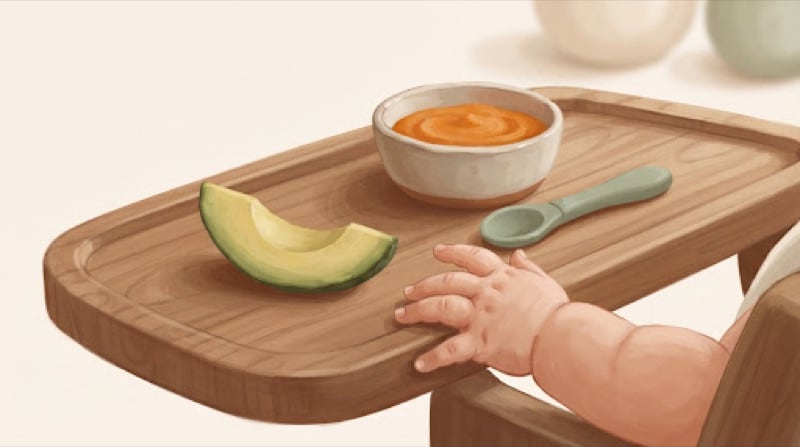 Starting solids: the complete guide
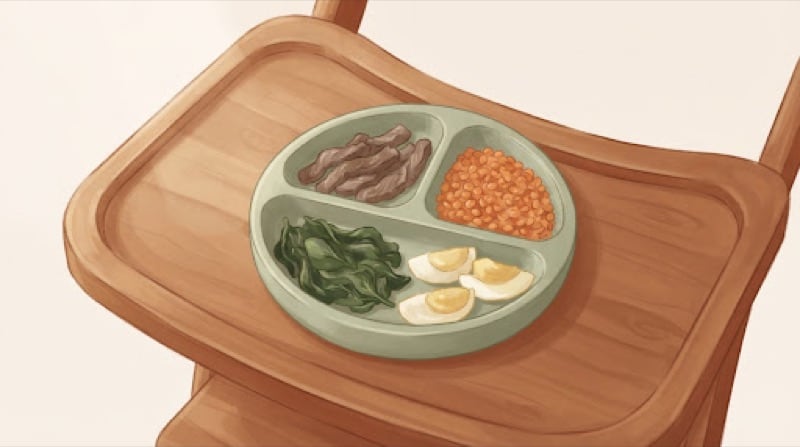 Iron-rich foods for babies
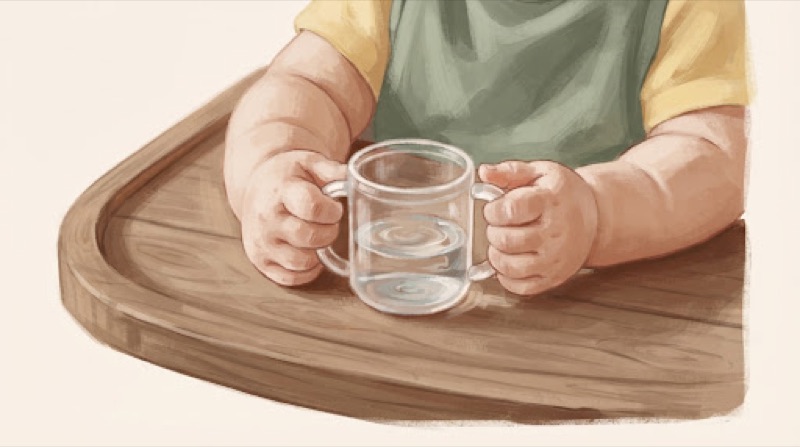 When can babies have water?
Recipe collectionsBaby purée recipesLunch ideas for a 1 year oldToddler snacks
- AAP (HealthyChildren.org): Starting solid foods
- AAP (HealthyChildren.org): Amount and schedule of formula feedings
- AAP (HealthyChildren.org): Recommended drinks for children ages 0 to 5
- AAP (HealthyChildren.org): Discontinuing the bottle
- CDC: Infant and toddler nutrition
- WHO: Complementary feeding
Schedules are reviewed by our dietitians, and based on AAP, CDC, WHO and ESPGHAN guidance. They are educational and don’t replace your pediatrician.