
How to introduce peanut to your baby
Early, safe and often: the steps that lower the chance of peanut allergy, following NIAID guidelines.
Quick answer
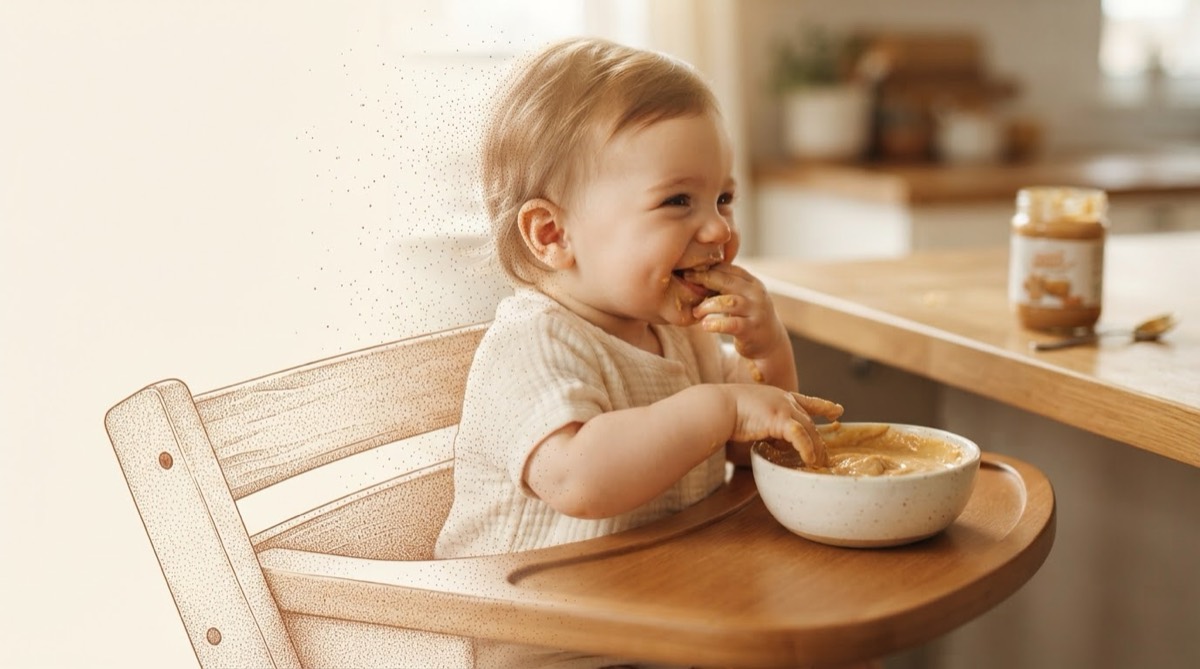
Introduce peanut at around 6 months, once baby is eating a few other solid foods, as thinned smooth peanut butter or peanut powder mixed into a food baby already eats. Never whole peanuts or a spoonful of peanut butter. Once it is in, keep it in: about 2 grams of peanut protein, 3 times a week (roughly 2 teaspoons of smooth peanut butter per serving). If baby has severe eczema or an egg allergy, talk to your pediatrician first: NIAID advises peanut as early as 4–6 months for these babies, often after testing or with a first feed in the clinic.
- Introduce peanut around 6 months; 4–6 months for high-risk babies after talking to your pediatrician
- Use thinned smooth peanut butter or peanut powder, never whole peanuts
- Keep it in: about 2 g peanut protein, 3 times a week
STEP 1
Why introduce peanut early?
In the LEAP study, high-risk babies who ate peanut regularly from 4–11 months were about 80% less likely to have peanut allergy at age 5 than babies who avoided it. That research changed the advice: since 2017, US guidelines (NIAID, endorsed by the AAP) recommend introducing peanut early rather than waiting.
Waiting does not prevent allergy. Delaying peanut past the first year may raise the risk.

STEP 2
Does my baby need testing before peanut?
The NIAID guidelines sort babies into three groups:
| Your baby | NIAID advice |
|---|---|
| Severe eczema (persistent or frequently returning, needing prescription creams) and/or egg allergy | High risk. Talk to your pediatrician before any peanut. They may suggest a skin prick or blood test, or a first feeding in the office. Introduce as early as 4–6 months. |
| Mild to moderate eczema | Introduce peanut at around 6 months, at home. |
| No eczema or food allergy | Introduce peanut at around 6 months, with other foods, at home. |
STEP 3
What is the safest way to give baby peanut?
Peanut needs to be smooth and thin. Safe options for babies:
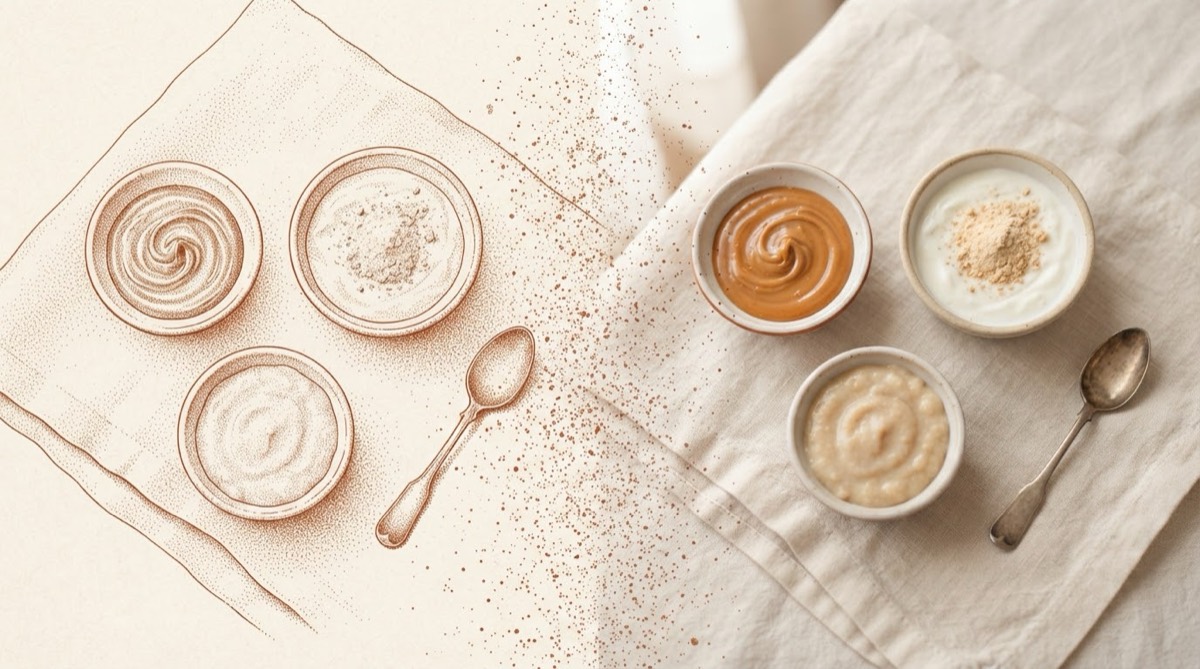
- Thinned peanut butter: mix 2 teaspoons of smooth peanut butter with 2 to 3 teaspoons of warm water, breast milk or formula until runny
- Stirred into food: swirl peanut butter into oatmeal, yogurt, mashed banana or a fruit puree
- Peanut powder or flour: stir 2 teaspoons into a puree or cereal
- Peanut puffs: softened with water into a mush for young babies; whole puffs once baby can manage dissolvable foods
- Thin spread: a very thin layer on a toast finger, from about 6 months for babies eating finger foods

STEP 4
How to introduce peanut for the first time
- 1Pick a day when baby is well, with no cold, fever or eczema flare.
- 2Serve it at home, in the morning or early afternoon, so you can watch baby for at least 2 hours afterward.
- 3Offer a small taste first, about a quarter teaspoon of thinned peanut butter mixed into food.
- 4Wait about 10 minutes and watch for hives, swelling, vomiting or coughing.
- 5If all looks well, offer the rest of the serving at baby’s usual pace.
- 6Note it in your log. Baby doesn’t need to finish it all on day one.

STEP 5
Easy ways to serve peanut to a baby
Regular peanut is easier when it fits into foods baby already eats. Each of these gives about 2 g of peanut protein when made with 2 teaspoons of smooth peanut butter or peanut powder:
- Peanut oatmeal: stir peanut butter into warm oatmeal until fully melted in
- Peanut yogurt: swirl peanut powder into plain full-fat yogurt
- Banana mash: mash ripe banana with thinned peanut butter
- Peanut toast fingers: a very thin layer on soft toast strips, from about 6 months
- Peanut sauce: thin peanut butter with water and toss with soft noodles or shredded chicken for older babies

STEP 6
How much peanut should a baby have?
The goal from the research is about 6 to 7 grams of peanut protein a week, split over 3 or more servings. Each of these is about 2 grams of peanut protein:
| Form | About 2 g peanut protein |
|---|---|
| Smooth peanut butter | 2 teaspoons (9 to 10 g), thinned |
| Peanut powder or flour | 2 teaspoons |
| Peanut puffs | About 21 puffs |
Work up to this over the first few servings. Babies who only eat a little are still getting a benefit: regular exposure is what matters most. Keep peanut in the diet for the long term, ideally several times a week. Our Top 9 allergen plan helps you rotate it with the other allergens.
STEP 7
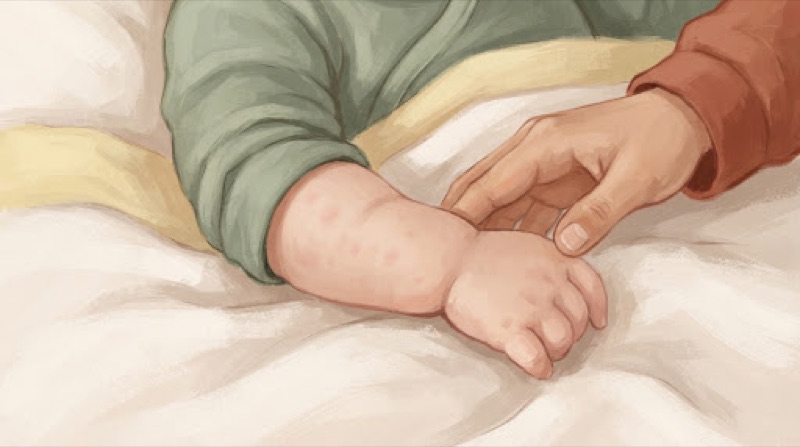
What does a peanut allergy reaction look like?
Most reactions happen within minutes to 2 hours of eating.
A few hives around the mouth with no other symptoms: stop feeding peanut, take a photo and call your pediatrician. Don’t offer peanut again until you have talked to them.

AVOID THESE
Common mistakes to avoid
- Waiting until after the first birthday “to be safe”. Delaying may raise allergy risk
- Giving whole peanuts, chopped peanuts or a spoonful of peanut butter
- Introducing peanut for the first time when baby is sick or has an eczema flare
- Trying peanut once and then stopping. Regular exposure is the point
- Introducing peanut and another new allergen on the same day
- Skipping the pediatrician conversation when baby has severe eczema or egg allergy
GET HELP
When to call your pediatrician
Talk to your pediatrician before peanut if baby has severe eczema or a known egg allergy. Call them after peanut if you see:
- A few hives around the mouth or face, with no other symptoms
- Vomiting once, then baby seems well
- Eczema that flares within a day or two of peanut
- Ongoing refusal of peanut-containing foods with gagging or discomfort
Introducing peanut: questions parents ask
When can babies have peanut butter?
Babies can have peanut butter from around 6 months, once they have started solids, as long as it is smooth and thinned with water, breast milk or formula or stirred into food. Babies with severe eczema or egg allergy may start as early as 4–6 months after talking to their pediatrician.
How much peanut butter should I give my baby the first time?
Start with a small taste, about a quarter teaspoon of thinned smooth peanut butter mixed into a food baby already eats. Wait about 10 minutes and, if there is no reaction, offer the rest of a small serving.
How often should babies eat peanut?
The NIAID guidelines suggest about 6 to 7 grams of peanut protein a week, over 3 or more servings. That is roughly 2 teaspoons of smooth peanut butter, 3 times a week. Keep it going regularly, not just once.
Should my baby be tested before eating peanut?
Only if your pediatrician recommends it. NIAID suggests considering testing for babies with severe eczema and/or egg allergy. Babies with mild or no eczema can have peanut at home without testing.
Can I give my baby peanut if a sibling has a peanut allergy?
A sibling with peanut allergy does not place baby in the NIAID high-risk group on its own, but many families feel more comfortable checking with their pediatrician or allergist first. Ask before you start.
Is it safe to introduce peanut at daycare?
Introduce peanut at home first, when you can watch baby for at least 2 hours. Once baby has had it a few times without a reaction, it can be served elsewhere.
What if my baby refuses peanut?
Try a different form, like peanut powder stirred into oatmeal or peanut butter mixed into banana. Regular small amounts still help. Keep offering without pressure.
Can babies eat peanut puffs?
Yes. Peanut puffs are a common way to give peanut. For babies just starting solids, soften the puffs with a little water into a mush. About 21 puffs equal roughly 2 grams of peanut protein.
Is peanut allergy outgrown?
Only about 1 in 5 children outgrow a peanut allergy, which is why prevention through early introduction matters. If baby reacts to peanut, see an allergist.
Is there a best time of day to introduce peanut?
Yes, in the morning or early afternoon, so you can watch baby for at least 2 hours after eating. Avoid introducing new allergens right before a nap or bedtime.
Keep reading
 How to introduce egg
 Signs of an allergic reaction
 The Top 9 allergen plan
Recipe collectionsBaby oatmeal recipes
- Togias A. et al. Addendum guidelines for the prevention of peanut allergy in the United States (NIAID expert panel). J Allergy Clin Immunol, 2017
- Du Toit G. et al. Randomized trial of peanut consumption in infants at risk for peanut allergy (LEAP). NEJM, 2015
- AAP (HealthyChildren.org): Food allergies in children
- ACAAI: Food allergy
- CDC: Choking hazards for infants and toddlers
This guide is written for healthy, full-term babies and doesn’t replace your pediatrician. If your baby was born early, has a medical condition, feeding or swallowing difficulties, or a known allergy, check with them first (medical disclaimer). Reviewed by our dietitians.