
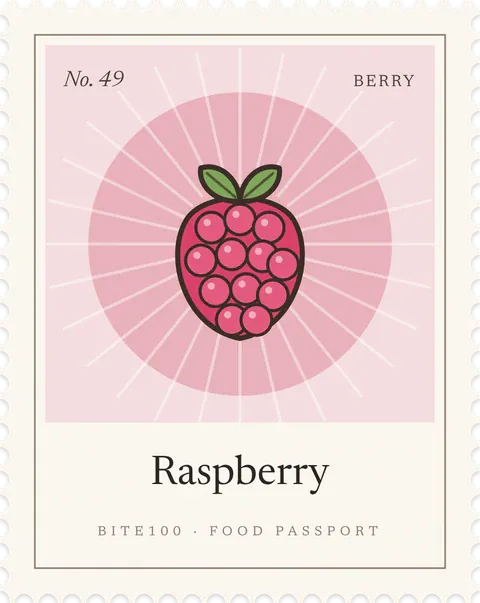
No. 49 · Fruit Passport food
When can babies have raspberries?
Can babies have raspberries?
Babies can have raspberries from about 6 months, as soon as they are ready for solids. Ripe raspberries are soft and squash easily: mash them into yogurt or oatmeal on a spoon at first, then offer flattened whole berries from 7–8 months. Wash raspberries gently and choose soft, fully ripe berries, since firm ones are harder to manage.
How to serve raspberries by age
Shapes and textures change as your baby’s grasp and chewing grow.

6 months
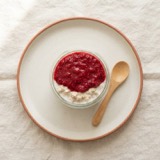
Mash ripe raspberries with a fork until smooth, or blend and strain them if you want to remove some seeds, then stir them into plain yogurt or oatmeal and offer it on a spoon.

7–8 months
Mash raspberries more roughly into thicker yogurt or oatmeal, or spread the mash on soft toast strips. You can also offer whole ripe raspberries flattened slightly between your fingers, which babies can rake up with their palm.

9–12 months
Offer ripe raspberries whole but gently squished, or tear larger berries in half for pincer-grasp practice. Check that each berry is soft enough to squash easily.

12 months +
Toddlers can eat whole ripe raspberries on their own or on cereal, pancakes and yogurt. Sit with your toddler while they eat, and keep firm or unripe berries for later.
Why it’s good
Raspberries are rich in vitamin C, which helps babies absorb iron from plant foods, and they are one of the highest-fiber fruits. Raspberries also give manganese, vitamin K and plant antioxidants. Their tart-sweet flavor helps babies get used to a range of tastes.
Safety notes
- Choose soft, ripe raspberries that squash easily between your thumb and finger. Firm or underripe berries can be harder to chew.
- Do not offer whole frozen raspberries to babies. Frozen berries are hard; thaw them fully, then mash or squish before serving.
- Wash raspberries just before serving by rinsing them gently in a colander, and remove any moldy berries. Raspberries spoil quickly.
- Acidic fruits like raspberries can cause a red, blotchy rash around the mouth where juice touches the skin. This usually fades within an hour and is not an allergy.
- The tiny seeds in raspberries are safe for babies to eat and may show up in the diaper. No need to remove them.
A low-allergy food, still worth watching
Raspberries are not one of the Top 9 allergens, and true raspberry allergy is uncommon. A rash only around the mouth is usually skin irritation, but hives elsewhere on the body, swelling, vomiting or breathing changes need prompt medical attention.
Raspberries for babies: questions parents ask
Quick answers about raspberries for babies and toddlers.
When can babies have raspberries?
Babies can have raspberries from about 6 months, as soon as they are ready to start solids. Raspberries should be ripe and soft; mash them at first, and offer them lightly flattened from 7–8 months.
Can babies have raspberries?
Yes, babies can eat raspberries from 6 months. Ripe raspberries are soft, full of fiber and vitamin C, and easy to mash into other foods.
Are raspberries a choking hazard for babies?
Raspberries are a low choking risk for babies when they are ripe and soft, since they squash easily in the mouth. Firm, unripe or frozen raspberries carry more risk, so flatten or mash berries for young babies and stay with your baby while they eat.
Are raspberries a common allergen?
No, raspberries are not a common allergen and are not one of the Top 9 allergens. Raspberries often cause a harmless red rash around the mouth from their acidity, which is different from an allergic reaction.
How do I serve raspberries to a 6 month old?
To serve raspberries to a 6 month old, mash ripe berries until smooth and stir them into plain yogurt or oatmeal, then offer it on a spoon. Lightly flattened whole raspberries and mash on soft toast strips can follow at 7–8 months.
Can babies have frozen raspberries?
Babies can have frozen raspberries once they are fully thawed, then mashed or squished. Frozen raspberries are a handy, budget-friendly option and work well stirred into oatmeal, but do not give hard frozen berries to babies.
Why does my baby get a rash from raspberries?
Raspberries are acidic, and the juice can irritate a baby's skin and cause red blotches around the mouth and chin. This contact rash usually fades within an hour, but hives that spread or any swelling or vomiting should be checked by your pediatrician.
Do raspberries help with baby constipation?
Raspberries are high in fiber, so they can help soften stools when offered as part of a varied diet. Pair raspberries with water at meals and other fiber-rich foods like pears, prunes and oats.
Should I buy organic raspberries for my baby?
Organic and conventional raspberries are both healthy choices for babies, and eating fruit matters more than how it is grown. Whichever you buy, rinse raspberries well under running water just before serving.
Are raspberries good for babies?
Yes, raspberries are good for babies from about 6 months. They are one of the highest-fiber fruits and rich in vitamin C, which helps babies absorb iron from plant foods. Mash ripe raspberries into yogurt or oatmeal on a spoon at first, then offer soft whole berries flattened slightly from 7–8 months.
Are raspberries good for toddlers?
Yes, raspberries are a great fruit for toddlers over 12 months, giving fiber, vitamin C and antioxidants. Ripe raspberries are soft, so toddlers can eat them whole on their own or on cereal, pancakes and yogurt. Choose berries that squash easily, and sit with your toddler while they eat.
Can babies eat raspberry seeds?
Yes, babies can eat raspberry seeds. The tiny seeds are not a choking hazard and pass through the gut, so you may see some in your baby's diaper. If you want a smoother texture at 6 months, blend the raspberries and press them through a sieve to remove some seeds.
The takeaway
- Babies can have raspberries from about 6 months, as soon as they are ready for solids.
- Mash ripe raspberries with a fork until smooth, or blend and strain them if you want to remove some seeds, then stir them into plain yogurt or oatmeal and offer it on a spoon.
- Choking risk is low. Not a Top 9 allergen, but offer a small amount first and watch for any reaction.
Read next


Sources
This guide follows current advice from these organizations.
- Starting Solid Foods American Academy of Pediatrics (HealthyChildren.org)
- When, What, and How to Introduce Solid Foods Centers for Disease Control and Prevention
- Choking Hazards Centers for Disease Control and Prevention
Stamp raspberry in your baby’s passport
Track the first 100 foods and the Top 9 allergens. 7 days free.
Recipes with raspberry
More fruit for babies
Updated November 2026. Reviewed by our dietitians. Based on AAP, CDC and NIAID guidance. Written for healthy, full-term babies; not a substitute for your pediatrician. If your baby was born early, has a medical condition, feeding difficulties or a known allergy, check with them first (medical disclaimer). Always stay with your baby while they eat.