
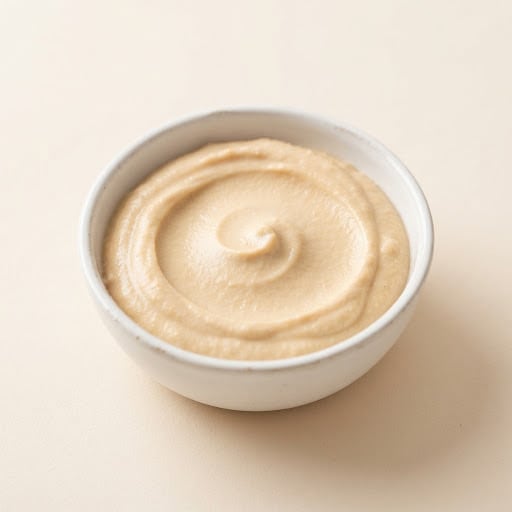
Protein Food Library
When can babies have hummus?
Can babies have hummus?
Babies can have hummus from about 6 months, thinned and offered on a spoon at first, then spread thinly on soft foods from 7–8 months. Hummus is made from chickpeas and tahini, and tahini is sesame, one of the Top 9 food allergens. Homemade or low-sodium hummus is best, since many store-bought tubs are salty.
How to serve hummus by age
Shapes and textures change as your baby’s grasp and chewing grow.

6 months
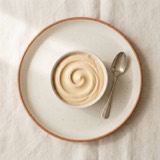
Offer a small amount of hummus on a spoon or preloaded spoon, thinned with a little water so it is smooth and not sticky, or stir it into a smooth vegetable puree. Start with a small amount the first time because of the sesame.

7–8 months
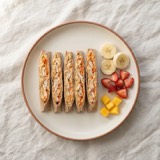
Spread hummus thinly on a soft toast strip, a soft roasted vegetable wedge or a strip of soft flatbread your baby can hold, or stir it into lumpier mashed vegetables. Keep thinning thick hummus so it never forms globs.

9–12 months
Spread hummus on small pieces of toast or soft pita, use it as a dip for soft steamed carrot sticks, or mix it into pasta or mashed vegetables. Let your baby practice scooping with a spoon.

12 months +
Toddlers can dip soft vegetables, pita or crackers in hummus, or eat it in wraps and on sandwiches. Keep raw carrot sticks and other hard raw vegetables out of the dipping lineup until chewing skills are strong.
Why it’s good
Hummus gives plant protein, fiber, iron, zinc and folate from chickpeas, plus healthy fats and calcium from tahini. Olive oil and lemon add more healthy fat and vitamin C, which helps babies absorb the iron. Hummus is an easy, nutrient-dense way to add plant protein to a baby's meal.
Safety notes
- Hummus contains tahini, which is sesame. Introduce it as a sesame allergen in a small amount, and check labels on all hummus brands, since sesame must now be listed on US labels.
- Thick hummus can stick to the roof of the mouth. Spread it thinly or thin it with water, and do not serve large globs.
- Many store-bought hummus brands are high in sodium. Make it at home without salt or choose a lower-sodium brand.
- Some flavored hummus contains whole chickpeas, pine nuts or very spicy toppings. Remove whole chickpeas and nuts, which are choking hazards, and skip spicy versions.
- Refrigerate hummus and use homemade hummus within about 3 to 4 days, or by the date on an opened store-bought tub.
Introduce hummus on its own, then keep it in
Hummus contains sesame from tahini, and sesame is one of the Top 9 food allergens; chickpeas, a legume, can also rarely cause reactions, especially in children with peanut allergy. Offer a small amount first, watch for hives, vomiting, swelling, coughing or wheezing, and keep sesame in the diet once tolerated.
Hummus for babies: questions parents ask
Quick answers about hummus for babies and toddlers.
When can babies have hummus?
Babies can have hummus from about 6 months, when they start solids. Hummus contains sesame, a common allergen, so start with a small amount thinned on a spoon, and spread it thinly on soft foods from 7–8 months.
Can babies have hummus?
Yes, babies can eat hummus, and it is a nutritious source of plant protein, iron and healthy fat. Choose low-sodium or homemade hummus and introduce it as a sesame allergen.
Is hummus a choking hazard for babies?
Hummus is a low choking risk when spread thinly, but thick globs can stick to the roof of the mouth. Thin hummus with water if needed, and remove any whole chickpeas or pine nuts used as toppings.
Is hummus a common allergen?
Yes, hummus contains a common allergen because it is made with tahini, which is sesame paste. Chickpeas can also cause reactions in a small number of children, especially those with peanut allergy.
How do I serve hummus to a 6 month old?
To serve hummus to a 6 month old, thin a little hummus with water until smooth and offer it on a spoon or preloaded spoon, or stir it into a vegetable puree. Start with a small amount the first time because of the sesame. Hummus on toast strips can follow at 7–8 months.
Is store-bought hummus okay for babies?
Store-bought hummus is okay for babies in small amounts, but many brands are high in sodium. Compare labels and choose the lowest-sodium option, or make hummus at home without salt.
How do I make hummus for a baby?
To make hummus for a baby, blend cooked or rinsed canned chickpeas with tahini, a squeeze of lemon, a little olive oil and water until very smooth. Leave out the salt and use only a small amount of garlic.
Can hummus give babies gas or constipation?
Hummus is high in fiber, which can cause some gas as babies adjust, but it more often helps prevent constipation. Offer water with meals and start with small portions.
Can babies have hummus without tahini?
Yes, babies can have hummus made without tahini, which is a good option if your baby has a sesame allergy. Blend chickpeas with olive oil and lemon instead, but still introduce sesame separately if there is no known allergy.
Is hummus good for toddlers?
Yes, hummus is a good food for toddlers 12 months and older, giving plant protein, fiber, iron and healthy fats. Serve it as a dip for soft vegetables or pita or spread on sandwiches, choose low-sodium or homemade hummus, and keep hard raw carrot sticks off the dipping plate.
Is hummus good for babies?
Yes, hummus is a nutritious food for babies from about 6 months, with plant protein, iron, zinc and healthy fats. It contains tahini, which is sesame, a Top 9 allergen, so start with a small amount thinned with water on a spoon, and choose homemade or low-sodium hummus.
The takeaway
- Babies can have hummus from about 6 months, thinned and offered on a spoon at first, then spread thinly on soft foods from 7–8 months.
- Offer a small amount of hummus on a spoon or preloaded spoon, thinned with a little water so it is smooth and not sticky, or stir it into a smooth vegetable puree.
- Choking risk is low. Sesame is one of the Top 9 allergens: offer a small amount first, watch for a reaction, then keep it in the diet regularly.
Read next
Sources
This guide follows current advice from these organizations.
- Starting Solid Foods American Academy of Pediatrics (HealthyChildren.org)
- When, What, and How to Introduce Solid Foods Centers for Disease Control and Prevention
- Choking Hazards Centers for Disease Control and Prevention
- Foods and Drinks to Avoid or Limit Centers for Disease Control and Prevention
- Iron Centers for Disease Control and Prevention
- The Effects of Early Nutritional Interventions on the Development of Atopic Disease in Infants and Children Greer FR, Sicherer SH, Burks AW; American Academy of Pediatrics. Pediatrics. 2019;143(4):e20190281
Track every new food in your baby’s passport
Track the first 100 foods and the Top 9 allergens. 7 days free.
Recipes with hummus
More protein foods for babies
Updated November 2026. Reviewed by our dietitians. Based on AAP, CDC and NIAID guidance. Written for healthy, full-term babies; not a substitute for your pediatrician. If your baby was born early, has a medical condition, feeding difficulties or a known allergy, check with them first (medical disclaimer). Always stay with your baby while they eat.