
No. 39 · Grains Passport food
When can babies eat rice congee?
Can babies eat rice congee?
Babies can have rice and rice congee from about 6 months, as soon as they are ready for solids. Smooth rice porridge on a spoon is an easy first food, with thicker congee and soft sticky rice balls from 7–8 months, but rice can contain arsenic, so rotate it with other grains rather than serving it every day.
How to serve rice congee by age
Shapes and textures change as your baby’s grasp and chewing grow.

6 months
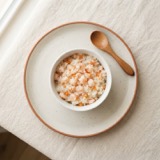
Simmer rice in plenty of water, about 1 part rice to 8 to 10 parts water, until it breaks down into a soft congee, then blend or mash it smooth and cool it. Offer it on a pre-loaded spoon, stirred with smooth vegetable puree or blended chicken or fish for iron.

7–8 months
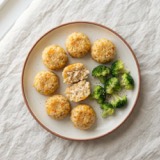
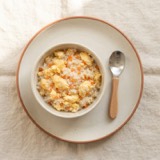
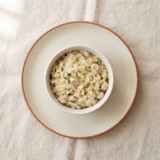
Serve thicker, lumpier congee with finely minced cooked meat, egg or mashed veggies stirred in. For hand practice, press soft, slightly overcooked sticky rice into balls or flat patties about the size of a walnut that squash easily.

9–12 months
Offer loose soft rice that sticks together for pincer practice, rice patties, or thicker congee with finely chopped cooked meat, egg or veggies. Rice can also be served with soft lentils or mixed into fritters.

12 months +
Serve rice with family meals such as stir-fries, curries, risotto and burritos, with no extra salt for the toddler portion. Keep crunchy fried rice crusts and mochi for later, as they are a bigger choking risk.
Why it’s good
Rice gives babies easy-to-digest energy from carbohydrates, plus some B vitamins and manganese. Brown rice adds more fiber and magnesium. Plain rice is not rich in iron, so cook congee with meat, fish, egg or beans, or use iron-fortified infant cereal.
Safety notes
- Rice can contain inorganic arsenic. Rotate rice with oats, barley, quinoa and other grains, and cook rice in lots of water and drain the extra, which removes a good share of the arsenic.
- Cool cooked rice quickly and refrigerate within 1 hour. Rice left at room temperature can grow Bacillus cereus bacteria; use leftovers within a day and reheat only once, until steaming hot.
- Rice drinks should not replace breast milk or formula, and many health agencies advise against rice milk as a drink for young children because of arsenic.
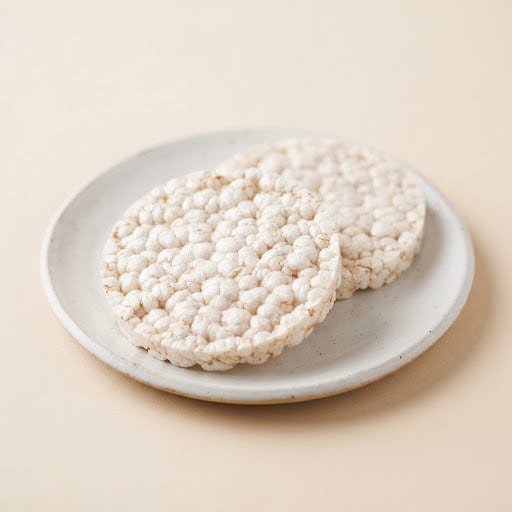
- Rice cakes and puffs are fine as occasional snacks, but they still add to arsenic intake, so do not make them a daily staple.
- Mochi and other chewy glutinous rice cakes are a high choking risk for babies and toddlers and are best avoided.
A low-allergy food, still worth watching
Rice is not a common allergen, but rice is one of the most common triggers of FPIES, a delayed allergy that causes repeated vomiting 1 to 4 hours after eating. Call your pediatrician if you see that pattern, and seek urgent care if your baby becomes pale or floppy.
Rice congee for babies: questions parents ask
Quick answers about rice congee for babies and toddlers.
When can babies eat rice congee?
Babies can have rice congee from about 6 months, once they are ready for solids. Rice congee is a soft, smooth porridge that is easy for beginners to swallow and can carry many other ingredients.
Can babies eat rice?
Yes, babies can eat rice from around 6 months as smooth congee on a spoon, with soft sticky rice balls or patties from 7–8 months. Because rice can contain arsenic, offer rice as one of several grains rather than every day.
Is rice a choking hazard for babies?
Soft cooked rice is a low choking risk for babies, though loose grains can make babies gag as they learn. Chewy rice cakes like mochi and crunchy fried rice crusts carry a higher risk.
Is rice a common allergen?
No, rice is not one of the Top 9 common allergens. Rice is, however, a common trigger of FPIES, a delayed reaction with repeated vomiting a few hours after eating.
How do I serve rice congee to a 6 month old?
To serve rice congee to a 6 month old, simmer rice in about 8 to 10 times its volume of water until it is very soft, blend or mash it smooth and let it cool. Offer the congee on a pre-loaded spoon and stir in smooth vegetable puree or blended meat for extra nutrients. Soft rice balls can follow at 7–8 months.
Should I worry about arsenic in rice for my baby?
Arsenic in rice is a real but manageable concern for babies. Serve rice a few times a week rather than daily, rotate it with other grains, and cook rice in extra water and drain it to lower arsenic levels.
Is brown rice or white rice better for babies?
Brown rice has more fiber and nutrients, while white rice usually has less arsenic, so both have trade-offs for babies. Either rice is fine in moderation; varieties like basmati and jasmine tend to be lower in arsenic.
Is infant rice cereal a good first food?
Infant rice cereal is no longer the only recommended first food, and the FDA has set limits on arsenic in it. Iron-fortified oat or multigrain infant cereals are good alternatives, and many babies start with other foods altogether.
Can babies eat leftover rice?
Babies can eat leftover rice if it was cooled and refrigerated within about an hour of cooking and is eaten within a day. Reheat leftover rice only once, until steaming hot throughout, then cool before serving.
Can babies eat rice cakes or rice puffs?
Babies can have rice cakes and rice puffs that dissolve easily as an occasional snack. Rice cakes and puffs still contain arsenic and little nutrition, so they should not replace meals or other grains.
The takeaway
- Babies can have rice and rice congee from about 6 months, as soon as they are ready for solids.
- Simmer rice in plenty of water, about 1 part rice to 8 to 10 parts water, until it breaks down into a soft congee, then blend or mash it smooth and cool it.
- Choking risk is low. Not a Top 9 allergen, but offer a small amount first and watch for any reaction.
Read next


Sources
This guide follows current advice from these organizations.
- Starting Solid Foods American Academy of Pediatrics (HealthyChildren.org)
- When, What, and How to Introduce Solid Foods Centers for Disease Control and Prevention
- Choking Hazards Centers for Disease Control and Prevention
- What You Can Do to Limit Exposure to Arsenic U.S. Food and Drug Administration
Recipes with rice congee
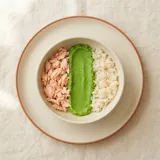
Stamp rice congee in your baby’s passport
Track the first 100 foods and the Top 9 allergens. 7 days free.
More grains for babies
Updated November 2026. Reviewed by our dietitians. Based on AAP, CDC and NIAID guidance. Written for healthy, full-term babies; not a substitute for your pediatrician. If your baby was born early, has a medical condition, feeding difficulties or a known allergy, check with them first (medical disclaimer). Always stay with your baby while they eat.