
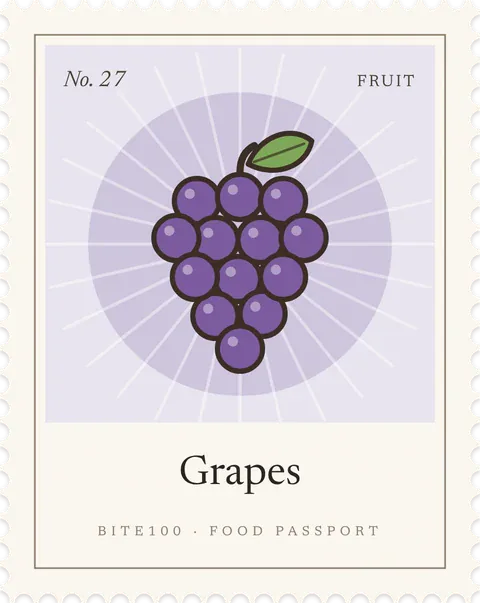
No. 27 · Fruit Passport food
When can babies have grapes?
Can babies have grapes?
Babies can have grapes from about 6 months, but only when they are prepared safely. Whole grapes are one of the most common choking hazards for young children, so mash grapes into food at first, then quarter them lengthwise and flatten them from about 7–8 months, and keep cutting them until at least age 4.
How to serve grapes by age
Shapes and textures change as your baby’s grasp and chewing grow.

6 months
Mash or blend seedless grapes, peeled if the skins are thick, and stir them into plain yogurt, oatmeal or ricotta to offer on a spoon. Pick out any seeds you find, and never offer a whole or halved grape.

7–8 months
Cut seedless grapes into quarters lengthwise and press each piece flat, or keep mashing them roughly into yogurt or oatmeal. Never offer a whole or halved grape.

9–12 months
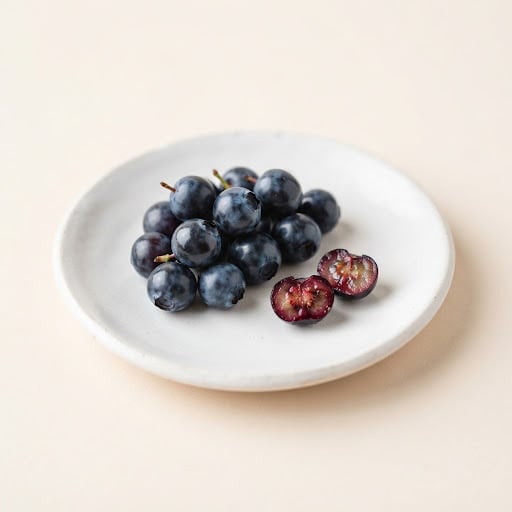
Quarter seedless grapes lengthwise, from stem end to tip, so each piece is a thin sliver rather than a round ball. For extra safety you can also peel or lightly squash the quarters, especially for large grapes.

12 months +
Keep quartering grapes lengthwise for toddlers and preschoolers; halving is not enough for young children. Serve them at the table with your child seated, never while walking, playing or riding in the car.
Why it’s good
Grapes provide water, vitamin C, vitamin K, some fiber and natural sugars for energy. Red and purple grapes also contain plant pigments called polyphenols. Grapes are low in iron and protein, so pair them with foods like cheese, yogurt, beans or meat.
Safety notes
- Never serve whole grapes to babies or young children. A whole grape is the perfect size and shape to plug a small child's airway.
- Quarter grapes lengthwise until at least age 4. Halving grapes still leaves a round piece that can block the airway.
- Remove seeds, even from grapes labeled seedless, and choose seedless varieties when you can.
- Frozen grapes are a serious choking hazard. Do not offer them whole or cut to babies and young children, even for teething.
- Seat your child upright at the table and stay within arm's reach. Choking is usually silent, so watch rather than listen.
A low-allergy food, still worth watching
Grapes are not a common allergen, though rare reactions have been reported. Watch for hives, swelling, itching or vomiting the first few times you serve them.
Grapes for babies: questions parents ask
Quick answers about grapes for babies and toddlers.
When can babies have grapes?
Babies can have grapes from about 6 months of age, as long as the grapes are mashed into soft foods at first, then quartered lengthwise and flattened from about 7–8 months. Grapes should never be served whole or halved to babies, because whole grapes are a leading choking hazard.
Can babies have grapes?
Yes, babies can eat grapes from around 6 months when they are prepared safely. Seedless grapes should be mashed into foods like yogurt or oatmeal for young babies, then quartered lengthwise and squashed from about 7–8 months.
Are grapes a choking hazard for babies?
Yes, grapes are a high choking hazard for babies and young children because they are round, firm, slippery and about the size of a child's airway. Quartering grapes lengthwise and flattening them for young babies greatly lowers the risk, and grapes should be cut until at least age 4.
Are grapes a common allergen?
No, grapes are not one of the Top 9 common food allergens. Grape allergy is rare, but any food can cause a reaction, so watch for hives, swelling or vomiting when you first offer them.
How do I serve grapes to a 6 month old?
To serve grapes to a 6 month old, mash or blend seedless grapes and stir them into plain yogurt or oatmeal, then offer it on a spoon. Quartered, flattened grape pieces can follow at 7–8 months. Grapes should never be offered whole or in halves at this age.
How long should I keep cutting grapes for my child?
Keep cutting grapes into lengthwise quarters until at least age 4, and longer if your child eats quickly or stuffs their mouth. Many pediatric safety groups recommend cutting grapes for young children no matter how well they chew.
Can babies have frozen grapes for teething?
Babies should not have frozen grapes, even cut up, because hard frozen pieces are slippery and very hard to chew. For teething, try a chilled teether or a cold soft food like chilled mashed fruit instead.
When can babies drink grape juice?
Babies should not drink grape juice before 12 months, following AAP guidance. After 12 months, whole quartered grapes are the better choice, and any juice should be limited to small amounts of 100 percent juice with meals.
Can babies have raisins?
Raisins are sticky and firm, so they are a choking risk for babies when served dry. Raisins can be soaked in hot water until plump and then chopped or blended into oatmeal or baked goods, and dry raisins are best saved for older toddlers who chew well.
Are grapes good for babies?
Yes, grapes can be a healthy food for babies from about 6 months, offering water, vitamin C, vitamin K and some fiber, but only when prepared safely. Mash them into yogurt or oatmeal at first, then quarter them lengthwise and flatten them from 7–8 months; never serve whole or halved grapes.
Are grapes good for toddlers?
Yes, grapes are a healthy snack for toddlers 12 months and older, but whole grapes are one of the top choking hazards for young children. Keep quartering grapes lengthwise until at least age 4, serve them with your child seated, and pair them with yogurt, beans or meat for protein.
The takeaway
- Babies can have grapes from about 6 months, but only when they are prepared safely.
- Mash or blend seedless grapes, peeled if the skins are thick, and stir them into plain yogurt, oatmeal or ricotta to offer on a spoon.
- Choking risk is high. Not a Top 9 allergen, but offer a small amount first and watch for any reaction.
Read next


Sources
This guide follows current advice from these organizations.
- Starting Solid Foods American Academy of Pediatrics (HealthyChildren.org)
- When, What, and How to Introduce Solid Foods Centers for Disease Control and Prevention
- Choking Hazards Centers for Disease Control and Prevention
- Choking Prevention American Academy of Pediatrics (HealthyChildren.org)
Stamp grapes in your baby’s passport
Track the first 100 foods and the Top 9 allergens. 7 days free.
Recipes with grapes
More fruit for babies
Updated November 2026. Reviewed by our dietitians. Based on AAP, CDC and NIAID guidance. Written for healthy, full-term babies; not a substitute for your pediatrician. If your baby was born early, has a medical condition, feeding difficulties or a known allergy, check with them first (medical disclaimer). Always stay with your baby while they eat.