
When baby refuses food
Why it happens, what actually helps, and how to keep meals calm when baby pushes the plate away.
Quick answer
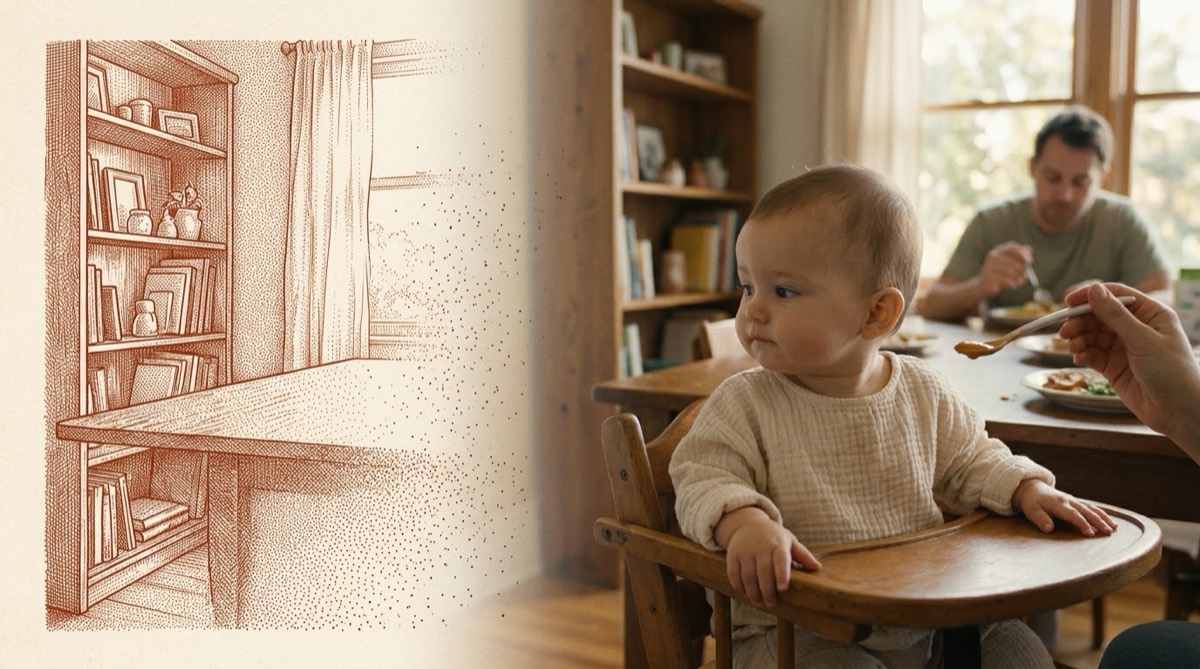
Food refusal is very common and usually temporary. The most frequent causes are teething, illness, tiredness, too much milk right before meals, a growth slowdown, or a new skill like crawling. Keep meals low-pressure: serve small portions, include one food baby usually eats, eat together, and let baby decide how much. A new food can take 8 to 15 tries before it is accepted. Call your pediatrician if baby is losing weight, has fewer wet diapers, vomits often, or refuses almost all solids by 9–10 months.
- Food refusal is common and usually temporary
- Keep meals calm: small portions, one safe food, no pressure
- New foods can take 8 to 15 tries before baby accepts them

STEP 1
Why is my baby refusing food?
| Cause | What it looks like |
|---|---|
| Teething | Chewing on hands, drooling, preferring cold or soft foods |
| Illness | Cold, ear infection or tummy bug; appetite returns 1–2 weeks after recovery |
| Too tired or overhungry | Fussing or crying in the high chair |
| Too much milk too close to meals | Happy, just not hungry |
| New skills | Crawling, standing or walking take over attention |
| Wanting control | Refuses the spoon but eats with own hands |
| Growth slowdown (around 12 months) | Toddler eats much less than at 9–10 months |
STEP 2
What food refusal means at each age
6–8 months
9–12 months
12 months +
STEP 3
How many times should I offer a new food?
Research on young children suggests it can take 8 to 15 exposures, sometimes more, before a new food is accepted. Every exposure counts, even when baby only looks at, touches or licks the food.
To keep exposures going without battles, serve a small amount of the new food next to familiar foods, without asking baby to taste it. Change the shape, temperature or flavor: roasted instead of steamed, a dip on the side, or mixed into a favorite.

STEP 4
What to do when baby won’t eat
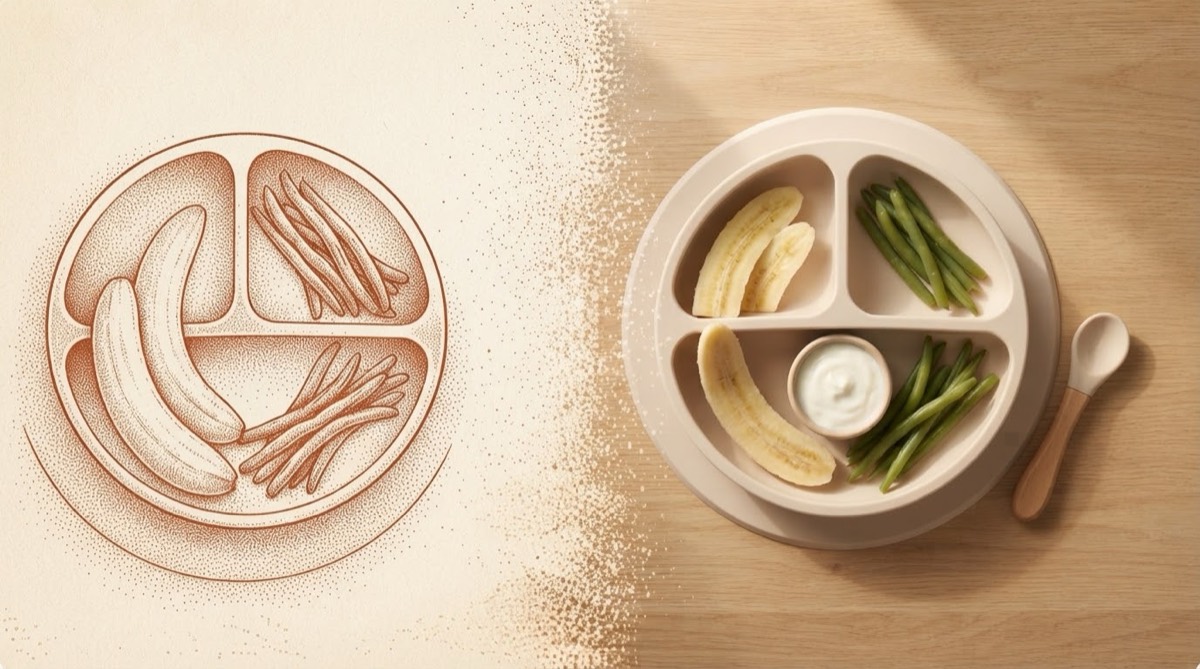
- 1Check timing. Offer solids 30 to 60 minutes after milk for younger babies, and keep about 2.5 to 3 hours between meals for older ones. No grazing between.
- 2Check the seat. Baby should sit upright, hips at 90 degrees, with feet supported on a footrest.
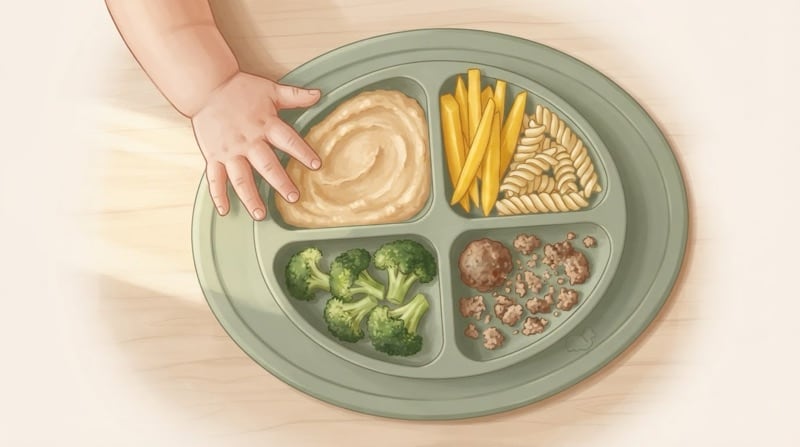
- 3Serve a “safe” food. Put one food baby usually eats on the plate with new ones.
- 4Hand over control. Let baby self-feed or hold a pre-loaded spoon.
- 5Eat together. Babies copy what they see. Eat the same foods and let them watch you enjoy it.
- 6Keep it short. End the meal when baby turns away, pushes food off or arches back. About 15 to 20 minutes is plenty.
- 7Try again later. Serve a refused food again in a few days, maybe cooked or cut differently.

STEP 5
What not to do when baby refuses food
- Don’t coax, bribe or praise for “one more bite”. Pressure tends to reduce how much babies eat over time
- Don’t use screens or airplane spoons to sneak food in
- Don’t cook a separate backup meal each time. Include one accepted food instead
- Don’t replace refused meals with extra milk or snacks soon after
- Don’t judge one meal. Look at what baby ate over the whole week
STEP 6
What to say at the table
The words you use can lower pressure without ignoring the food. These short phrases keep the mood light:
- “You don’t have to eat it. It can stay on your plate.”
- “This is crunchy, like the toast you had yesterday.”
- “I’m having some carrots. Mmm, sweet.”
- “Are you all done? Okay, we’ll eat again at snack time.”
- “Your tummy knows how much it needs.”
Phrases to drop: “just one more bite”, “good job eating!” for every mouthful, and “no dessert until you finish”. They shift attention from hunger to pleasing you.

STEP 7
Teething or sick: what to serve
STEP 8
When should I worry about my baby not eating?
These can point to a medical issue, reflux, an allergy or a feeding disorder. A pediatric feeding therapist can help, and early support works best.
AVOID THESE
Common mistakes to avoid
- Pressuring, bribing or praising each bite
- Using screens to distract baby into eating
- Offering milk or snacks soon after a refused meal
- Giving up on a food after 2 or 3 tries
- Making a separate meal every time baby refuses
- Judging success meal by meal instead of across the week
Baby refusing food: questions parents ask
Why is my baby suddenly refusing food?
Sudden food refusal is usually caused by teething, illness, tiredness, too much milk close to meals, a growth slowdown or a new skill like crawling. It usually passes within days to a couple of weeks.
Is it normal for a 1-year-old to eat less?
Yes. Growth slows after the first birthday, so toddlers often eat less than they did at 9–10 months. Appetite also swings a lot from day to day.
How many times should I offer a new food?
Keep offering it. Many babies and toddlers need 8 to 15 exposures, sometimes more, before accepting a new food. Seeing, touching and smelling a food all count.
Should I force my baby to eat?
No. Pressure, bribes and forcing usually make babies eat less over time. Serve the food, eat together, and let baby decide whether and how much to eat.
My baby refuses the spoon but eats finger foods. What should I do?
Go with it. Many babies want to feed themselves. Offer soft finger foods and hand over a pre-loaded spoon instead of spoon-feeding.
My baby won’t eat solids but drinks milk. Is that okay?
For a short time, yes, especially when unwell or teething. If baby still refuses nearly all solids by 9–10 months, talk to your pediatrician, as milk alone can’t meet iron needs.
Can teething make a baby refuse food?
Yes. Sore gums can make babies refuse food for a few days. Cold and soft foods, like chilled yogurt or cucumber spears, can help.
When should I be worried about my baby not eating?
Call your pediatrician if baby is losing weight, has fewer wet diapers, vomits often, coughs or chokes at most meals, seems in pain when eating, or still refuses almost all solids by 9–10 months.
Is it picky eating or a feeding problem?
Picky eaters still accept a range of foods, usually 20 or more, and grow well. Accepting very few foods, gagging or vomiting on new foods, or poor growth can signal a feeding disorder, so talk to your pediatrician.
Keep reading
 Food throwing at the table
 Purees to finger foods
 10–11-month-old feeding schedule
Recipe collectionsToddler meals for picky eatersToddler snacks
- Ellyn Satter Institute: The division of responsibility in feeding
- AAP (HealthyChildren.org): Starting solid foods
- AAP (HealthyChildren.org): Picky eaters
- WHO: Complementary feeding
This guide is written for healthy, full-term babies and doesn’t replace your pediatrician. If your baby was born early, has a medical condition, feeding or swallowing difficulties, or a known allergy, check with them first (medical disclaimer). Reviewed by our dietitians.