
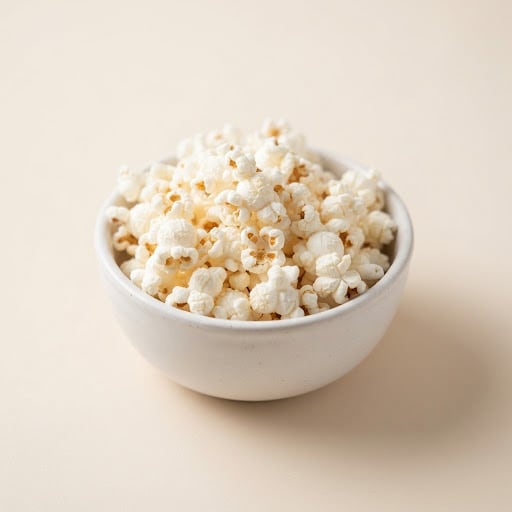
Grains Food Library
When can babies have popcorn?
Can babies eat popcorn?
Popcorn is best avoided until at least 4 years old. Popcorn is a high choking hazard because the light, irregular pieces and hard unpopped kernels can be breathed into the lungs. Offer melt-in-the-mouth puffs instead for younger children.
How to serve popcorn by age
Shapes and textures change as your baby’s grasp and chewing grow.

6 months
Do not offer popcorn. At 6 months your baby eats smooth purees and mashes from a spoon, so there is no need for a crunchy snack yet.

7–8 months
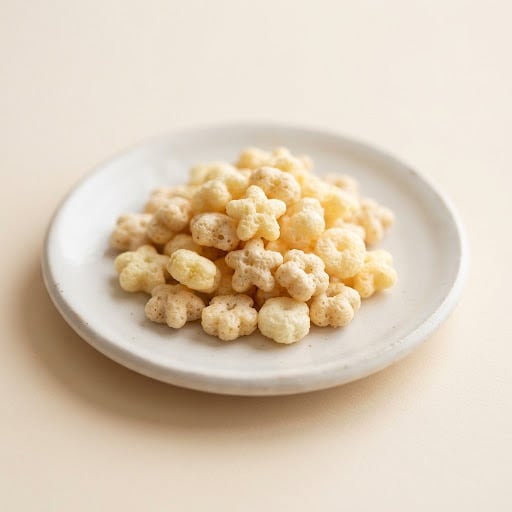
Popcorn is still off-limits. For a crunchy snack, try baby puffs that dissolve quickly in the mouth, offered one or two at a time.

9–12 months
Popcorn is still off-limits. Offer dissolvable puffs or soft finger foods like steamed vegetables.

12 months +
Wait until at least age 4 for popcorn. When you start, serve plain, lightly salted popcorn with no unpopped kernels, have your child sit down, and supervise closely.
Why it’s good
Plain popcorn is a whole grain and offers some fiber. Buttered, salted or caramel popcorn adds fat, salt or sugar. For young children, the choking risk outweighs the nutritional benefits.
Safety notes
- Popcorn is a high choking hazard for children under 4. The AAP lists popcorn among foods to avoid for young children.
- Unpopped and half-popped kernels are hard and can be inhaled into the lungs.
- Pieces of popcorn hull can stick in the throat.
- When older kids eat popcorn, they should sit down and not run, laugh or play while eating.
A low-allergy food, still worth watching
Popcorn is not a common allergen. Flavored or buttered popcorn may contain dairy, so check labels.
Popcorn for babies: questions parents ask
Quick answers about popcorn for babies and toddlers.
When can babies have popcorn?
Popcorn is best avoided until at least 4 years old. Popcorn is a high choking hazard for young children.
Can babies eat popcorn?
No, babies should not eat popcorn. Popcorn pieces and kernels can easily be inhaled into the airway.
Is popcorn a choking hazard for babies?
Yes, popcorn is a high choking hazard for babies and toddlers. Kernels and hulls can be breathed into the lungs, which can cause serious problems.
Is popcorn a common allergen?
No, popcorn is not a common allergen. Buttered or flavored popcorn may contain dairy or other allergens.
How do I serve popcorn to a 6 month old?
Popcorn should not be served to a 6 month old. At 6 months, stick to smooth purees on a spoon; baby puffs that dissolve easily can be a safer crunchy snack from 7–8 months.
What can toddlers eat instead of popcorn?
Toddlers can eat dissolvable puffs, soft whole-grain crackers or puffed rice cereal instead of popcorn. These melt quickly and are easier to manage.
Is popcorn healthy for kids?
Plain popcorn can be a healthy whole-grain snack for kids over 4. Avoid heavily salted or buttered popcorn.
Why is popcorn dangerous for toddlers?
Popcorn is dangerous for toddlers because it is light, can be inhaled while chewing, and kernels are hard. Toddlers also lack the molars to grind popcorn well.
The takeaway
- Popcorn is best avoided until at least 4 years old.
- Wait until at least age 4 for popcorn.
- Choking risk is high. Not a Top 9 allergen, but offer a small amount first and watch for any reaction.
Read next

Sources
This guide follows current advice from these organizations.
- Starting Solid Foods American Academy of Pediatrics (HealthyChildren.org)
- When, What, and How to Introduce Solid Foods Centers for Disease Control and Prevention
- Choking Hazards Centers for Disease Control and Prevention
- Choking Prevention American Academy of Pediatrics (HealthyChildren.org)
- Foods and Drinks to Avoid or Limit Centers for Disease Control and Prevention
Track every new food in your baby’s passport
Track the first 100 foods and the Top 9 allergens. 7 days free.
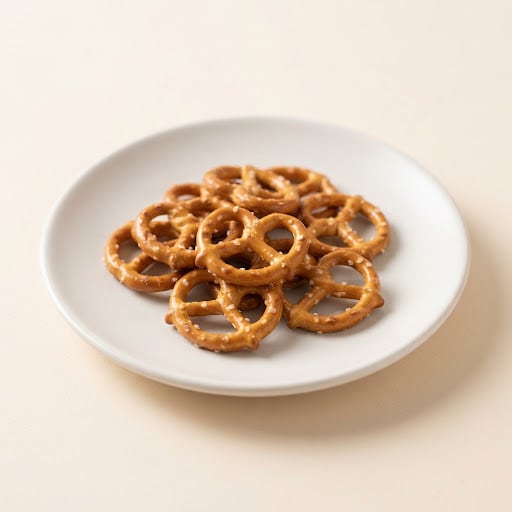
More grains for babies
Updated November 2026. Reviewed by our dietitians. Based on AAP, CDC and NIAID guidance. Written for healthy, full-term babies; not a substitute for your pediatrician. If your baby was born early, has a medical condition, feeding difficulties or a known allergy, check with them first (medical disclaimer). Always stay with your baby while they eat.