
No. 53 · Grains Passport food
When can babies have barley?
Can babies have barley?
Babies can have barley from about 6 months, as soon as they are ready for solids. Cook pearl or hulled barley until very soft and blend it into a smooth porridge at first, then serve it mashed into other foods or pressed into soft patties from 7–8 months. Barley contains gluten, so it is a useful early way to introduce gluten, but it is not a Top 9 allergen.
How to serve barley by age
Shapes and textures change as your baby’s grasp and chewing grow.

6 months
Simmer pearl barley in plenty of water until each grain is plump and very soft, about 45 to 60 minutes, then blend it with some cooking water, breast milk or formula into a smooth porridge. Offer it on a spoon, plain or mixed with fruit or vegetable puree.

7–8 months
Mash soft cooked barley roughly so it is thicker and lumpier, and mix it with mashed vegetables, yogurt or broth so the grains hold together. You can also shape soft barley with mashed vegetables or egg into fully cooked patties about the size of two adult fingers that squash easily.

9–12 months
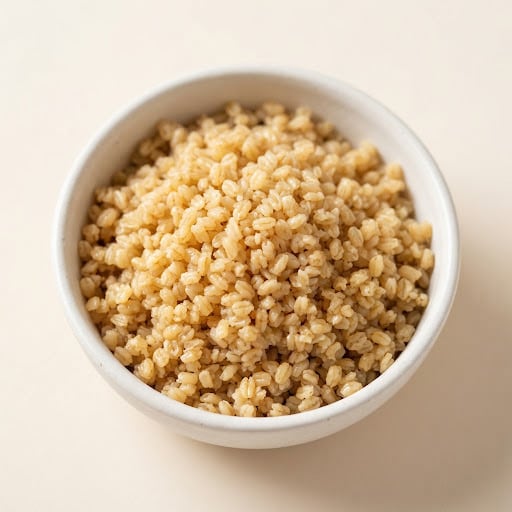
Offer loose, very soft cooked barley in a bowl or on the tray for baby to rake up with fingers or a preloaded spoon. Mixing it into soups, stews or risotto-style dishes helps the grains stick together.

12 months +
Serve barley in family soups, grain salads, pilaf and stews. Toddlers can use a spoon or fork, and you can cook it a little firmer as chewing improves.
Why it’s good
Barley gives babies carbohydrates for energy, fiber for healthy digestion, and minerals like selenium, manganese, magnesium and some iron and zinc. Hulled barley keeps more of the bran and fiber than pearl barley. Barley is also a good grain to rotate with rice, which tends to take up more arsenic from the soil.
Safety notes
- Cook barley until it is completely soft. Firm or undercooked grains are hard to chew and easy to inhale, so mash or clump them for young babies.
- Loose grains can scatter in the mouth and cause gagging or coughing. Mixing barley with a moist food like yogurt, puree or broth helps it hold together.
- Barley contains gluten. If your child has celiac disease in the family or has symptoms like ongoing diarrhea, bloating or poor weight gain, talk to your pediatrician.
- Use low-sodium or homemade broth when cooking barley, and skip salty soup mixes and bouillon cubes for babies under 2.
- Cool cooked barley quickly, refrigerate within 2 hours, and use within 3 to 4 days.
A low-allergy food, still worth watching
Barley is not one of the Top 9 allergens, though allergic reactions to it are possible. Children with a wheat allergy often tolerate barley, but some do react to it, so if your baby has a wheat allergy, ask your allergist before offering barley.
Barley for babies: questions parents ask
Quick answers about barley for babies and toddlers.
When can babies have barley?
Babies can have barley from about 6 months, when they are ready for solids. Barley should be cooked until very soft and served as a smooth porridge at first, then mixed into other foods or shaped into soft patties from about 7–8 months.
Can babies have barley?
Yes, babies can eat barley from 6 months. Barley is a gentle, filling grain that works well in porridge, soups and stews.
Is barley a choking hazard for babies?
Yes, whole grains like barley are treated as a choking hazard for babies under 12 months. A single soft grain is unlikely to block the airway, but loose grains can be gagged on or inhaled, which is why mashing barley or mixing it with a moist food is best for new eaters.
Is barley a common allergen?
No, barley is not a common allergen and is not one of the Top 9. Barley does contain gluten, which matters for celiac disease, and some children with a wheat allergy also react to barley.
How do I serve barley to a 6 month old?
To serve barley to a 6 month old, cook it in water until very soft, then blend it into a smooth porridge and offer it on a spoon or pre-loaded spoon. Soft barley patties for baby to hold can follow at 7–8 months.
Does barley have gluten?
Yes, barley contains gluten. Offering foods with gluten from around 6 months is generally fine for babies, and there is no need to delay it unless your pediatrician advises otherwise, for example because of celiac disease concerns.
Is pearl barley or hulled barley better for babies?
Both pearl barley and hulled barley are fine for babies. Pearl barley cooks faster and turns softer, which makes it easier for beginners, while hulled barley has more fiber and needs longer cooking until every grain is tender.
Is barley cereal a good alternative to rice cereal?
Barley cereal is a good alternative to rice cereal for babies, because rice tends to contain more arsenic than other grains. Choose an iron-fortified barley infant cereal and rotate it with oats, wheat and other grains.
Does barley help with baby constipation?
Barley is rich in fiber and can help keep stools soft as part of a varied diet. When adding more barley and other high-fiber foods, also offer small sips of water with meals to help the fiber work.
The takeaway
- Babies can have barley from about 6 months, as soon as they are ready for solids.
- Simmer pearl barley in plenty of water until each grain is plump and very soft, about 45 to 60 minutes, then blend it with some cooking water, breast milk or formula into a smooth porridge.
- Choking risk is medium. Not a Top 9 allergen, but offer a small amount first and watch for any reaction.
Read next



Sources
This guide follows current advice from these organizations.
- Starting Solid Foods American Academy of Pediatrics (HealthyChildren.org)
- When, What, and How to Introduce Solid Foods Centers for Disease Control and Prevention
- Choking Hazards Centers for Disease Control and Prevention
- Choking Prevention American Academy of Pediatrics (HealthyChildren.org)
- What You Can Do to Limit Exposure to Arsenic U.S. Food and Drug Administration
Stamp barley in your baby’s passport
Track the first 100 foods and the Top 9 allergens. 7 days free.
More grains for babies
Updated November 2026. Reviewed by our dietitians. Based on AAP, CDC and NIAID guidance. Written for healthy, full-term babies; not a substitute for your pediatrician. If your baby was born early, has a medical condition, feeding difficulties or a known allergy, check with them first (medical disclaimer). Always stay with your baby while they eat.