
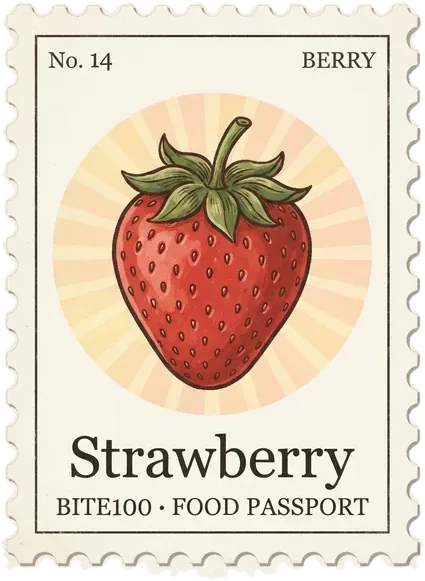
No. 14 · Fruit Passport food
When can babies have strawberries?
Can babies have strawberries?
Babies can have strawberries from about 6 months, as soon as they are ready for solids. Start with ripe strawberries mashed into yogurt or oatmeal on a spoon, then offer roughly mashed berries or very ripe berries quartered and flattened from 7–8 months. Never offer whole strawberries to babies, and keep mashing, flattening or cutting them until about age 4.
How to serve strawberries by age
Shapes and textures change as your baby’s grasp and chewing grow.

6 months
Remove the green tops and mash ripe strawberries well with a fork, or blend them, then stir them into plain yogurt, oatmeal or iron-fortified cereal and offer it on a spoon. Do not offer whole berries at this age.

7–8 months
Mash ripe strawberries roughly with a fork, or chop them finely, and stir them into yogurt or oatmeal for a lumpier texture. Very ripe, soft strawberries can also be quartered and flattened for your baby to pick up, as long as they squash easily; never offer them whole.

9–12 months
Cut ripe strawberries into small pieces about the size of a chickpea, or quarter them, so your baby can practice the pincer grasp. Very soft berries can also be flattened slightly to make them easier to pick up and safer to chew.

12 months +
Serve strawberries quartered or in thin slices on their own, on toast, or in yogurt. Keep cutting small or firm strawberries until about age 4, since a whole small berry can block the airway.
Why it’s good
Strawberries give babies a lot of vitamin C, which supports the immune system and helps the body absorb iron from plant foods like beans, lentils and fortified cereals. Strawberries also offer folate, manganese, fiber and water. Their bright color and sweet-tart taste make them an easy way to add variety.
Safety notes
- Whole, small, firm or underripe strawberries are a choking risk. Mash strawberries at 6 months, and from 7–8 months mash them roughly or quarter and flatten only very ripe, soft berries.
- A red rash around the mouth or on the chin after eating strawberries is common and is usually skin irritation from the acidic juice, not an allergy. If the rash spreads, or you see hives, swelling or vomiting, call your pediatrician.
- Rinse strawberries under running water just before serving and remove the leafy green top for younger babies. Do not soak them, which can make them mushy.
- Frozen whole strawberries are hard and a choking hazard. Thaw and mash them first.
- Skip strawberry jam, syrups and sweetened strawberry yogurts for babies under 2. They are high in added sugar. Fresh mashed berries sweeten food naturally.
A low-allergy food, still worth watching
Strawberries are not a common allergen and true strawberry allergy is uncommon. A red rash around the mouth is usually contact irritation; hives elsewhere on the body, swelling, vomiting or trouble breathing are signs of a reaction and need medical advice right away.
Strawberries for babies: questions parents ask
Quick answers about strawberries for babies and toddlers.
When can babies have strawberries?
Babies can have strawberries from about 6 months, as soon as they are ready for solids. Serve strawberries mashed at 6 months; from 7–8 months they can be roughly mashed or, if very ripe and soft, quartered and flattened, but never served whole.
Can babies have strawberries?
Yes, babies can eat strawberries from around 6 months. Strawberries are a good source of vitamin C and can be served mashed into yogurt at first, quartered and flattened when very ripe from 7–8 months, or cut into small pieces once the pincer grasp develops.
Are strawberries a choking hazard for babies?
Strawberries are a medium choking risk for babies. Small, round or firm strawberries can block the airway, so mash, flatten or quarter them, and do not offer whole berries to babies.
Are strawberries a common allergen?
No, strawberries are not one of the Top 9 common food allergens. Strawberries often cause a harmless red rash around the mouth, but hives, swelling or vomiting can signal a real allergy and should be checked by your pediatrician.
How do I serve strawberries to a 6 month old?
To serve strawberries to a 6 month old, remove the tops and mash ripe strawberries into plain yogurt or oatmeal, then offer it on a spoon. Roughly mashed berries, or very ripe berries quartered and flattened, can follow at 7–8 months. Never give a baby whole strawberries.
Why does my baby get a rash from strawberries?
A baby often gets a red rash around the mouth from strawberries because the acidic juice irritates sensitive skin. This contact rash usually fades within an hour and is not an allergy, but a rash that spreads or comes with swelling or vomiting needs a call to your pediatrician.
Can babies have frozen strawberries?
Babies can eat frozen strawberries once they are fully thawed and mashed or cut small. Hard frozen whole strawberries are a choking hazard, though a thawed, mashed berry can soothe sore gums in a mesh feeder.
Should I buy organic strawberries for my baby?
Organic strawberries are a personal choice, and conventional strawberries are still a healthy food for babies. Strawberries often carry more pesticide residue than other fruits, so rinse them well under running water, and choose organic if it fits your budget.
Can strawberries cause diaper rash?
Strawberries can sometimes cause a mild diaper rash because acidic fruits change the acidity of poop. Diaper rash from strawberries is usually short-lived; use a barrier cream and offer fewer strawberries for a few days if it bothers your baby.
How do I pick sweet strawberries for my baby?
Sweet strawberries are red all the way to the top, smell fragrant, and feel slightly soft but not mushy. Strawberries do not get sweeter after picking, so pale or white-shouldered berries will stay tart and firm.
Are strawberries good for babies?
Yes, strawberries are a good food for babies from about 6 months, offering vitamin C, folate, fiber and water. The vitamin C helps babies absorb iron from beans, lentils and fortified cereals; mash strawberries at first and never offer them whole.
Can babies have freeze-dried strawberries?
Babies can have freeze-dried strawberries from about 6 months if you crush them into a fine powder and stir it into yogurt or oatmeal. Whole freeze-dried berries are firm and crunchy before they soften, so offer pieces only once your baby chews well, and choose plain brands with no added sugar.
Can strawberries cause diarrhea in toddlers?
Strawberries can loosen a toddler's stools if they eat a lot at once, because the berries are high in fiber, water and natural sugars. Offer a moderate portion alongside other foods, and call your pediatrician if diarrhea lasts more than a day or two or comes with fever, vomiting or signs of dehydration.
The takeaway
- Babies can have strawberries from about 6 months, as soon as they are ready for solids.
- Remove the green tops and mash ripe strawberries well with a fork, or blend them, then stir them into plain yogurt, oatmeal or iron-fortified cereal and offer it on a spoon.
- Choking risk is medium. Not a Top 9 allergen, but offer a small amount first and watch for any reaction.
Read next



Sources
This guide follows current advice from these organizations.
- Starting Solid Foods American Academy of Pediatrics (HealthyChildren.org)
- When, What, and How to Introduce Solid Foods Centers for Disease Control and Prevention
- Choking Hazards Centers for Disease Control and Prevention
- Choking Prevention American Academy of Pediatrics (HealthyChildren.org)
- Foods and Drinks to Avoid or Limit Centers for Disease Control and Prevention
- Dietary Guidelines for Americans, 2020-2025 U.S. Department of Agriculture and HHS
Recipes with strawberry

Stamp strawberry in your baby’s passport
Track the first 100 foods and the Top 9 allergens. 7 days free.
More fruit for babies
Updated November 2026. Reviewed by our dietitians. Based on AAP, CDC and NIAID guidance. Written for healthy, full-term babies; not a substitute for your pediatrician. If your baby was born early, has a medical condition, feeding difficulties or a known allergy, check with them first (medical disclaimer). Always stay with your baby while they eat.