
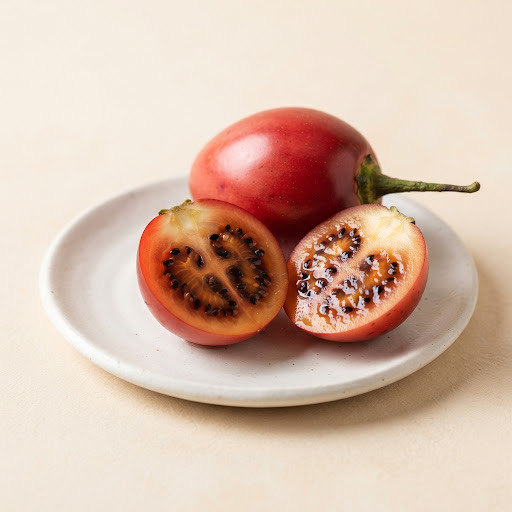
Fruit Food Library
When can babies have tamarillos?
Can babies have tamarillos?
Babies can have tamarillo, also called tree tomato, from about 6 months when it is ripe, peeled and mashed or cooked. Tamarillo flesh can be slippery and firm when underripe, which raises the choking risk. Tamarillo is not a common allergen.
How to serve tamarillos by age
Shapes and textures change as your baby’s grasp and chewing grow.

6 months
Peel a ripe tamarillo (blanch it in hot water for a minute so the skin slips off) and mash or blend the flesh smooth into plain yogurt or oatmeal. You can also simmer it into a soft compote with a ripe banana or apple and blend it before offering it on a spoon.

7–8 months
Mash peeled ripe tamarillo more roughly into yogurt or oatmeal, or simmer it into a chunkier compote with banana or apple. A thin layer of compote on a soft toast strip is an easy way for your baby to self-feed.

9–12 months
Offer small, soft pieces of peeled ripe tamarillo or cooked tamarillo mixed into grains, or spread compote on toast strips. The tart taste pairs well with sweeter fruit.

12 months +
Toddlers can eat chopped peeled tamarillo, tamarillo salsa or sauces, and baked tamarillo halves scooped with a spoon. Keep pieces small until chewing is strong.
Why it’s good
Tamarillo gives babies vitamin C, vitamin A, vitamin E, potassium and fiber. Its tangy, tomato-like taste helps babies learn to enjoy sour and bold flavors.
Safety notes
- Always peel tamarillo. The skin is bitter and tough to chew.
- Underripe tamarillo is firm and slippery. Serve only ripe fruit that gives slightly when pressed, or cook it soft.
- Tamarillo is acidic and may cause mild redness around the mouth. This is usually irritation, not allergy.
- The small seeds are soft and safe to eat once the flesh is mashed.
A low-allergy food, still worth watching
Tamarillo is not a Top 9 allergen. It belongs to the nightshade family with tomatoes, so babies sensitive to tomato may react; offer a small amount first and watch for hives or swelling.
Tamarillos for babies: questions parents ask
Quick answers about tamarillos for babies and toddlers.
When can babies have tamarillo?
Babies can have tamarillo from about 6 months, as soon as they start solids. Tamarillo should be ripe, peeled and mashed or cooked soft.
Can babies have tree tomato?
Yes, babies can eat tree tomato, the common name for tamarillo, when it is peeled and prepared for their age. Tree tomato can be mashed raw when ripe or cooked into a compote.
Is tamarillo a choking hazard for babies?
Tamarillo can be a choking hazard when it is underripe, firm or served in slippery pieces. Peel ripe tamarillo and mash it or cook it soft to lower the risk.
Is tamarillo a common allergen?
No, tamarillo is not a common allergen. Babies sensitive to tomatoes or other nightshades may occasionally react to tamarillo.
How do I serve tamarillo to a 6 month old?
To serve tamarillo to a 6 month old, dip a ripe tamarillo in hot water for a minute, slip off the skin, and mash the flesh into plain yogurt or oatmeal. Pairing tamarillo with banana softens its tartness.
How do I peel a tamarillo?
To peel a tamarillo, cut a small cross in the bottom, cover it with boiling water for about a minute, then cool it in cold water. The skin will slip off easily, or you can halve it and scoop out the flesh.
Can I cook tamarillo for my baby?
Yes, cooking tamarillo softens the flesh and mellows its sour taste. Simmer peeled tamarillo with apple or pear, then mash or blend for your baby.
Why is my baby making a face at tamarillo?
Tamarillo tastes tart and tangy, so many babies make a face at first. Keep offering tamarillo alongside familiar foods, since babies often need many tries to accept new flavors.
The takeaway
- Babies can have tamarillo, also called tree tomato, from about 6 months when it is ripe, peeled and mashed or cooked.
- Peel a ripe tamarillo (blanch it in hot water for a minute so the skin slips off) and mash or blend the flesh smooth into plain yogurt or oatmeal.
- Choking risk is medium. Not a Top 9 allergen, but offer a small amount first and watch for any reaction.
Read next



Sources
This guide follows current advice from these organizations.
- Starting Solid Foods American Academy of Pediatrics (HealthyChildren.org)
- When, What, and How to Introduce Solid Foods Centers for Disease Control and Prevention
- Choking Hazards Centers for Disease Control and Prevention
- Choking Prevention American Academy of Pediatrics (HealthyChildren.org)
Track every new food in your baby’s passport
Track the first 100 foods and the Top 9 allergens. 7 days free.
More fruit for babies
Updated November 2026. Reviewed by our dietitians. Based on AAP, CDC and NIAID guidance. Written for healthy, full-term babies; not a substitute for your pediatrician. If your baby was born early, has a medical condition, feeding difficulties or a known allergy, check with them first (medical disclaimer). Always stay with your baby while they eat.