
No. 50 · Veggies Passport food
When can babies have bell peppers?
Can babies have bell peppers?
Babies can have bell peppers from about 6 months, as soon as they are ready for solids. Roast or saute bell pepper until very soft and peel off the skin, then blend it smooth at 6 months and offer soft finger-length strips from 7–8 months. Raw bell pepper is crunchy and can break into hard pieces, so keep it cooked for babies.
How to serve bell peppers by age
Shapes and textures change as your baby’s grasp and chewing grow.

6 months
Roast or saute bell pepper until very soft and slumped, peel off the skin, and blend it until smooth with a little water, breast milk or formula. Stir the puree into smooth lentils, hummus or sweet potato and serve it on a spoon.

7–8 months
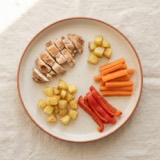
Finely chop or fork-mash soft roasted pepper into lumpier lentils, pasta sauce or potato. You can also offer peeled roasted strips about the length and width of an adult finger to hold, as long as they squash easily between your fingers.

9–12 months
Cut soft cooked bell pepper into small pieces about the size of a pea, or finely dice it into omelets, quesadillas and rice. Remove any loose skin that could stick to the roof of the mouth.

12 months +
Keep serving soft cooked bell pepper in family meals like stir-fries, fajitas and pasta. Raw bell pepper is a hard, crunchy food, so wait to offer raw slices until your child chews well and can bite through crunchy foods safely, and serve them as thin strips.
Why it’s good
Bell peppers are one of the richest vegetable sources of vitamin C, which helps babies absorb iron from beans, grains and iron-fortified cereal. Bell peppers also give vitamin A, vitamin B6, folate and fiber. Red, yellow and orange peppers are sweeter and higher in vitamin A than green ones.
Safety notes
- Raw bell pepper is crunchy and can break into hard, sharp pieces. Cook it until very soft for babies and young toddlers.
- Bell pepper skin can stay tough and papery after cooking. Peel roasted peppers, or remove loose skins, for younger babies.
- Remove the stem, seeds and white ribs before cooking. The seeds are small and slippery and can make babies cough.
- Do not confuse bell peppers with hot chili peppers. Spicy peppers can burn a baby's mouth and eyes, so keep them separate when cooking.
- Jarred roasted peppers are often salty and packed in vinegar. Rinse them well, or roast your own.
A low-allergy food, still worth watching
Bell pepper is not one of the Top 9 allergens, and allergy is uncommon. Some children with pollen or latex allergies notice an itchy mouth from bell pepper, so watch for itching, hives, swelling or vomiting and talk to your pediatrician if your baby has these allergies.
Bell peppers for babies: questions parents ask
Quick answers about bell peppers for babies and toddlers.
When can babies have bell peppers?
Babies can have bell peppers from about 6 months, as soon as they are ready to start solids. Bell peppers should be cooked until very soft, with tough skins removed, and pureed at first, then served in soft strips from 7–8 months.
Can babies have bell peppers?
Yes, babies can eat bell peppers from 6 months when they are cooked soft. Bell peppers are packed with vitamin C and add sweet flavor and color to meals.
Are bell peppers a choking hazard for babies?
Bell peppers can be a choking hazard for babies, especially raw pieces and loose skin. Cook bell peppers until very soft, peel the skin, and stay with your baby while they eat.
Are bell peppers a common allergen?
No, bell peppers are not a common allergen and are not one of the Top 9 allergens. Children with pollen or latex allergies sometimes react to bell pepper, so watch for an itchy mouth or hives the first few times.
How do I serve bell peppers to a 6 month old?
To serve bell peppers to a 6 month old, roast or saute them until very soft, peel off the skin and blend until smooth. Stir the puree into hummus, lentils or sweet potato and offer it on a spoon. Soft roasted strips to hold can follow at 7–8 months.
Can babies have raw bell pepper?
Raw bell pepper is not recommended for babies because it is hard and crunchy and can break into small pieces. Serve bell pepper cooked until soft, and wait on raw slices until your child is a confident chewer, then offer them as thin strips with supervision.
Do bell peppers make babies gassy?
Bell peppers can cause a little gas in some babies, especially green peppers and raw pepper. Cooking bell peppers well and peeling the skin often makes them easier to digest.
Which color bell pepper is best for babies?
Red, orange and yellow bell peppers are riper and sweeter, so babies often like them more than green peppers. Red bell peppers have the most vitamin C and vitamin A, but every color is a healthy choice.
Do I need to peel bell peppers for my baby?
Peeling bell peppers is helpful for young babies, since the skin can stay tough and stick to the roof of the mouth. Roast peppers until the skin blisters, cover them for 10 minutes, and the skin will slip off easily.
The takeaway
- Babies can have bell peppers from about 6 months, as soon as they are ready for solids.
- Roast or saute bell pepper until very soft and slumped, peel off the skin, and blend it until smooth with a little water, breast milk or formula.
- Choking risk is high. Not a Top 9 allergen, but offer a small amount first and watch for any reaction.
Read next


Sources
This guide follows current advice from these organizations.
- Starting Solid Foods American Academy of Pediatrics (HealthyChildren.org)
- When, What, and How to Introduce Solid Foods Centers for Disease Control and Prevention
- Choking Hazards Centers for Disease Control and Prevention
- Choking Prevention American Academy of Pediatrics (HealthyChildren.org)
Stamp bell pepper in your baby’s passport
Track the first 100 foods and the Top 9 allergens. 7 days free.
Recipes with bell pepper

More vegetables for babies
Updated November 2026. Reviewed by our dietitians. Based on AAP, CDC and NIAID guidance. Written for healthy, full-term babies; not a substitute for your pediatrician. If your baby was born early, has a medical condition, feeding difficulties or a known allergy, check with them first (medical disclaimer). Always stay with your baby while they eat.