
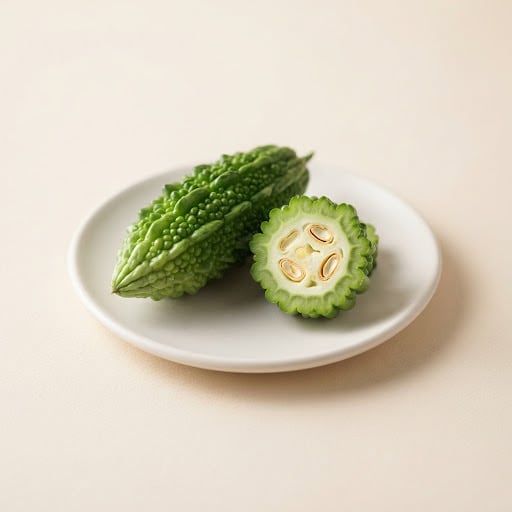
Veggies Food Library
When can babies have bitter melon?
Can babies have bitter melon?
Babies can have small amounts of cooked bitter melon from about 6 months. Remove all seeds and the inner pith, cook the flesh until soft, and offer it as an occasional food mixed with milder ingredients. Bitter melon should be a food, never a supplement, juice or extract, for babies.
How to serve bitter melon by age
Shapes and textures change as your baby’s grasp and chewing grow.

6 months
Cut bitter melon in half, scoop out every seed and the white pith, then steam or simmer the flesh until very soft. Blend a small amount into smooth dal, mashed potato or rice porridge to soften the bitter taste, and offer it on a spoon.

7–8 months
Mash or finely chop soft-cooked, seeded bitter melon and stir it into thicker foods like scrambled egg, dal, rice or fork-mashed potato. Keep the amount small and check that no seeds are left.

9–12 months
Offer thin, soft-cooked bitter melon pieces, about the size of a pea, mixed into stir-fried egg, tofu, rice or noodles. Keep portions small and make sure there are no seeds left.

12 months +
Toddlers can try bitter melon in family dishes like stir-fries, soups and curries, cut into small, tender bite-size pieces. Do not worry if your toddler refuses it; bitter flavors often take many tries.
Why it’s good
Bitter melon gives babies vitamin C, folate, vitamin A, potassium and fiber. Its strong bitter taste also exposes babies to a flavor they rarely meet, which may help them accept a wider range of vegetables later. Because bitter melon can lower blood sugar, its value for babies is as an occasional vegetable rather than a large or daily portion.
Safety notes
- Remove all seeds and the red or white pith before cooking. The seeds, especially from ripe red fruit, contain compounds that can be harmful, and they are also a choking risk.
- Do not give babies or toddlers bitter melon juice, tea, extracts, capsules or other supplements. These concentrated forms can lower blood sugar and have caused serious illness in young children.
- Serve bitter melon cooked and in small amounts as part of a mixed meal. If your baby has a medical condition such as diabetes or a G6PD deficiency, check with your pediatrician first.
- Raw bitter melon is firm, crunchy and slippery. Cook it until soft and cut it to suit your baby's age to lower the choking risk.
- Choose firm, green bitter melon without soft spots. Fruit that has turned yellow or orange is overripe and more bitter.
A low-allergy food, still worth watching
Bitter melon is not a common allergen. Babies with allergies to related plants in the gourd family, such as cucumber, melon or squash, may react, so offer a small amount first and watch for rash, hives or vomiting.
Bitter melon for babies: questions parents ask
Quick answers about bitter melon for babies and toddlers.
When can babies have bitter melon?
Babies can have small amounts of cooked bitter melon from about 6 months. Bitter melon should be seeded, cooked until soft and served as an occasional food mixed with milder flavors.
Can babies have bitter melon?
Yes, babies can eat bitter melon in small, well-cooked portions with all seeds and pith removed. Bitter melon juices, teas and supplements are not safe for babies and should be avoided.
Is bitter melon a choking hazard for babies?
Yes, bitter melon can be a choking hazard because the raw flesh is firm and slippery and the seeds are large. Remove all seeds, cook bitter melon until soft, and mash or finely chop it for young babies.
Is bitter melon a common allergen?
No, bitter melon is not a common allergen. Babies with allergies to cucumber, melon, squash or other gourds may be more likely to react, so start with a small amount.
How do I serve bitter melon to a 6 month old?
To serve bitter melon to a 6 month old, remove the seeds and pith, steam the flesh until soft and blend or mash it smooth. Mix a small spoonful into a familiar smooth food such as dal or mashed potato and offer it on a spoon.
Is bitter melon juice safe for babies?
No, bitter melon juice is not safe for babies or toddlers. Concentrated bitter melon juice can lower blood sugar too much in young children, so serve bitter melon only as a cooked vegetable.
How do I make bitter melon less bitter for my baby?
To make bitter melon less bitter, remove all the white pith, slice the flesh thinly, sprinkle it with a little salt, let it sit for 10 to 15 minutes, then rinse very well before cooking. Blanching bitter melon briefly and pairing it with egg, coconut milk or potato also tames the taste.
Can bitter melon lower a baby's blood sugar?
Bitter melon contains compounds that can lower blood sugar, which is why concentrated forms are risky for young children. Small amounts of cooked bitter melon as part of a balanced meal are generally considered fine for healthy babies, but ask your pediatrician if your child has a medical condition.
What if my baby refuses bitter melon?
It is very normal for babies to refuse bitter melon at first because babies are born preferring sweet tastes. Keep offering tiny amounts of bitter melon alongside favorite foods, without pressure, and let your baby see you enjoy it too.
The takeaway
- Babies can have small amounts of cooked bitter melon from about 6 months.
- Cut bitter melon in half, scoop out every seed and the white pith, then steam or simmer the flesh until very soft.
- Choking risk is high. Not a Top 9 allergen, but offer a small amount first and watch for any reaction.
Read next


Sources
This guide follows current advice from these organizations.
- Starting Solid Foods American Academy of Pediatrics (HealthyChildren.org)
- When, What, and How to Introduce Solid Foods Centers for Disease Control and Prevention
- Choking Hazards Centers for Disease Control and Prevention
- Choking Prevention American Academy of Pediatrics (HealthyChildren.org)
Track every new food in your baby’s passport
Track the first 100 foods and the Top 9 allergens. 7 days free.
More vegetables for babies
Updated November 2026. Reviewed by our dietitians. Based on AAP, CDC and NIAID guidance. Written for healthy, full-term babies; not a substitute for your pediatrician. If your baby was born early, has a medical condition, feeding difficulties or a known allergy, check with them first (medical disclaimer). Always stay with your baby while they eat.