
Veggies Food Library
When can babies have bok choy?
Can babies have bok choy?
Babies can have bok choy from about 6 months, as soon as they are ready for solids. Cook bok choy until the stalks are very soft, since firm raw stalks are hard for babies to chew. Bok choy adds calcium, vitamin C and vitamin A to a baby's meals.
How to serve bok choy by age
Shapes and textures change as your baby’s grasp and chewing grow.

6 months
Steam or simmer bok choy until both the leaves and the stalks are very soft, then blend it until smooth. Bok choy puree is thin, so stir it into mashed potato, sweet potato, rice cereal or lentils and offer it on a spoon.

7–8 months
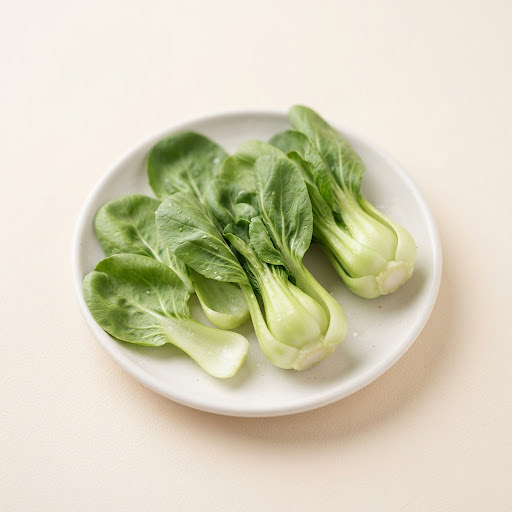
Finely chop well-cooked bok choy leaves and soft stalks and stir them into lumpier mashes, rice or lentils. You can also offer a whole baby bok choy, or a larger one halved lengthwise, steamed until the stalk squashes easily between your thumb and finger, for baby to hold by the stalk end.

9–12 months
Chop well-cooked bok choy stalks into small, soft pieces about the size of a pea, and finely chop the leaves so they do not form a long strand. Toss with soft noodles, rice, tofu or scrambled egg.

12 months +
Serve chopped, soft-cooked bok choy in stir-fries, soups, noodle bowls and dumpling fillings. Limit salty sauces like soy sauce, oyster sauce and stock cubes, or use low-sodium versions, and keep raw stalks for older kids who chew well.
Why it’s good
Bok choy gives babies vitamin C, vitamin A, vitamin K, folate and a useful amount of calcium that the body absorbs well. Bok choy has small amounts of iron, and its vitamin C helps the body absorb iron from beans, tofu or meat served in the same meal. Its mild flavor is an easy introduction to leafy greens.
Safety notes
- Never serve raw bok choy stalks to babies: they are firm, crunchy and hard to break down. Cook them until they squash easily between your fingers.
- Cooked leaves can stick to the roof of the mouth or form long strands. Chop leaves finely or mix them into moist foods like rice or mashed potato.
- Go easy on salty sauces. Soy sauce, oyster sauce, fish sauce and bouillon are high in sodium; use a splash of low-sodium versions or season with garlic, ginger or sesame oil instead.
- Wash bok choy well by separating the stalks and rinsing at the base, where grit and soil collect.
- Always seat baby upright and stay within arm's reach while they eat.
A low-allergy food, still worth watching
Bok choy is not a common allergen, and reactions are rare. Babies with a known reaction to related vegetables such as cabbage, broccoli or mustard greens may be more sensitive, so offer a small amount first and watch for hives, swelling or vomiting.
Bok choy for babies: questions parents ask
Quick answers about bok choy for babies and toddlers.
When can babies have bok choy?
Babies can have bok choy from about 6 months, once they are developmentally ready for solid foods. Bok choy should be cooked until soft for babies, especially the firm white stalks.
Can babies have bok choy?
Yes, babies can eat bok choy when it is cooked until very soft. Bok choy can be blended into purees at 6 months, then finely chopped into mashes or offered as a whole soft-cooked baby bok choy to hold from about 7–8 months.
Is bok choy a choking hazard for babies?
Bok choy can be a choking hazard for babies when the stalks are raw or undercooked, because they are firm and crunchy. Cooked bok choy is much safer, but chop the leaves finely so they do not stick in the mouth or form long strands.
Is bok choy a common allergen?
No, bok choy is not one of the Top 9 common food allergens. Allergic reactions to bok choy are rare, though babies sensitive to related vegetables like cabbage or broccoli may react, so watch the first few times.
How do I serve bok choy to a 6 month old?
To serve bok choy to a 6 month old, steam it for about 5 to 8 minutes until the stalks are very soft, then blend it and stir it into a smooth puree like potato or sweet potato. Offer it on a spoon. A whole soft-cooked baby bok choy to hold can follow at 7–8 months.
Can babies have raw bok choy?
No, babies should not eat raw bok choy, because the raw stalks are too firm to chew safely. Wait until your child can chew crunchy raw vegetables well, usually after age 4, before offering raw bok choy stalks.
What is the difference between baby bok choy and regular bok choy for babies?
Baby bok choy is simply a younger, smaller harvest with more tender stalks, which makes it easier to cook soft and hold. Regular bok choy works just as well for babies once the thicker stalks are cooked longer and cut into age-appropriate pieces.
Is bok choy healthy for babies?
Yes, bok choy is healthy for babies, offering vitamins C, A and K, folate and well-absorbed calcium. Bok choy is also mild in flavor, so it is a gentle way to introduce leafy greens.
Can bok choy cause gas in babies?
Bok choy is a cruciferous vegetable, and like cabbage or broccoli it can cause some extra gas in a few babies. Start with small portions and serve it cooked, which is usually easier to digest.
Can I use frozen bok choy for my baby?
Yes, frozen bok choy is fine for babies and is usually just as nutritious as fresh. Cook frozen bok choy until very soft and chop it finely, since it can be watery and stringy once thawed.
The takeaway
- Babies can have bok choy from about 6 months, as soon as they are ready for solids.
- Steam or simmer bok choy until both the leaves and the stalks are very soft, then blend it until smooth.
- Choking risk is medium. Not a Top 9 allergen, but offer a small amount first and watch for any reaction.
Read next



Sources
This guide follows current advice from these organizations.
- Starting Solid Foods American Academy of Pediatrics (HealthyChildren.org)
- When, What, and How to Introduce Solid Foods Centers for Disease Control and Prevention
- Choking Hazards Centers for Disease Control and Prevention
- Choking Prevention American Academy of Pediatrics (HealthyChildren.org)
- Foods and Drinks to Avoid or Limit Centers for Disease Control and Prevention
Track every new food in your baby’s passport
Track the first 100 foods and the Top 9 allergens. 7 days free.
More vegetables for babies
Updated November 2026. Reviewed by our dietitians. Based on AAP, CDC and NIAID guidance. Written for healthy, full-term babies; not a substitute for your pediatrician. If your baby was born early, has a medical condition, feeding difficulties or a known allergy, check with them first (medical disclaimer). Always stay with your baby while they eat.