
Constipation and starting solids
Poop changes when solids start. Here is what’s normal, what helps, and when to call.
Quick answer
Firmer, smellier and less frequent poop is normal once solids start, usually from about 6 months. Constipation means hard, dry or pebble-like stools that hurt to pass, not just fewer poops. Most cases ease within a few days with fiber-rich foods like pears, prunes, peas and oats, small sips of water with meals, and fewer binding foods.
- Judge by texture and comfort, not by how many days between poops
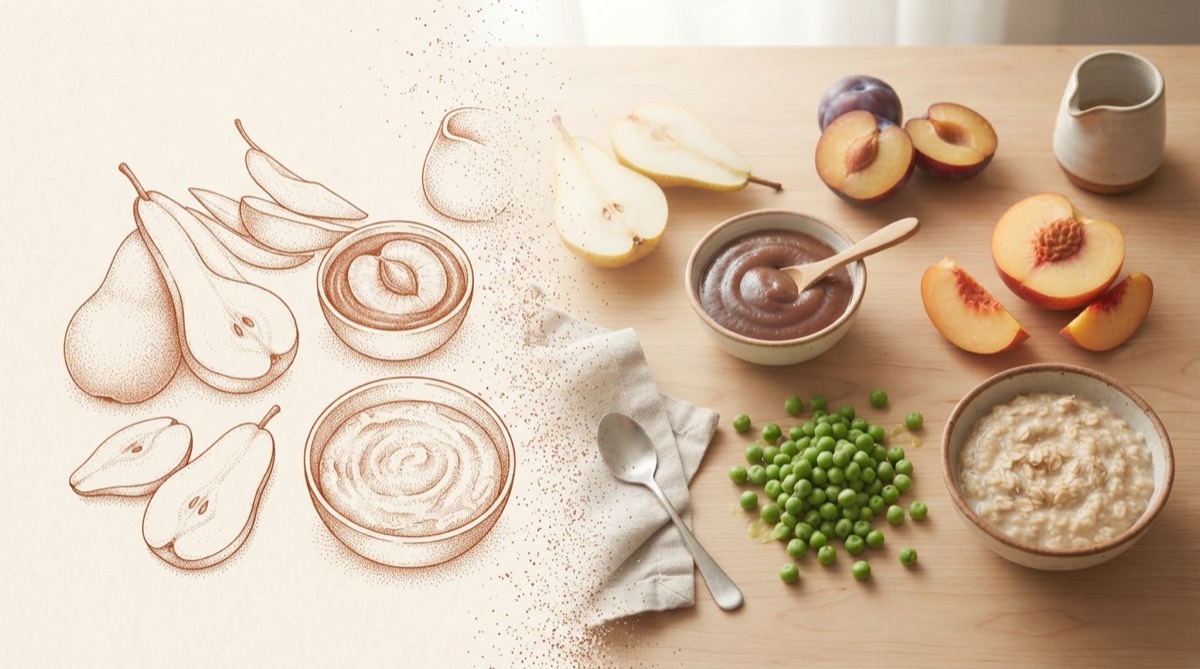
- Offer “P fruits” (pear, prune, plum, peach), beans, veggies and whole grains
- Call your pediatrician for blood, vomiting, a swollen belly or no improvement in about a week

STEP 1
What’s normal
Probably fine
Likely constipated
Why do babies get constipated when they start solids?
A baby’s gut has only ever handled breast milk or formula. New foods bring new fiber, starch and less water per bite, so the gut needs a few weeks to adjust. Some firming up is expected.
The usual triggers are a sudden shift to lots of starchy or low-fiber foods (rice cereal, crackers, puffs), less milk because solids are filling baby up, a hot day or a cold, and teething or illness that cuts appetite for fluids.
How often should a baby poop after starting solids?
There is no magic number. What matters is that stools are soft enough to pass without pain. A pattern that is steady for your baby is more useful than comparing with other babies.
| Baby | Often normal | Worth a closer look |
|---|---|---|
| Breastfed, just starting solids | Several a day to once every few days | Hard pellets, pain, or a big change that lasts |
| Formula-fed, just starting solids | About once a day to every 2 days | Hard stools, straining with no result for 10+ minutes |
| Eating solids 2–3 times a day | 1–3 a day to every 2–3 days, thicker, like peanut butter | Fewer than 3 a week, or dry “rabbit droppings” |

STEP 2
Foods that help
Soft ripe or puree
Ripe, or prune puree
Soft slices
Smashed
Thick on a spoon
Which foods help a baby poop?
Two things soften stool: fiber, which adds bulk and holds water, and natural sugars like sorbitol in some fruits, which draw water into the bowel. Mixing both kinds through the day works better than relying on one “magic” food.
| Food | Why it helps | Easy way to serve (6–12 months) |
|---|---|---|
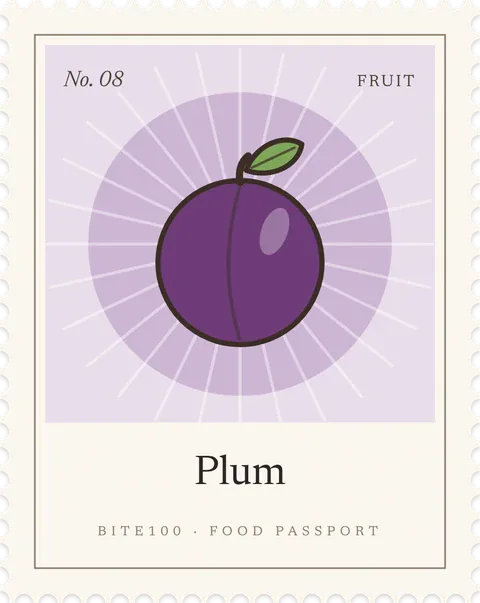
| Prunes and plums | Fiber plus sorbitol | Smooth prune puree stirred into oatmeal or yogurt; very ripe plum halves, pit removed |
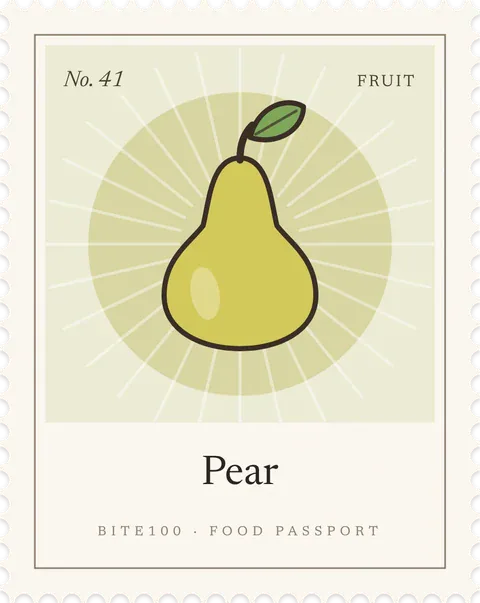
| Pear | Sorbitol and soft fiber | Very ripe or steamed spears, or mashed |
| Apricot, peach, mango, kiwi | Water-rich fruit with fiber | Ripe slices with skin on for grip, or mashed |
| Peas, broccoli, avocado | Insoluble fiber adds bulk | Smashed peas, soft florets, avocado spears |
| Lentils, black beans, chickpeas | Fiber plus iron | Well-cooked and mashed, or thinned hummus |
| Oats, barley, quinoa | Whole-grain fiber | Oat or barley cereal in place of rice cereal |
| Chia and ground flaxseed | Gel-forming fiber softens stool | A pinch stirred into wet food (soak chia first) |
A poop-friendly day, for example
- Breakfast: oatmeal made with breast milk or formula, plus a spoon of prune puree
- Lunch (if baby has one): mashed lentils, soft broccoli and ripe pear
- Dinner: avocado spears, smashed peas and a few sips of water from an open cup
Give changes 1 to 3 days to work. Fiber builds up slowly, and too much at once can bring gas or loose stools. If stools turn runny, scale back.

STEP 3
Foods to ease off for a few days
- •Rice cereal and lots of rice
- •Unripe bananas
- •Big portions of cheese
- •Lots of refined grains like white bread and crackers
You don’t need to cut these foods out. Offer them less often for a few days and pair them with something from the list above, for example ripe banana with pear, or cheese with peas.
What about formula and milk?
Keep breast milk or formula feeds as they were. Don’t switch formula, add extra water to bottles, or mix formula stronger or weaker than the label says without your pediatrician’s advice. Wrongly mixed formula can be dangerous.
The iron in standard infant formula is not a proven cause of constipation, so a “low-iron” formula is not the fix. Cow’s milk as a main drink should wait until 12 months; large amounts later on are a common cause of toddler constipation.
STEP 4
Fluids and movement
- •Offer a few sips of water with meals from 6 months
- •Keep up breast milk or formula feeds
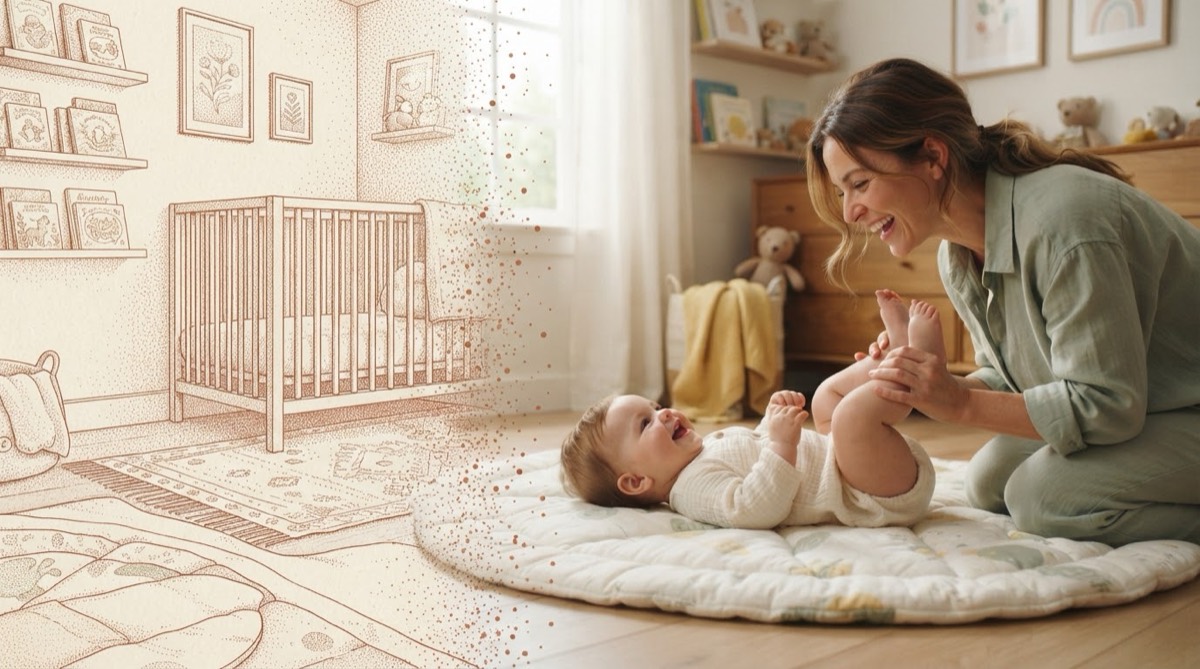
- •Tummy time and bicycle legs can help things move
- •A warm bath can relax a straining baby
How much water can a constipated baby have?
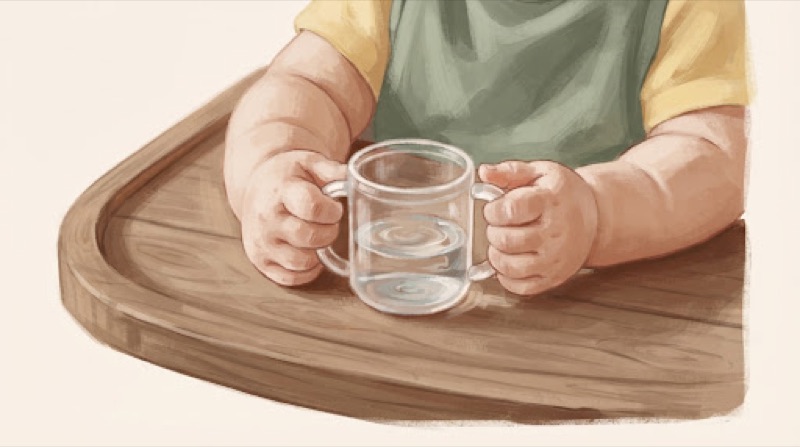
From 6 months, offer small sips of water in an open or straw cup with meals, about 1 to 2 oz (30 to 60 mL) at a time and up to about 4 to 8 oz (120 to 240 mL) a day in total. More than that can fill baby up and crowd out milk. Under 6 months, ask your pediatrician before giving any water.
Simple ways to get things moving
- Tummy massage: with warm hands, rub slow circles clockwise around the belly button for a few minutes
- Bicycle legs: lying on their back, gently cycle baby’s legs, then bring both knees softly to the tummy
- Warm bath: it relaxes tummy muscles; many babies poop during or just after
- Movement: floor time, rolling, crawling and tummy time all help the gut
- Supported squat: holding baby with knees up toward the chest mimics a natural pooping position
Common mistakes
Most baby constipation clears up on its own once the diet is rebalanced. These well-meant moves tend to make it harder.
- Counting days instead of checking texture. A soft poop every 3 days is fine; a hard poop every day is not.
- Going all-in on rice cereal and puffs. These are low in fiber. Rotate in oats, barley, beans and fruit.
- Cutting back milk to “make room” for solids. Breast milk or formula is still the main drink and source of fluid before 12 months.
- Giving juice, laxatives or suppositories on your own. Ask your pediatrician first, even for over-the-counter products.
- Using a thermometer or cotton swab to “stimulate” a poop. Doing it regularly can irritate the skin and make baby rely on it. Only do this if your pediatrician suggests it.
- Changing formula brands back and forth. Talk to your pediatrician before any switch.
- Adding a mountain of fiber overnight. Increase slowly over a few days to avoid gas and tummy pain.
- Pressuring baby to eat “the good foods.” Offer them calmly and often. Stress at meals doesn’t help digestion.
STEP 5
When to call your pediatrician
Call promptly if you see
Don’t give laxatives, suppositories or juice to a baby without your pediatrician’s advice.
Call your pediatrician the same day if
- Baby is under 6 weeks old and seems constipated
- There is more than a small streak of blood, or blood with mucus
- Stools are white, pale gray or clay-colored, or black and tarry (not from blueberries or iron)
- Baby has a fever, vomits, or is unusually sleepy or fussy
- The belly looks swollen or feels hard
- Baby is feeding much less, or has fewer wet diapers than usual
Book a regular appointment if
- Hard stools haven’t improved after about a week of food changes
- Constipation keeps coming back, or lasts more than 2 weeks
- Baby is not gaining weight as expected
- Baby seems to hold in poop because it hurts
Your pediatrician may suggest a short-term remedy, such as a small amount of prune or pear juice or a gentle treatment. Let them choose the product and the amount for your baby’s age and weight.
Baby constipation: questions parents ask
Is it normal for a baby to get constipated after starting solids?
Yes, it is common. Stools usually get thicker and less frequent once solids start, around 6 months, and some babies have a few days of hard stools while their gut adjusts. More fruit, vegetables and whole grains, plus small sips of water with meals, usually settle it within a few days.
How long can a baby go without pooping after starting solids?
Many healthy babies on solids go every 2 to 3 days, and some breastfed babies go even longer. What matters is that the poop is soft and passes without pain. If baby hasn’t pooped for 4 or more days and seems uncomfortable, has a swollen belly or is feeding less, call your pediatrician.
What foods help a constipated baby poop?
The best-known helpers are the “P fruits”: prunes, pears, plums and peaches, plus apricots, kiwi and mango. Peas, broccoli, beans, lentils, oats, barley and a little chia or ground flaxseed also add fiber. Mix several over the day rather than relying on one food.
How much prune can I give my baby for constipation?
Start small: a teaspoon or two of smooth prune puree stirred into oatmeal or yogurt, once a day, then watch for 24 to 48 hours. If stools soften, keep prunes as an occasional food; if they turn loose, cut back. If baby needs prunes every day to poop comfortably, talk to your pediatrician.
Can I give my baby prune or pear juice for constipation?
Only if your pediatrician suggests it. Juice isn’t recommended for babies under 12 months as an everyday drink, because it is sugary and can replace milk. Pediatricians sometimes advise a small amount of 100% prune, pear or apple juice for a short time, and they will tell you how much.
Do bananas and rice cereal cause constipation?
They can firm up stools when eaten in large amounts, especially unripe bananas and rice cereal. You don’t need to avoid them. Offer them less often while baby is constipated, choose ripe bananas, and swap rice cereal for iron-fortified oat or barley cereal.
Does iron-fortified formula cause constipation?
Research hasn’t shown that the iron in standard infant formula causes constipation, and babies need that iron. Don’t switch to a low-iron formula or change brands without talking to your pediatrician. Never add extra water or powder to a bottle to change stools.
Should I give my constipated baby water?
From 6 months, yes, in small amounts. Offer sips from an open or straw cup with meals, up to about 4 to 8 oz (120 to 240 mL) a day in total. Under 6 months, ask your pediatrician first, and keep breast milk or formula feeds as usual.
My baby strains and turns red but the poop is soft. Is that constipation?
No. If the stool is soft, straining and grunting are normal while babies learn to coordinate their tummy and bottom muscles. Constipation is about hard, dry stools or pain. Gentle bicycle legs and tummy time can still help baby feel more comfortable.
When is baby constipation an emergency?
Call emergency services (911 in the US) if a constipated baby becomes weak or floppy, has a weak cry, drooping eyelids, or trouble feeding or breathing, or has repeated green or bloody vomiting with a swollen belly. Call your pediatrician the same day for blood in the stool, fever, a hard belly, or white or pale stools.
Keep reading
 When can babies have water?
 The best first foods for baby
 Iron-rich foods for babies
Recipe collectionsBaby purée recipes
- AAP (HealthyChildren.org): Infant constipation
- AAP (HealthyChildren.org): Starting solid foods
- NHS: Constipation in babies and children
- CDC: Foods and drinks to encourage for infants and toddlers
- CDC: Symptoms of botulism
Based on AAP (HealthyChildren.org) guidance and NHS guidance on constipation in babies. This guide is written for healthy, full-term babies and doesn’t replace your pediatrician. If your baby was born early, has a medical condition, feeding or swallowing difficulties, or a known allergy, check with them first (medical disclaimer).