
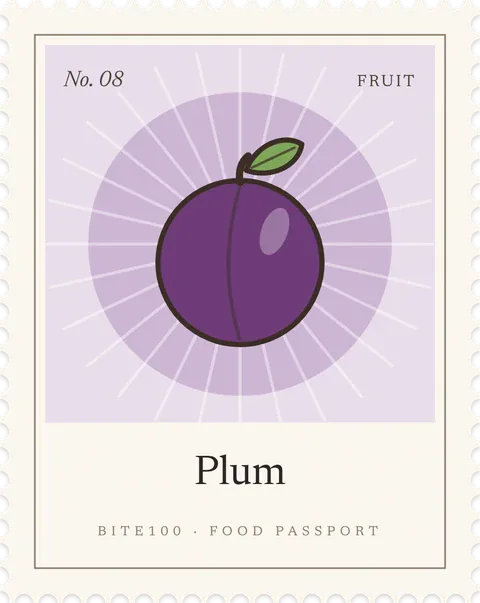
No. 08 · Fruit Passport food
When can babies have plums?
Can babies have plums?
Babies can have plums from about 6 months, as soon as they are ready for solids, as long as the plum is ripe and the pit is removed. Firm, underripe plums and the hard pit are choking risks, so choose soft fruit and cut it into a safe shape for your baby's age.
How to serve plums by age
Shapes and textures change as your baby’s grasp and chewing grow.

6 months
Pick a very ripe plum that gives easily when pressed, or poach or bake a firmer one until soft. Remove the pit and skin, then mash or blend the flesh smooth and offer it on a spoon, plain or stirred into yogurt or oatmeal.

7–8 months
Fork-mash ripe or stewed plum more roughly so it has soft lumps. You can also offer a pitted half or large wedge of very ripe plum with the skin on for grip, so baby can gnaw and suck on the soft flesh.

9–12 months
Cut ripe, pitted plum into small pieces about the size of a chickpea for pincer-grasp practice. If your baby struggles with the skin, peel it off or serve cooked plum, which softens the skin.

12 months +
Serve ripe plum in bite-size pieces or thin slices, or let toddlers bite from a large pitted half. Keep firm plums cut small or cooked until about age 4, and always remove the pit first.
Why it’s good
Plums give babies vitamin C, vitamin K, potassium and fiber, plus natural sugars and sorbitol that help keep stools soft. Their deep color comes from antioxidant plant compounds. Offering plum alongside iron-rich foods helps baby absorb more iron thanks to its vitamin C.
Safety notes
- Always remove the pit. Plum pits are hard, a serious choking hazard and should never be chewed, since crushed pits can release a cyanide-forming compound.
- Serve only ripe, soft plums. Firm or underripe plum is slippery and hard and can break off in large pieces.
- Plum skin can be thin and tough. If baby gags on it, peel the plum or cook it until soft.
- Skip prune juice before 12 months unless your pediatrician recommends a small amount for constipation.
- Always seat baby upright and stay within arm's reach while they eat.
A low-allergy food, still worth watching
Plums are not a common allergen, though reactions, including rare severe ones, are possible. Children with birch pollen allergy may get an itchy mouth from raw plums; watch for hives, vomiting or swelling the first few times.
Plums for babies: questions parents ask
Quick answers about plums for babies and toddlers.
When can babies have plums?
Babies can have plums from about 6 months of age, once they are ready for solids. Plums should be ripe and soft, with the pit removed, or cooked until soft if they are firm.
Can babies have plums?
Yes, babies can eat plums from around 6 months. Start with mashed or stewed plum on a spoon, then offer large pitted halves or wedges of ripe plum to hold from about 7–8 months.
Is plum a choking hazard for babies?
Plum is a medium choking risk for babies because underripe fruit is firm and the pit is hard. Choose ripe plums that squash easily, always remove the pit, and cut pieces to suit your baby's age.
Is plum a common allergen?
Plum is not a common allergen and is not one of the Top 9 food allergens. Reactions are uncommon, but children with pollen allergies may get an itchy mouth from raw plum.
How do I serve plum to a 6 month old?
To serve plum to a 6 month old, choose a very ripe plum or poach a firmer one until soft, remove the pit and skin, and mash or blend the flesh smooth. Offer it on a spoon. Large pitted wedges with the skin on for grip can follow at 7–8 months.
Do plums help with baby constipation?
Plums and prunes can help ease constipation in babies because they contain fiber and sorbitol, a natural sugar that draws water into the gut. A few spoonfuls of mashed plum or stewed prunes is a gentle place to start; talk to your pediatrician if constipation lasts.
Can babies have prunes?
Prunes, which are dried plums, are safe for babies when they are pitted and soaked or cooked until soft, then mashed or finely chopped. Whole prunes are sticky and chewy, so avoid serving them whole to babies and young toddlers.
Should I peel plums for my baby?
Plum skin is safe and adds fiber, but it can be tough and stick in baby's mouth. Leaving it on a large wedge helps grip, while peeling or cooking smaller pieces makes them easier to manage.
How do I know if a plum is ripe enough for my baby?
A ripe plum feels heavy, smells sweet and gives slightly when pressed near the stem. If it is still firm, leave it at room temperature for a day or two, or cook it until soft before serving.
Can plums give my baby diarrhea?
Plums can loosen stools or cause gas in some babies, especially in larger amounts. Start with a small portion, and call your pediatrician if diarrhea is frequent, bloody or comes with signs of dehydration.
The takeaway
- Babies can have plums from about 6 months, as soon as they are ready for solids, as long as the plum is ripe and the pit is removed.
- Pick a very ripe plum that gives easily when pressed, or poach or bake a firmer one until soft.
- Choking risk is medium. Not a Top 9 allergen, but offer a small amount first and watch for any reaction.
Read next


Sources
This guide follows current advice from these organizations.
- Starting Solid Foods American Academy of Pediatrics (HealthyChildren.org)
- When, What, and How to Introduce Solid Foods Centers for Disease Control and Prevention
- Choking Hazards Centers for Disease Control and Prevention
- Choking Prevention American Academy of Pediatrics (HealthyChildren.org)
Stamp plum in your baby’s passport
Track the first 100 foods and the Top 9 allergens. 7 days free.
More fruit for babies
Updated November 2026. Reviewed by our dietitians. Based on AAP, CDC and NIAID guidance. Written for healthy, full-term babies; not a substitute for your pediatrician. If your baby was born early, has a medical condition, feeding difficulties or a known allergy, check with them first (medical disclaimer). Always stay with your baby while they eat.