
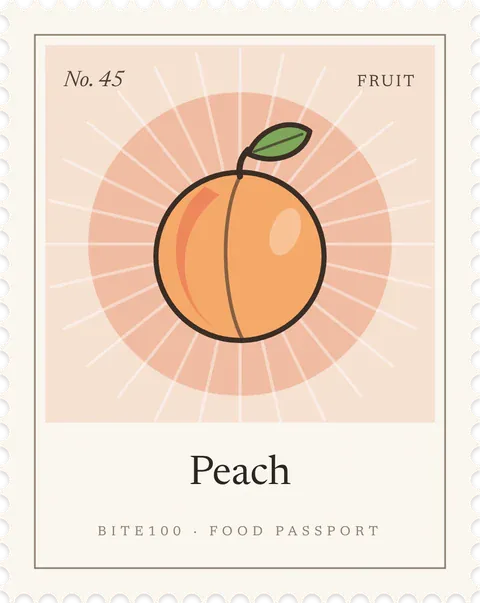
No. 45 · Fruit Passport food
When can babies have peaches?
Can babies have peaches?
Babies can have peaches from about 6 months, as soon as they are ready for solids. Choose a very ripe peach that squashes easily between your fingers and remove the pit: start with a smooth mash on a spoon, then offer large peeled halves or spears from 7–8 months. Firm, unripe peach pieces are slippery and can be a choking risk, so ripeness matters.
How to serve peaches by age
Shapes and textures change as your baby’s grasp and chewing grow.

6 months
Peel a very ripe peach, remove the pit, and mash or blend the flesh until smooth. Offer it on a spoon or preloaded spoon, or stir it into plain yogurt or oatmeal. Steam or bake firmer peaches until soft first.

7–8 months
Fork-mash ripe peach so it has soft lumps, or offer a large half or a thick spear of very ripe peach with the pit removed, about the length of an adult finger, for your baby to hold and gnaw. Peel it if the skin is tough, or roll slippery pieces in finely crushed oat cereal for better grip.

9–12 months
Cut ripe peach into small, soft pieces about the size of a chickpea for pincer-grasp practice. If the fruit is firm, steam or bake it briefly until soft.

12 months +
Serve ripe peach in bite-size pieces or thin slices, on its own, on oatmeal or yogurt, or baked into muffins. Toddlers can try a whole ripe peach with the pit removed while you sit with them.
Why it’s good
Peaches give babies vitamin C, which helps the body absorb iron from plant foods, plus vitamin A, potassium, fiber and water. The gentle sweetness of peaches makes them a good partner for iron-rich foods like beans, meat or iron-fortified cereal.
Safety notes
- Use only very ripe peaches that squash easily between your thumb and finger. Firm or unripe peach is slippery and hard and can be a choking risk.
- Always remove the pit. Peach pits are a choking hazard, and the seed inside should never be eaten.
- Peach skin can be thin and tough to chew for new eaters. Peel it for young babies, then leave it on once your child chews well.
- Do not give frozen peach chunks to babies. Frozen fruit is hard and can break into pieces that are hard to manage; thaw and mash it first.
- Choose canned peaches packed in water or 100% juice, not syrup, and drain them. Skip peach juice before 12 months.
A low-allergy food, still worth watching
Peaches are not one of the Top 9 allergens, but peach allergy does happen, often as an itchy mouth in children with pollen allergies. Watch for hives, lip swelling, vomiting or breathing changes, and talk to your pediatrician if your baby has a known pollen or fruit allergy.
Peaches for babies: questions parents ask
Quick answers about peaches for babies and toddlers.
When can babies have peaches?
Babies can have peaches from about 6 months, as soon as they are ready to start solids. Peaches should be very ripe and soft, with the pit removed, and mashed at first, then served in large soft pieces from 7–8 months.
Can babies have peaches?
Yes, babies can eat peaches from 6 months. Ripe peaches are soft, juicy and naturally sweet, and they give babies vitamin C to help absorb iron.
Are peaches a choking hazard for babies?
Peaches can be a choking hazard for babies when they are firm, unripe or cut into small slippery chunks. Serve only very ripe peach in large pieces or mashed, always remove the pit, and stay with your baby while they eat.
Are peaches a common allergen?
No, peaches are not a common allergen and are not one of the Top 9 allergens. Peach allergy is possible, especially in children with pollen allergies, so watch for an itchy mouth, hives or swelling the first few times.
How do I serve peaches to a 6 month old?
To serve peaches to a 6 month old, pick a very ripe peach, remove the pit and peel, and mash or blend the flesh smooth. Offer it on a preloaded spoon or stirred into yogurt. A large half or finger-length spear to hold can follow at 7–8 months.
Do I need to peel peaches for my baby?
Peeling peaches is a good idea for young babies, since the skin can be tough and stick to the roof of the mouth. Once your baby chews well, often around 12 months, you can leave the skin on for extra fiber.
Can babies have canned peaches?
Yes, babies can have canned peaches packed in water or 100% fruit juice, drained and cut into safe pieces. Avoid peaches in heavy or light syrup, which add sugar that babies do not need.
Can babies have frozen peaches?
Babies can eat frozen peaches once they are thawed, softened and cut or mashed for their age. Hard frozen peach slices are not safe for teething babies, because they can break into firm pieces.
When can babies drink peach juice?
Peach juice is not recommended before 12 months, because whole peaches give babies fiber and nutrients without the extra sugar of juice. After age 1, keep any 100% juice to a small amount a day and serve it in an open cup with a meal.
How do I pick a ripe peach for my baby?
A ripe peach smells sweet, gives slightly when you press near the stem, and has no green color around the stem. If your peaches are firm, leave them on the counter in a paper bag for a day or two, or soften them by baking or steaming.
Are peaches good for babies?
Yes, peaches are a good fruit for babies from about 6 months. They give vitamin C, which helps the body absorb iron from plant foods, plus vitamin A, fiber and water. Choose very ripe, soft peaches, remove the pit and peel, and mash them smooth at first.
Are peaches good for toddlers?
Yes, peaches are a healthy fruit for toddlers 12 months and older, adding vitamin C, vitamin A and fiber. Serve ripe peach in bite-size pieces or thin slices, or on oatmeal or yogurt. Toddlers can try a whole ripe peach with the pit removed while you sit with them.
The takeaway
- Babies can have peaches from about 6 months, as soon as they are ready for solids.
- Peel a very ripe peach, remove the pit, and mash or blend the flesh until smooth.
- Choking risk is medium. Not a Top 9 allergen, but offer a small amount first and watch for any reaction.
Read next



Sources
This guide follows current advice from these organizations.
- Starting Solid Foods American Academy of Pediatrics (HealthyChildren.org)
- When, What, and How to Introduce Solid Foods Centers for Disease Control and Prevention
- Choking Hazards Centers for Disease Control and Prevention
- Choking Prevention American Academy of Pediatrics (HealthyChildren.org)
Recipes with peach

Stamp peach in your baby’s passport
Track the first 100 foods and the Top 9 allergens. 7 days free.
More fruit for babies
Updated November 2026. Reviewed by our dietitians. Based on AAP, CDC and NIAID guidance. Written for healthy, full-term babies; not a substitute for your pediatrician. If your baby was born early, has a medical condition, feeding difficulties or a known allergy, check with them first (medical disclaimer). Always stay with your baby while they eat.