
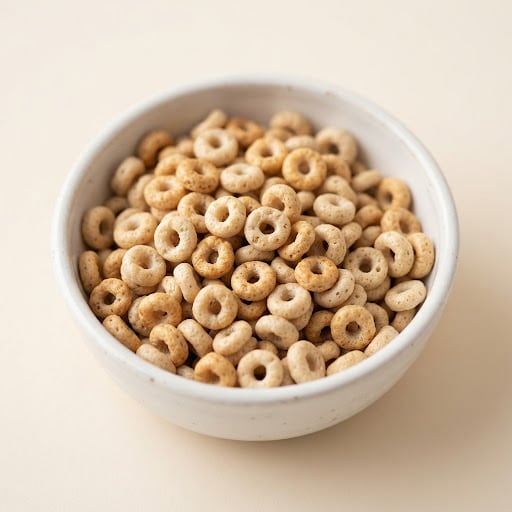
Grains Food Library
When can babies have Cheerios?
Can babies have Cheerios?
Babies can have plain Original Cheerios from about 6 months, softened in breast milk, formula or whole cow's milk or crushed into food at first, and as finger food once the pincer grasp develops around 8–9 months. Skip Honey Nut Cheerios before 12 months, because they contain honey.
How to serve Cheerios by age
Shapes and textures change as your baby’s grasp and chewing grow.

6 months
Soften a small handful of plain Original Cheerios in breast milk or formula until they turn completely mushy, or grind them into a fine powder and stir it into yogurt or a smooth puree on a spoon. At this age this is about flavor and texture, not self-feeding.

7–8 months
Soak plain Cheerios briefly so they are soft but still hold some shape, or crush them into coarser crumbs and stir them into thicker oatmeal or yogurt. Crushed Cheerios also make a good coating for slippery soft fruit like banana. Single dry Os are still hard to pick up until the pincer grasp develops around 8–9 months.

9–12 months
Scatter a few dry plain Cheerios on the high chair tray for pincer grasp practice. Each O softens quickly with saliva, which makes it a gentle first crunchy food. Offer them alongside other foods rather than as the whole meal.

12 months +
Serve plain Cheerios as a snack, with whole milk in a bowl, or mixed with soft fruit pieces. Keep to plain Original Cheerios until age 2; flavored varieties like Honey Nut have added sugar., but plain varieties have much less sugar.
Why it’s good
Original Cheerios are made mainly from whole grain oats and, in the US, are fortified with iron, zinc, B vitamins and other nutrients. The added iron is the main benefit for babies, since iron needs rise sharply around 6 months. Cheerios are low in protein and fat, so pair them with foods like yogurt, egg or fruit for a more balanced snack.
Safety notes
- Choose plain Original Cheerios for babies. Honey Nut Cheerios contain honey, which should be avoided in all forms before 12 months because of the risk of infant botulism.
- Flavored Cheerios like Honey Nut, Chocolate or Frosted have more added sugar. Health guidance recommends limiting added sugar before age 2.
- Some varieties contain peanut, tree nuts or wheat, and recipes differ by country. Read the ingredient and allergen label on each box.
- Do not give Cheerios in the car seat, stroller or while baby is crawling or walking. Babies should always eat sitting upright and supervised.
- A bowl of Cheerios is easy to over-rely on. Keep them as one part of a varied diet with fruits, vegetables and protein foods.
A low-allergy food, still worth watching
Original Cheerios in the US are made from oats and do not list any Top 9 allergens as ingredients, but other varieties may contain wheat, peanut or tree nuts, and Cheerios sold in some other countries contain wheat and barley. Always check the label on your box, and watch for any reaction the first time, as you would with any new food.
Cheerios for babies: questions parents ask
Quick answers about Cheerios for babies and toddlers.
When can babies have Cheerios?
Babies can have plain Original Cheerios from about 6 months, softened in breast milk or formula or crushed into other foods. Most babies are ready to pick up dry Cheerios as finger food around 8–9 months, when the pincer grasp develops.
Can babies have Cheerios?
Yes, babies can eat plain Original Cheerios, which are made from whole grain oats and fortified with iron. Cheerios are best as one part of a varied diet, not a meal on their own.
Are Cheerios a choking hazard for babies?
Cheerios are a low choking risk for babies because each O is small, light and softens quickly in the mouth. Babies should still eat Cheerios sitting upright with an adult nearby, never while crawling, walking or in a car seat.
Are Cheerios a common allergen?
Original Cheerios do not contain any of the Top 9 allergens as ingredients in the US, so Original Cheerios are not considered a common allergen. Other flavors can contain wheat, peanut or tree nuts, and recipes vary by country, so check the label every time.
How do I serve Cheerios to a 6 month old?
To serve Cheerios to a 6 month old, soak plain Original Cheerios in breast milk or formula until soft and mushy, or crush them into crumbs and mix them into yogurt or a puree. Single dry Os are hard for a 6 month old to pick up, so save them for later.
Can babies have Honey Nut Cheerios?
No, babies should not have Honey Nut Cheerios before 12 months because Honey Nut Cheerios contain honey, which can carry spores that cause infant botulism. After the first birthday, Honey Nut Cheerios are safe in small amounts but are higher in sugar than Original Cheerios.
Are Cheerios gluten-free?
In the US, Original Cheerios are labeled gluten-free, because the oats are sorted to remove stray wheat and barley grains. Children with celiac disease vary in how they react to oats, so check with your pediatrician or dietitian before relying on Cheerios as a gluten-free food.
Are Cheerios healthy for babies?
Plain Original Cheerios are a reasonable choice for babies because they are whole grain, low in sugar and fortified with iron. Cheerios are low in protein and fat, so serve them with foods like yogurt, egg, avocado or nut butter for a more filling snack.
How many Cheerios can a baby have?
There is no set number of Cheerios for babies, but a small handful, about a quarter cup, alongside other foods is plenty for a snack. Watch that Cheerios do not crowd out more nutrient-dense foods like vegetables, fruit and protein.
Can babies have Multigrain or other Cheerios flavors?
Babies under 12 months are best kept to plain Original Cheerios. Multigrain and other flavors usually have more added sugar, and some contain allergens like wheat or nuts, so read the label carefully before offering them to a toddler.
The takeaway
- Babies can have plain Original Cheerios from about 6 months, softened in breast milk, formula or whole cow's milk or crushed into food at first, and as finger food once the pincer grasp develops around 8–9 months.
- Soften a small handful of plain Original Cheerios in breast milk or formula until they turn completely mushy, or grind them into a fine powder and stir it into yogurt or a smooth puree on a spoon.
- Choking risk is low. Not a Top 9 allergen, but offer a small amount first and watch for any reaction.
Read next


Sources
This guide follows current advice from these organizations.
- Starting Solid Foods American Academy of Pediatrics (HealthyChildren.org)
- When, What, and How to Introduce Solid Foods Centers for Disease Control and Prevention
- Choking Hazards Centers for Disease Control and Prevention
- Foods and Drinks to Avoid or Limit Centers for Disease Control and Prevention
- Iron Centers for Disease Control and Prevention
- Dietary Guidelines for Americans, 2020-2025 U.S. Department of Agriculture and HHS
- Botulism Prevention Centers for Disease Control and Prevention
Track every new food in your baby’s passport
Track the first 100 foods and the Top 9 allergens. 7 days free.
More grains for babies
Updated November 2026. Reviewed by our dietitians. Based on AAP, CDC and NIAID guidance. Written for healthy, full-term babies; not a substitute for your pediatrician. If your baby was born early, has a medical condition, feeding difficulties or a known allergy, check with them first (medical disclaimer). Always stay with your baby while they eat.