
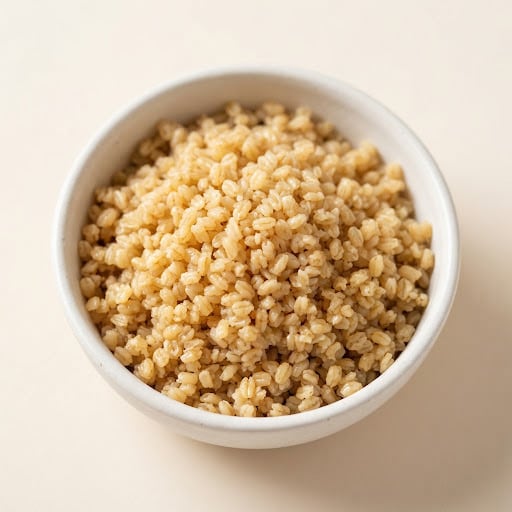
Grains Food Library
When can babies have bulgur?
Can babies have bulgur?
Babies can have bulgur from about 6 months, cooked soft and served moist. Bulgur is cracked whole wheat, so it is a common allergen and also a good early way to introduce wheat. Cooked bulgur is a low choking risk, but loose grains can scatter, so mix it with something sticky like yogurt or mashed vegetables.
How to serve bulgur by age
Shapes and textures change as your baby’s grasp and chewing grow.

6 months
Cook fine bulgur with extra water until very soft, then blend or mash it well and stir it into a smooth food like mashed sweet potato, plain yogurt or lentil puree so there are no loose grains. Offer it on a spoon or a pre-loaded spoon.

7–8 months
Cook fine bulgur soft and mix it, unblended, into mashed vegetables, yogurt or lentils so it clumps together into a thicker, lumpier texture. You can also press the mixture into soft balls or patties that squash easily for your baby to hold.

9–12 months
Offer soft bulgur mixed into veggie fritters, meatballs, or a moist pilaf so baby can practice picking up small clumps. Stirring in a little olive oil or tahini thinned with water helps the grains stick.

12 months +
Toddlers can eat bulgur in tabbouleh with finely chopped herbs and tomato, in stuffed peppers, soups, or as a side like rice. Hold back on salt and serve lemony salads in small portions.
Why it’s good
Bulgur gives babies whole grain fiber, carbohydrates for energy, B vitamins, magnesium and some plant protein and iron. Bulgur has more fiber than white rice or couscous, which helps keep stools soft. Bulgur is not fortified, so pair it with iron-rich foods like meat, lentils or beans.
Safety notes
- Cook bulgur until soft and keep it moist. Dry, loose grains can scatter in the mouth and be inhaled into the airway, which is more likely when spoon-fed quickly.
- Bulgur is wheat and contains gluten. Introduce it early as one of the Top 9 allergens, and talk to your pediatrician first if your baby has severe eczema or another food allergy.
- Choose plain bulgur rather than seasoned pilaf mixes, which are often high in sodium.
- Fine bulgur cooks faster and softer than coarse bulgur. If you only have coarse bulgur, cook it longer and mash a little for young babies.
- Cooked grains left at room temperature can grow bacteria. Refrigerate leftover bulgur within 2 hours and use it within 3 to 4 days.
Introduce bulgur on its own, then keep it in
Bulgur is made from wheat, one of the Top 9 allergens, and contains gluten. Introduce a small amount early, watch for hives, vomiting or swelling, and once tolerated keep wheat in your baby's diet regularly; celiac disease is different from allergy, so ask your pediatrician if you notice ongoing tummy trouble or poor growth.
Bulgur for babies: questions parents ask
Quick answers about bulgur for babies and toddlers.
When can babies have bulgur?
Babies can have bulgur from about 6 months, as soon as they are ready for solids. Bulgur should be cooked until soft and served moist, mixed with other foods so the grains hold together.
Can babies have bulgur?
Yes, babies can eat bulgur, and bulgur is a simple, whole grain way to introduce wheat. Cooked bulgur mixed into mashed vegetables, yogurt or lentils is easy for babies to manage.
Is bulgur a choking hazard for babies?
Bulgur is a low choking risk for babies when it is cooked soft and kept moist. Loose, dry grains can be inhaled, so mix bulgur with sticky foods and let babies self-feed or eat from a preloaded spoon at their own pace.
Is bulgur a common allergen?
Yes, bulgur is a common allergen because bulgur is made from wheat, one of the Top 9 food allergens. Introduce bulgur in a small amount and keep it in the diet if your baby tolerates it.
How do I serve bulgur to a 6 month old?
To serve bulgur to a 6 month old, cook fine bulgur with extra water until very soft, mash or blend it, and stir it into a smooth food like mashed sweet potato, plain yogurt or lentil puree. Offer the mix on a spoon. Soft bulgur balls to hold can follow at 7–8 months.
Is bulgur gluten-free?
No, bulgur is not gluten-free because bulgur is made from wheat. Babies with celiac disease or a wheat allergy should not eat bulgur, but most babies can and benefit from early wheat exposure.
Can babies have gluten?
Yes, most babies can eat gluten from about 6 months, and there is no benefit in delaying it. Gluten in foods like bulgur, pasta and bread is safe for babies who do not have celiac disease or a wheat allergy.
How do I cook bulgur for my baby?
To cook bulgur for a baby, simmer 1 part fine bulgur in about 2 to 2.5 parts water for 10 to 15 minutes until soft, then let it sit covered. Using a little extra water than package directions makes bulgur softer for babies.
What is the difference between bulgur and couscous?
Bulgur is cracked whole wheat that has been parboiled, while couscous is small balls of semolina pasta. Bulgur has more fiber and a nuttier taste, and both are wheat allergens.
The takeaway
- Babies can have bulgur from about 6 months, cooked soft and served moist.
- Cook fine bulgur with extra water until very soft, then blend or mash it well and stir it into a smooth food like mashed sweet potato, plain yogurt or lentil puree so there are no loose grains.
- Choking risk is low. Wheat is one of the Top 9 allergens: offer a small amount first, watch for a reaction, then keep it in the diet regularly.
Read next


Sources
This guide follows current advice from these organizations.
- Starting Solid Foods American Academy of Pediatrics (HealthyChildren.org)
- When, What, and How to Introduce Solid Foods Centers for Disease Control and Prevention
- Choking Hazards Centers for Disease Control and Prevention
- Foods and Drinks to Avoid or Limit Centers for Disease Control and Prevention
- The Effects of Early Nutritional Interventions on the Development of Atopic Disease in Infants and Children Greer FR, Sicherer SH, Burks AW; American Academy of Pediatrics. Pediatrics. 2019;143(4):e20190281
Track every new food in your baby’s passport
Track the first 100 foods and the Top 9 allergens. 7 days free.
More grains for babies
Updated November 2026. Reviewed by our dietitians. Based on AAP, CDC and NIAID guidance. Written for healthy, full-term babies; not a substitute for your pediatrician. If your baby was born early, has a medical condition, feeding difficulties or a known allergy, check with them first (medical disclaimer). Always stay with your baby while they eat.