
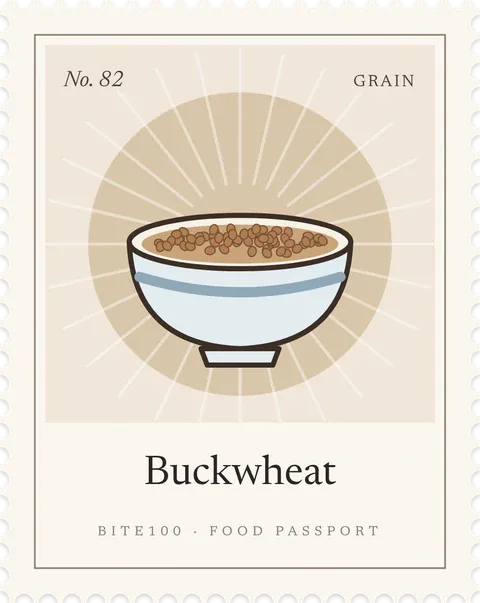
No. 82 · Grains Passport food
When can babies have buckwheat?
Can babies have buckwheat?
Babies can have buckwheat from about 6 months, once they are ready for solids. Start with smooth buckwheat porridge on a spoon, then offer lumpier porridge and soft patties to hold from 7–8 months. Despite the name, buckwheat is not wheat and is naturally gluten-free.
How to serve buckwheat by age
Shapes and textures change as your baby’s grasp and chewing grow.

6 months
Simmer buckwheat groats or cream of buckwheat in plenty of water, breast milk or formula until very soft, then blend or mash into a smooth porridge. Offer it on a spoon or a pre-loaded spoon, plain or mixed with smooth fruit or vegetable puree.

7–8 months
Cook groats soft and serve them as a thicker, lumpier porridge, or stir them into mashed sweet potato or lentils. You can also mix cooked buckwheat with mashed sweet potato or egg, shape it into soft patties about the length of an adult finger and bake until set but still soft enough to squash between your fingers.

9–12 months
Offer soft cooked groats in a bowl for your baby to scoop with fingers, or mix them into soft meatballs, veggie fritters or yogurt. Buckwheat flour pancakes cut into strips are another easy finger food at this age.

12 months +
Toddlers can eat buckwheat as kasha with vegetables, in pancakes and muffins, or as soba noodles cut into short lengths. Keep cooking groats soft rather than crunchy and skip salty sauces on noodles.
Why it’s good
Buckwheat gives babies complex carbohydrates for energy, fiber for healthy digestion, and minerals such as magnesium, manganese, copper and some plant-based iron. Buckwheat also offers more complete protein than most grains, which makes it a useful base for meals. Pair it with vitamin C-rich foods like tomato, berries or bell pepper to help your baby absorb the iron.
Safety notes
- Always cook buckwheat until fully soft. Dry, raw or toasted groats and crunchy buckwheat granola can be hard and are easy to inhale, so save crunchy versions for older toddlers.
- Buckwheat is not related to wheat and is gluten-free, but many soba noodles and buckwheat pancake mixes also contain wheat flour. Read labels if you are avoiding wheat.
- Buckwheat allergy is uncommon in the US but can be serious when it happens. Offer a small amount the first time and watch closely.
- Store-bought soba noodles and kasha mixes can be salty. Choose plain groats or flour and add flavor with herbs and vegetables instead of salt.
- Seat your baby upright and stay with them while they eat. Loose cooked grains can cause gagging, which is a normal part of learning.
A low-allergy food, still worth watching
Buckwheat is not one of the Top 9 allergens in the US, but buckwheat allergy is well known in parts of Asia and Europe and reactions can be severe. Start with a small amount and watch for hives, vomiting, swelling, coughing or wheezing, and talk to your pediatrician first if your baby has severe eczema or other food allergies.
Buckwheat for babies: questions parents ask
Quick answers about buckwheat for babies and toddlers.
When can babies have buckwheat?
Babies can have buckwheat from about 6 months, as soon as they show signs of readiness for solids. Buckwheat should be cooked until very soft and served as smooth porridge at first, with lumpier porridge and soft patties from 7–8 months.
Can babies have buckwheat?
Yes, babies can eat buckwheat from 6 months when it is well cooked and soft. Buckwheat is a nourishing, gluten-free grain that works well in smooth porridge at first, and later in pancakes and soft patties.
Is buckwheat a choking hazard for babies?
Buckwheat is a low choking risk for babies when it is cooked soft and served as porridge or in patties. Raw, toasted or crunchy buckwheat is harder and riskier, so keep it for older toddlers and always stay with your baby during meals.
Is buckwheat a common allergen?
Buckwheat is not one of the Top 9 common allergens in the US, but buckwheat allergy does exist and can be severe. Introduce buckwheat in a small amount, watch for signs of a reaction, and keep offering it if your baby does well.
How do I serve buckwheat to a 6 month old?
To serve buckwheat to a 6 month old, cook the groats in plenty of water until they are mushy, blend or mash them smooth, and serve the porridge on a pre-loaded spoon. Soft buckwheat patties to hold can follow at 7–8 months.
Is buckwheat gluten-free for babies?
Yes, pure buckwheat is naturally gluten-free and is not a type of wheat. Buckwheat products like soba noodles or pancake mixes often contain wheat flour, so check labels if your baby needs to avoid gluten.
Can babies have soba noodles?
Babies can eat soba noodles from about 7–8 months if they are cooked very soft and served in strands to grab, or cut short for older babies; at 6 months, offer buckwheat as smooth porridge instead. Many soba noodles contain wheat and some are salted, so read the label and skip salty dipping sauces.
What is the difference between buckwheat groats and kasha?
Buckwheat groats are the hulled seeds, and kasha is buckwheat groats that have been toasted. Both are fine for babies once cooked very soft, though kasha has a stronger, nuttier flavor.
Is buckwheat good for baby constipation?
Buckwheat contains fiber, which can help keep a baby's stools soft as part of a varied diet. Offer buckwheat with fruits, vegetables and sips of water with meals, and talk to your pediatrician if constipation lasts.
The takeaway
- Babies can have buckwheat from about 6 months, once they are ready for solids.
- Simmer buckwheat groats or cream of buckwheat in plenty of water, breast milk or formula until very soft, then blend or mash into a smooth porridge.
- Choking risk is low. Not a Top 9 allergen, but offer a small amount first and watch for any reaction.
Read next



Sources
This guide follows current advice from these organizations.
- Starting Solid Foods American Academy of Pediatrics (HealthyChildren.org)
- When, What, and How to Introduce Solid Foods Centers for Disease Control and Prevention
- Choking Hazards Centers for Disease Control and Prevention
Stamp buckwheat in your baby’s passport
Track the first 100 foods and the Top 9 allergens. 7 days free.
More grains for babies
Updated November 2026. Reviewed by our dietitians. Based on AAP, CDC and NIAID guidance. Written for healthy, full-term babies; not a substitute for your pediatrician. If your baby was born early, has a medical condition, feeding difficulties or a known allergy, check with them first (medical disclaimer). Always stay with your baby while they eat.