
Grains Food Library
When can babies have challah?
Can babies have challah?
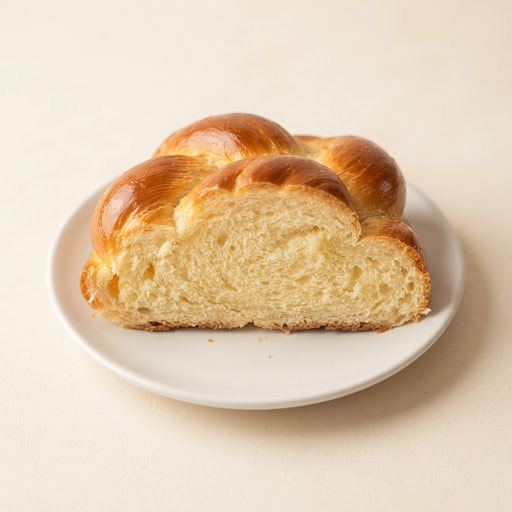
Babies can have challah from about 6 months, soaked and mashed into a smooth porridge, and as lightly toasted strips from 7–8 months. Challah usually contains egg and wheat, and sometimes sesame or milk, so introduce those allergens on their own first. Soft, fluffy bread like challah can form sticky clumps, so toasting it helps lower the choking risk.
How to serve challah by age
Shapes and textures change as your baby’s grasp and chewing grow.

6 months
Challah is not a first food in its usual form, so keep to smooth purees for now. If you want to introduce its egg and wheat, tear a little crustless, honey-free challah into breast milk or formula, let it soak until very soft, and mash it into a smooth porridge to offer on a spoon.

7–8 months
Lightly toast a slice of honey-free challah so it is firm on the outside but still soft inside, then cut it into strips about the width of two adult fingers. Spread with a thin layer of mashed avocado, thinned nut butter or ricotta for extra nutrition.

9–12 months
Cut toasted challah into small squares about the size of a dice for pincer-grasp practice. Challah French toast strips cooked through with egg are another soft, easy option.

12 months +
Toddlers can have challah toasted or untoasted, as small pieces, sandwiches or French toast. Teach them to take small bites, and watch for over-stuffing with soft bread.
Why it’s good
Challah gives babies carbohydrates for energy, plus some protein from the egg and wheat, and B vitamins. Many challah breads are made with enriched flour, which adds some iron and folate, but challah is not an iron-rich food. Challah is often a little sweet, so treat it as one of many breads rather than an everyday staple.
Safety notes
- Soft, fluffy challah can turn into a sticky ball in the mouth. Lightly toast it and cut it into strips or small pieces rather than offering big soft chunks.
- Read the ingredients. Challah usually contains egg and wheat, and may contain sesame seeds, milk, butter or nuts. Introduce each of these allergens separately before offering challah.
- Skip challah topped with whole seeds for young babies if your baby has not had sesame, and avoid versions with raisins, which are a choking risk for young babies unless chopped.
- Many challah recipes contain sugar or honey. Choose a less sweet loaf, and never serve challah made with honey to babies under 12 months, because honey in baked goods is still not recommended before 12 months.
- Challah contains some salt, like most breads. Offer it alongside lower-sodium foods and in modest amounts.
Introduce challah on its own, then keep it in
Challah usually contains egg and wheat, two of the Top 9 allergens, and can also contain sesame, milk or tree nuts, so introduce those foods on their own first and then offer challah. Watch for hives, vomiting, swelling, coughing or wheezing, and talk to your pediatrician if your baby has severe eczema or a known food allergy.
Challah for babies: questions parents ask
Quick answers about challah for babies and toddlers.
When can babies have challah?
Babies can have challah from about 6 months, once egg and wheat have been introduced. At 6 months, soak and mash it into a smooth porridge; from 7–8 months, lightly toasted strips are easier and safer for babies to eat.
Can babies have challah?
Yes, babies can eat challah as long as they tolerate its allergens, usually egg and wheat. Choose a challah without honey for babies under 12 months, mash it soft for a 6 month old and serve it toasted in strips from about 7–8 months.
Is challah a choking hazard for babies?
Challah can be a choking hazard because soft bread can form a sticky clump in the mouth. Lightly toasting challah, cutting it into strips or small pieces and staying close during meals lowers the risk.
Is challah a common allergen?
Yes, challah contains common allergens, usually egg and wheat, and sometimes sesame, milk or tree nuts. Check the challah label or recipe and introduce each allergen separately before serving it.
How do I serve challah to a 6 month old?
To serve challah to a 6 month old, soak a little crustless, honey-free challah in breast milk or formula until very soft and mash it into a smooth porridge. Offer it on a spoon. Lightly toasted challah strips with a thin spread can follow at 7–8 months.
Can babies have challah French toast?
Yes, babies can have challah French toast if they tolerate egg, wheat and milk. Cook the challah French toast until the egg is fully set and skip the syrup; mash it soft for a 6 month old, and cut it into soft strips from about 7–8 months.
Is challah made with honey safe for babies?
Challah made with honey is not recommended for babies under 12 months, because baking may not destroy botulism spores. Choose a honey-free challah, ideally one with little or no sugar, until your baby turns one.
Does challah have dairy?
Traditional challah is usually made without dairy, using oil instead of butter, but some bakeries add milk or butter. Always check the challah label if your baby has a milk allergy.
Is challah healthier than regular bread for babies?
Challah is not healthier than regular bread for babies, because it is usually made with white flour and a little sugar. Whole grain bread offers more fiber, so challah works best as one of several breads in your baby's diet.
The takeaway
- Babies can have challah from about 6 months, soaked and mashed into a smooth porridge, and as lightly toasted strips from 7–8 months.
- Challah is not a first food in its usual form, so keep to smooth purees for now.
- Choking risk is medium. Egg is one of the Top 9 allergens: offer a small amount first, watch for a reaction, then keep it in the diet regularly.
Read next


Sources
This guide follows current advice from these organizations.
- Starting Solid Foods American Academy of Pediatrics (HealthyChildren.org)
- When, What, and How to Introduce Solid Foods Centers for Disease Control and Prevention
- Choking Hazards Centers for Disease Control and Prevention
- Choking Prevention American Academy of Pediatrics (HealthyChildren.org)
- Foods and Drinks to Avoid or Limit Centers for Disease Control and Prevention
- Botulism Prevention Centers for Disease Control and Prevention
- The Effects of Early Nutritional Interventions on the Development of Atopic Disease in Infants and Children Greer FR, Sicherer SH, Burks AW; American Academy of Pediatrics. Pediatrics. 2019;143(4):e20190281
Track every new food in your baby’s passport
Track the first 100 foods and the Top 9 allergens. 7 days free.
More grains for babies
Updated November 2026. Reviewed by our dietitians. Based on AAP, CDC and NIAID guidance. Written for healthy, full-term babies; not a substitute for your pediatrician. If your baby was born early, has a medical condition, feeding difficulties or a known allergy, check with them first (medical disclaimer). Always stay with your baby while they eat.