
Protein Food Library
When can babies have yellow lentils?
Can babies have yellow lentils?
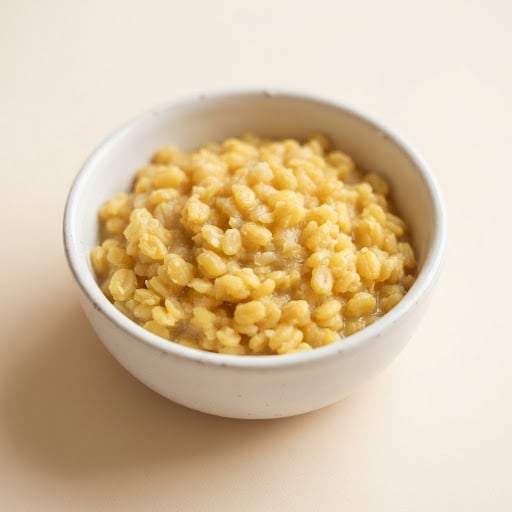
Babies can have yellow lentils from about 6 months, cooked until soft and mushy. Yellow lentils, such as moong dal and toor dal, cook into a thick, creamy dal that is easy for babies to eat. They are a good source of iron and protein for babies starting solids.
How to serve yellow lentils by age
Shapes and textures change as your baby’s grasp and chewing grow.

6 months
Rinse yellow lentils and simmer until they collapse completely, then whisk or blend into a smooth, loose dal, thinned with a little water, breast milk or formula. Serve on a spoon, or blend with soft rice as smooth khichdi. Season with a little turmeric, cumin or ghee instead of salt.

7–8 months
Serve thicker, unblended dal or khichdi with soft lumps on a pre-loaded spoon, or let your baby scoop with their hands. You can also spread thick dal on a soft toast or roti strip for your baby to hold.

9–12 months
Offer thick dal for your baby to scoop with fingers or pieces of soft roti, or shape lentils with grated vegetables into soft patties cut into strips or bite-size pieces.

12 months +
Toddlers can have yellow lentils in dals, soups, khichdi, stews and lentil pancakes like cheela. Keep dal thick enough to scoop and offer a spoon for practice.
Why it’s good
Yellow lentils give babies iron, protein, folate, zinc, fiber and potassium. Serve them with vitamin C foods like tomato, lemon or cauliflower to help the body absorb the plant iron. Yellow lentils are budget friendly and a key protein in vegetarian diets.
Safety notes
- Cook yellow lentils fully until soft and mushy. Toor dal can take longer than moong dal, so check that no firm bits remain.
- Rinse lentils and pick out stones or debris before cooking.
- Keep dal moist. Very thick dal can turn pasty and sticky; loosen it with water, breast milk or formula.
- Add salt only after removing your baby's portion, and skip stock cubes. Restaurant dal can be very salty.
- Cool leftovers quickly, refrigerate within 2 hours and use within 3 to 4 days, or freeze in small portions.
A low-allergy food, still worth watching
Yellow lentils are not one of the Top 9 allergens, but lentil allergy is possible and more common in some regions. Children with peanut, pea or chickpea allergy may react to lentils, so start with a small amount and watch for hives, swelling or vomiting.
Yellow lentils for babies: questions parents ask
Quick answers about yellow lentils for babies and toddlers.
When can babies have yellow lentils?
Babies can have yellow lentils from about 6 months of age, cooked until soft and mushy. Yellow lentils are a common first food in many families, often as dal or khichdi.
Can babies have yellow lentils?
Yes, babies can eat yellow lentils, and they are a great source of iron and protein. Yellow lentils can be served as dal, mixed with rice, or shaped into soft patties.
Are yellow lentils a choking hazard for babies?
Yellow lentils are a low choking risk when fully cooked into a soft mash. Thin thick or sticky dal with a little liquid, and always stay with your baby during meals.
Are yellow lentils a common allergen?
No, yellow lentils are not one of the Top 9 common allergens in the US. Lentil allergy can occur, especially in children allergic to peanut, peas or chickpeas, so introduce a small amount first.
How do I serve yellow lentils to a 6 month old?
To serve yellow lentils to a 6 month old, rinse and simmer them until they break down completely, then whisk into a smooth, loose dal, cool and serve on a spoon. Yellow lentils can also be blended with soft rice as smooth khichdi. Thick dal on soft toast strips can follow at 7–8 months.
What is the difference between moong dal and toor dal?
Moong dal is split, hulled mung bean and cooks quickly into a light, smooth dal, while toor dal is split pigeon pea and is slightly firmer with a nutty taste. Both are yellow lentils that babies can eat when cooked until soft.
When can babies have khichdi?
Babies can eat khichdi from about 6 months, made with rice and yellow lentils cooked until soft. Keep khichdi mild, with a little ghee, turmeric or cumin and no added salt for babies.
Can babies have dal every day?
Yes, babies can eat dal every day as part of a varied diet. Rotate different lentils, beans and other proteins like eggs, fish or meat so your baby gets a wide range of nutrients.
Can I use red lentils instead of yellow lentils for baby?
Yes, red lentils can be used instead of yellow lentils for babies. Red lentils and yellow lentils both cook quickly into a soft mash and have similar iron and protein.
The takeaway
- Babies can have yellow lentils from about 6 months, cooked until soft and mushy.
- Rinse yellow lentils and simmer until they collapse completely, then whisk or blend into a smooth, loose dal, thinned with a little water, breast milk or formula.
- Choking risk is low. Not a Top 9 allergen, but offer a small amount first and watch for any reaction.
Read next


Sources
This guide follows current advice from these organizations.
- Starting Solid Foods American Academy of Pediatrics (HealthyChildren.org)
- When, What, and How to Introduce Solid Foods Centers for Disease Control and Prevention
- Choking Hazards Centers for Disease Control and Prevention
- Foods and Drinks to Avoid or Limit Centers for Disease Control and Prevention
- Iron Centers for Disease Control and Prevention
Track every new food in your baby’s passport
Track the first 100 foods and the Top 9 allergens. 7 days free.
More protein foods for babies
Updated November 2026. Reviewed by our dietitians. Based on AAP, CDC and NIAID guidance. Written for healthy, full-term babies; not a substitute for your pediatrician. If your baby was born early, has a medical condition, feeding difficulties or a known allergy, check with them first (medical disclaimer). Always stay with your baby while they eat.