
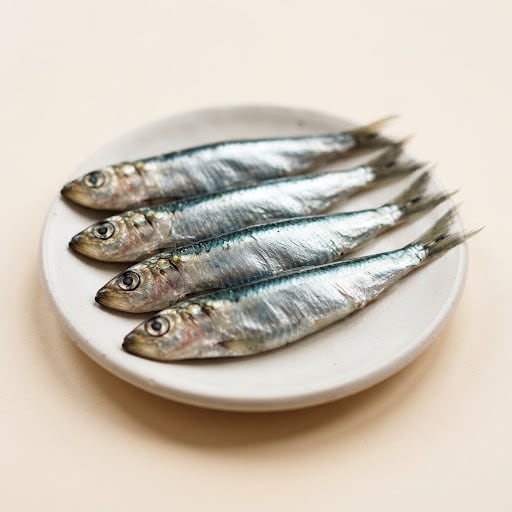
Protein Food Library
When can babies have anchovies?
Can babies have anchovies?
Babies can have anchovies from 6 months, fully cooked and with the salt reduced. Anchovies are low in mercury and rich in omega-3 fats, iron and calcium, but canned and salt-packed anchovies are very salty, so fresh anchovies or well-soaked canned ones are best. Fish is a Top 9 allergen, so introduce anchovies carefully.
How to serve anchovies by age
Shapes and textures change as your baby’s grasp and chewing grow.

6 months
Cook fresh anchovies, remove the backbone and any bones you can see, and blend or mash the flesh very smoothly into a soft food like potato, avocado or rice porridge. If using canned anchovies, soak them in water or whole cow's milk for 20 to 30 minutes, rinse, then mash a small amount in and offer it on a spoon.

7–8 months
Mash cooked, deboned anchovy more roughly into potato, rice porridge or pasta sauce for a lumpier texture. You can also mix it into soft fish cakes that fall apart easily when pressed between your fingers for baby to hold.

9–12 months
Offer flakes of cooked, deboned fresh anchovy for pincer practice, or mix mashed anchovy into soft fish cakes or pasta sauce. Keep salty canned anchovies to small amounts melted into family sauces.

12 months +
Toddlers can have cooked fresh anchovies, deboned or with only the very soft bones of tiny fish, plus a little anchovy melted into pasta, dressings or pizza. Limit salty canned anchovies, anchovy paste and fish sauce, and serve plenty of other low-salt foods that day.
Why it’s good
Anchovies are a great source of omega-3 fats (DHA and EPA) for brain and eye development, plus protein, iron, zinc, vitamin B12, selenium and vitamin D. Canned anchovies with soft edible bones also add calcium. Because they are small and short-lived, anchovies are among the lowest-mercury fish.
Safety notes
- Canned and salt-packed anchovies are very high in sodium; soak in water or whole cow's milk, rinse and use small amounts before age 2.
- Never serve raw or vinegar-cured anchovies, such as boquerones or marinated anchovies, to babies and young children; marinating does not cook the fish.
- Remove the backbone and larger bones from fresh anchovies; the tiny bones in canned anchovies are soft but still mash them for young babies.
- Anchovy paste, fish sauce and Worcestershire sauce contain anchovy and lots of salt, so use only a few drops in family food.
- Fish is a Top 9 allergen; introduce anchovies at home and early in the day so you can watch for a reaction.
Introduce anchovy on its own, then keep it in
Anchovies are fish, one of the Top 9 food allergens, and allergy to one fish often means allergy to others. Watch for hives, swelling, vomiting, coughing or wheezing after the first tastes and call emergency services for breathing trouble.
Anchovies for babies: questions parents ask
Quick answers about anchovies for babies and toddlers.
When can babies have anchovies?
Babies can have anchovies from about 6 months, when they are ready for solids. Anchovies must be fully cooked, deboned and lowered in salt before serving to babies.
Can babies have anchovies?
Yes, babies can eat anchovies, and they are one of the best low-mercury sources of omega-3 fats. Choose fresh anchovies when possible, or soak and rinse canned anchovies to cut the salt.
Are anchovies a choking hazard for babies?
Anchovies are a low choking risk when cooked, deboned and mashed or flaked. Remove the backbone and any firm bones from fresh anchovies, since fish bones can be a choking hazard.
Is anchovy a common allergen?
Yes, anchovy is a fish, and fish is one of the Top 9 common food allergens. Introduce anchovies in a small amount and offer them regularly once tolerated.
How do I serve anchovies to a 6 month old?
For a 6 month old, mash a small amount of cooked fresh anchovy or soaked and rinsed canned anchovy smoothly into a soft food like potato, avocado or porridge. Serve it on a spoon or a preloaded spoon. Soft anchovy fish cakes can follow at 7–8 months.
Are canned anchovies too salty for babies?
Canned anchovies are very salty, so they are not ideal for babies in large amounts. Soaking canned anchovies in water or whole cow's milk for 20 to 30 minutes and rinsing them removes some salt, and using a small amount mixed into food keeps sodium down.
Are anchovies high in mercury?
No, anchovies are one of the lowest-mercury fish and are on the FDA's Best Choices list. Anchovies can be offered to babies and toddlers in age-appropriate portions about twice a week, as the FDA suggests for young children, alongside other low-mercury fish.
Can babies have the bones in anchovies?
The tiny bones in canned anchovies are soft and usually safe to eat when mashed, and they add calcium. Fresh anchovies have a firmer backbone, so remove it before serving to babies and toddlers.
Can babies have marinated or raw anchovies?
No, babies and toddlers should not eat raw, marinated or vinegar-cured anchovies, such as Spanish boquerones. These are not cooked and can carry parasites or bacteria, so serve only fully cooked anchovies.
Can babies have dried anchovies?
Dried anchovies, popular in Asian cooking, are hard and salty, so they are not safe as finger food for babies. Use them only to flavor a broth and remove them, or grind them into a fine powder and add a tiny pinch to food.
Are anchovies good for babies?
Yes, anchovies are good for babies from about 6 months, as one of the lowest-mercury fish and a rich source of omega-3 fats, protein, iron and vitamin B12. They must be fully cooked and deboned, and canned anchovies should be soaked and rinsed because they are very salty.
The takeaway
- Babies can have anchovies from 6 months, fully cooked and with the salt reduced.
- Cook fresh anchovies, remove the backbone and any bones you can see, and blend or mash the flesh very smoothly into a soft food like potato, avocado or rice porridge.
- Choking risk is low. Fish is one of the Top 9 allergens: offer a small amount first, watch for a reaction, then keep it in the diet regularly.
Read next


Sources
This guide follows current advice from these organizations.
- Starting Solid Foods American Academy of Pediatrics (HealthyChildren.org)
- When, What, and How to Introduce Solid Foods Centers for Disease Control and Prevention
- Choking Hazards Centers for Disease Control and Prevention
- Foods and Drinks to Avoid or Limit Centers for Disease Control and Prevention
- Advice about Eating Fish U.S. Food and Drug Administration
- Iron Centers for Disease Control and Prevention
- The Effects of Early Nutritional Interventions on the Development of Atopic Disease in Infants and Children Greer FR, Sicherer SH, Burks AW; American Academy of Pediatrics. Pediatrics. 2019;143(4):e20190281
Track every new food in your baby’s passport
Track the first 100 foods and the Top 9 allergens. 7 days free.
More protein foods for babies
Updated November 2026. Reviewed by our dietitians. Based on AAP, CDC and NIAID guidance. Written for healthy, full-term babies; not a substitute for your pediatrician. If your baby was born early, has a medical condition, feeding difficulties or a known allergy, check with them first (medical disclaimer). Always stay with your baby while they eat.