
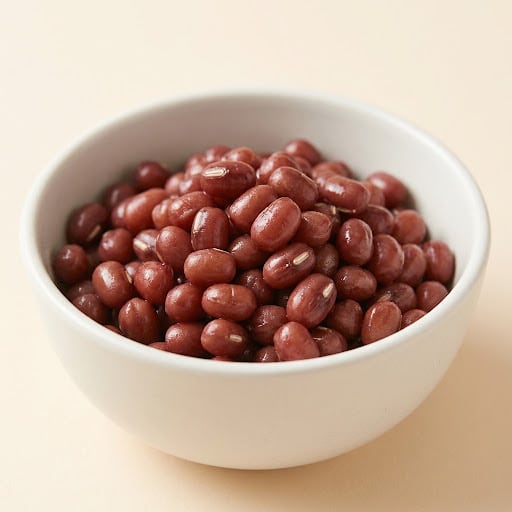
Protein Food Library
When can babies have adzuki beans?
Can babies have adzuki beans?
Babies can have adzuki beans from 6 months, as soon as they are ready for solids. Cook adzuki beans until very soft, then mash or flatten them, because whole round beans can be a choking risk. Skip sweet red bean paste, which is loaded with sugar.
How to serve adzuki beans by age
Shapes and textures change as your baby’s grasp and chewing grow.

6 months
Cook adzuki beans until they are completely soft, then blend or press them through a sieve with a little cooking water, breast milk or formula into a smooth puree. Offer it on a spoon on its own or stirred into oatmeal, rice porridge or a smooth vegetable puree.

7–8 months
Mash soft cooked adzuki beans with a fork so they keep some small soft lumps, and stir them into porridge, mashed sweet potato or rice. You can also spread the mash thinly on soft toast fingers or shape it with rice into very soft patties that squash easily between your fingers.

9–12 months
Flatten each soft, cooked adzuki bean with a fork or your finger so it is no longer round, and let your baby practice the pincer grasp. Mashed beans also work rolled into soft patties with rice or sweet potato, about the size of an adult finger.

12 months +
Keep flattening or halving beans until your toddler chews well, then offer them whole in soups, rice bowls, stews and grain salads. For a sweeter spread, mash plain cooked adzuki beans with ripe banana or a pinch of cinnamon. Save sweet red bean paste (anko) and other sweetened bean desserts until after age 2.
Why it’s good
Adzuki beans give babies plant protein, iron, folate, zinc, potassium and plenty of fiber. Iron and zinc are key nutrients from 6 months, when a baby's stores start to run low. Pair adzuki beans with a vitamin C food such as tomato, mango or broccoli to help the body absorb the plant iron.
Safety notes
- Whole cooked adzuki beans are small, round and firm, so mash or flatten every bean for babies and young toddlers.
- Never serve raw or undercooked dried beans. Boil dried adzuki beans until completely soft, which breaks down natural lectins that can upset the stomach.
- Choose canned adzuki beans labeled no salt added, or rinse regular canned beans well to wash away a good part of the sodium.
- Sweet red bean paste (anko) and many Asian desserts made with it are high in added sugar, so avoid them before age 2.
- Beans add fiber, so start with a spoonful or two and offer water in an open cup with meals to help keep stools soft.
A low-allergy food, still worth watching
Adzuki beans are not a Top 9 allergen, and reactions are uncommon. Babies with a peanut, soy or other legume allergy may occasionally react to other beans, so talk with your pediatrician first if that applies, and watch for hives, vomiting or swelling with any new food.
Adzuki beans for babies: questions parents ask
Quick answers about adzuki beans for babies and toddlers.
When can babies have adzuki beans?
Babies can have adzuki beans from about 6 months, when they show signs of readiness for solids. Serve adzuki beans fully cooked and mashed or flattened so they are safe to swallow.
Can babies have adzuki beans?
Yes, babies can eat adzuki beans, and they are a good source of iron, protein and fiber. Cook adzuki beans until very soft, skip added salt and sugar, and mash or flatten them for younger babies.
Are adzuki beans a choking hazard for babies?
Whole adzuki beans can be a choking hazard because they are small, round and sometimes firm. Cook adzuki beans until they squash easily, then mash or flatten each bean before serving to babies and young toddlers.
Are adzuki beans a common allergen?
No, adzuki beans are not one of the Top 9 common food allergens. Allergic reactions are rare, but children with other legume allergies may react, so introduce adzuki beans in a small amount and watch closely.
How do I serve adzuki beans to a 6 month old?
For a 6 month old, cook adzuki beans until very soft and blend them into a smooth puree with a little cooking water, breast milk or formula, then offer it on a spoon or stirred into porridge or a vegetable puree. Lumpier mash and bean spread on soft toast fingers can follow at 7–8 months.
Do adzuki beans need to be soaked before cooking?
Adzuki beans do not have to be soaked because they are small and cook faster than most beans, often in 45 to 60 minutes of simmering. Soaking for a few hours shortens the cooking time and may make the beans a little easier to digest, so it is a good option if you have time.
Can babies have canned adzuki beans?
Yes, babies can have canned adzuki beans if they are plain and not sweetened. Look for no-salt-added cans, or rinse the beans under running water to remove some sodium, and still mash or flatten them.
Can babies have sweet red bean paste?
Sweet red bean paste is made from adzuki beans but usually has a lot of added sugar, so it is best avoided before age 2. You can make a baby-friendly version by mashing plain cooked adzuki beans with ripe banana or a little cinnamon instead.
Are the lectins in adzuki beans safe for babies?
The lectins in adzuki beans are not a concern once the beans are fully cooked, because boiling breaks them down. Raw or undercooked dried beans can cause stomach upset, so always cook adzuki beans until completely soft.
Will adzuki beans make my baby gassy or constipated?
Adzuki beans can cause some gas as a baby's gut gets used to the fiber, which is normal. Start with small portions, offer sips of water with meals, and call your pediatrician if your baby seems in pain or has hard stools for several days.
The takeaway
- Babies can have adzuki beans from 6 months, as soon as they are ready for solids.
- Cook adzuki beans until they are completely soft, then blend or press them through a sieve with a little cooking water, breast milk or formula into a smooth puree.
- Choking risk is medium. Not a Top 9 allergen, but offer a small amount first and watch for any reaction.
Read next


Sources
This guide follows current advice from these organizations.
- Starting Solid Foods American Academy of Pediatrics (HealthyChildren.org)
- When, What, and How to Introduce Solid Foods Centers for Disease Control and Prevention
- Choking Hazards Centers for Disease Control and Prevention
- Choking Prevention American Academy of Pediatrics (HealthyChildren.org)
- Foods and Drinks to Avoid or Limit Centers for Disease Control and Prevention
- Iron Centers for Disease Control and Prevention
- Dietary Guidelines for Americans, 2020-2025 U.S. Department of Agriculture and HHS
Track every new food in your baby’s passport
Track the first 100 foods and the Top 9 allergens. 7 days free.
More protein foods for babies
Updated November 2026. Reviewed by our dietitians. Based on AAP, CDC and NIAID guidance. Written for healthy, full-term babies; not a substitute for your pediatrician. If your baby was born early, has a medical condition, feeding difficulties or a known allergy, check with them first (medical disclaimer). Always stay with your baby while they eat.