
Grains Food Library
When can babies have rye?
Can babies have rye?
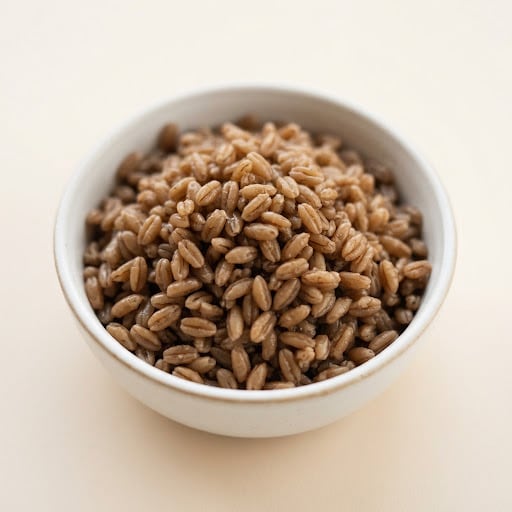
Babies can have rye from about 6 months as smooth rye porridge, with lumpier porridge and lightly toasted rye bread strips from 7–8 months. Rye contains gluten, and many rye breads also contain wheat, so check labels if you are watching for wheat. Whole rye berries are firm, so cook them until very soft or save them for older babies.
How to serve rye by age
Shapes and textures change as your baby’s grasp and chewing grow.

6 months
Cook rye flakes or finely ground rye into a smooth porridge with breast milk, formula or water, blending it if needed, and offer it on a spoon or a pre-loaded spoon. Save rye bread until 7–8 months.

7–8 months
Cook rye flakes into a thicker, lumpier porridge, or offer lightly toasted strips of soft rye bread about the width of two adult fingers with a thin spread like mashed avocado. Toasting helps the bread hold its shape without turning gummy.

9–12 months
Offer small pieces of toasted rye bread with soft toppings, or very soft cooked rye berries mixed into mashed vegetables or yogurt. Rye porridge can be offered on a preloaded spoon.

12 months +
Toddlers can eat rye bread sandwiches cut into strips, rye crackers with spreads and soft cooked rye berries in grain salads. Choose lower-sodium breads and skip seeds or hard crusts if your child struggles.
Why it’s good
Rye gives babies fiber, carbohydrates for energy, B vitamins, magnesium, manganese and some iron. Whole-grain rye has more fiber than many other grains, which can help keep stools soft. Dark rye flour has more minerals than light rye.
Safety notes
- Rye contains gluten. Do not serve rye to a child with celiac disease.
- Many rye breads also contain wheat flour. Check the ingredients if you are introducing wheat separately or your child has a wheat allergy.
- Soft, fresh rye bread can turn gummy and stick in the mouth. Lightly toast it and serve thin strips.
- Whole rye berries are firm and can be hard to manage. Cook them very soft and mash or mix them into moist foods for babies.
- Some rye breads are salty or have caraway seeds and hard crusts. Compare sodium labels and remove hard crusts for young babies.
A low-allergy food, still worth watching
Rye is not one of the Top 9 allergens, but reactions to rye have been reported, and many rye products also contain wheat. Introduce rye in a small amount and watch for hives, vomiting, swelling or wheezing.
Rye for babies: questions parents ask
Quick answers about rye for babies and toddlers.
When can babies have rye?
Babies can have rye from about 6 months as smooth porridge, and from about 7–8 months as lumpier porridge or lightly toasted rye bread strips. Rye contains gluten, which is fine for most babies.
Can babies have rye bread?
Yes, babies can eat rye bread from about 7–8 months when it is lightly toasted and cut into thin strips with a soft spread. Check the label, since many rye breads also contain wheat and some are high in sodium.
Is rye a choking hazard for babies?
Rye is a low choking risk when cooked soft or served as toasted bread strips. Soft rye bread can turn gummy and stick in the mouth, and firm whole rye berries can be harder to manage, so prepare them carefully.
Is rye a common allergen?
No, rye is not one of the Top 9 common allergens, though reactions are possible. Many rye products also contain wheat, which is a common allergen.
How do I serve rye to a 6 month old?
To serve rye to a 6 month old, cook rye flakes into a smooth porridge with breast milk, formula or water and offer it on a spoon. Lightly toasted rye bread strips topped with mashed avocado or ricotta can follow at 7–8 months.
Is rye gluten-free?
No, rye is not gluten-free. Rye contains gluten and is not safe for children with celiac disease.
Can rye help babies poop?
Rye is high in fiber, which can help soften stools and support regular bowel movements as part of a varied diet. Introduce rye gradually and offer water with meals.
Can babies have pumpernickel bread?
Yes, babies can have pumpernickel bread, a dark rye bread, when it is lightly toasted and cut into strips. Some pumpernickel contains added molasses or wheat, so check the label.
Can babies have rye crackers?
Hard rye crackers can break into sharp, dry pieces, so they are better for toddlers who chew well. For babies, soften a rye cracker with a moist spread or choose toasted rye bread instead.
The takeaway
- Babies can have rye from about 6 months as smooth rye porridge, with lumpier porridge and lightly toasted rye bread strips from 7–8 months.
- Cook rye flakes or finely ground rye into a smooth porridge with breast milk, formula or water, blending it if needed, and offer it on a spoon or a pre-loaded spoon.
- Choking risk is low. Not a Top 9 allergen, but offer a small amount first and watch for any reaction.
Read next



Sources
This guide follows current advice from these organizations.
- Starting Solid Foods American Academy of Pediatrics (HealthyChildren.org)
- When, What, and How to Introduce Solid Foods Centers for Disease Control and Prevention
- Choking Hazards Centers for Disease Control and Prevention
Track every new food in your baby’s passport
Track the first 100 foods and the Top 9 allergens. 7 days free.
More grains for babies
Updated November 2026. Reviewed by our dietitians. Based on AAP, CDC and NIAID guidance. Written for healthy, full-term babies; not a substitute for your pediatrician. If your baby was born early, has a medical condition, feeding difficulties or a known allergy, check with them first (medical disclaimer). Always stay with your baby while they eat.