
Grains Food Library
When can babies have ragi?
Can babies have ragi?
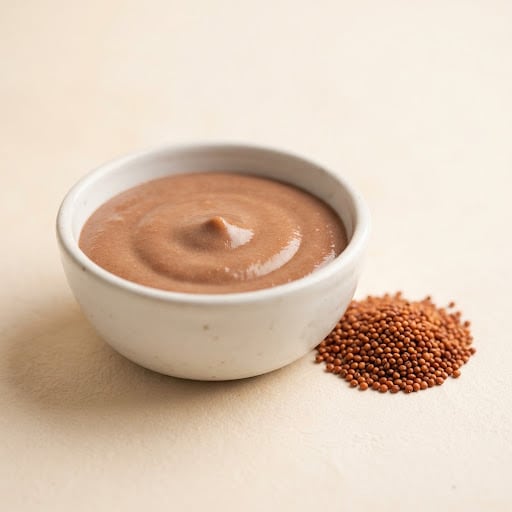
Ragi (finger millet) can be offered from 6 months, most often as a smooth, well-cooked porridge. It is naturally gluten-free and one of the richest grain sources of calcium. Cook it with water, breast milk or formula, and skip sugar, jaggery and honey for babies.
How to serve ragi by age
Shapes and textures change as your baby’s grasp and chewing grow.

6 months
Whisk ragi flour into cold water first so it does not form lumps, then cook it, stirring, until thick and smooth. Thin it with breast milk or formula and serve it on a spoon or pre-loaded spoon, plain or with a smooth fruit puree.

7–8 months
Cook ragi porridge a little thicker and stir in roughly mashed banana, apple or pear for natural sweetness and texture. You can also offer strips of soft ragi pancake that squash easily between your fingers.

9–12 months
Offer thicker ragi porridge, or ragi pancakes and dosa cut into finger-sized strips. Mix in mashed banana, apple or pear for natural sweetness.

12 months +
Serve ragi roti, idli, dosa, pancakes or muffins, cut into bite-sized pieces. Ragi porridge can stay a breakfast favorite.
Why it’s good
Ragi is a whole grain that is rich in calcium and gives fiber, some iron and plant protein. It is naturally gluten-free, which makes it a good grain for variety. Sprouted ragi flour is a little easier to digest and helps the body absorb more of its minerals.
Safety notes
- Cook ragi flour fully in liquid. Raw or undercooked flour is hard to digest and can carry bacteria.
- Mix ragi flour into cold liquid before heating so the porridge stays smooth and free of lumps.
- Ready-made ragi malt and porridge mixes often contain added sugar. Choose plain ragi flour, and avoid added sugar and jaggery before 2 years and honey before 12 months.
- Ragi is gluten-free, but flour can be processed alongside wheat. Look for certified gluten-free flour if your child has celiac disease.
- Serve ragi roti and dosa as soft strips or small pieces, not hard, crisp pieces.
A low-allergy food, still worth watching
Ragi is not a Top 9 allergen, and reactions are rare. Introduce it in a small amount and watch for hives, vomiting or swelling.
Ragi for babies: questions parents ask
Quick answers about ragi for babies and toddlers.
When can babies have ragi?
Babies can have ragi from 6 months, as a smooth, well-cooked porridge made with water, breast milk or formula.
How do I make ragi porridge for babies?
Whisk 1 to 2 tablespoons of ragi flour into about half a cup of cold water, then cook over low heat, stirring, for 5 to 8 minutes until thick and smooth. Thin with breast milk or formula and let it cool.
Is ragi good for babies?
Yes. Ragi is a whole grain rich in calcium, with fiber, some iron and plant protein. It is gluten-free and makes a nice change from rice or oats.
Should I use sprouted ragi flour?
Sprouted ragi flour is a good choice. Sprouting makes ragi easier to digest and helps the body absorb more of its iron and calcium.
Can babies have ragi every day?
Ragi can be part of your baby’s daily meals, but rotate it with other grains like oats, rice, quinoa and wheat so your baby gets variety.
Can ragi cause constipation in babies?
Ragi has fiber and does not usually cause constipation. Make sure the porridge is not too thick and that your baby gets enough fluid.
Can I add jaggery to ragi porridge?
It is best not to add jaggery or sugar before 2 years. Sweeten ragi porridge with mashed banana, dates or other fruit instead.
Is ragi the same as millet?
Ragi is a type of millet, called finger millet. It has a darker color and more calcium than the common pearl and proso millets.
The takeaway
- Ragi (finger millet) can be offered from 6 months, most often as a smooth, well-cooked porridge.
- Whisk ragi flour into cold water first so it does not form lumps, then cook it, stirring, until thick and smooth.
- Choking risk is low. Not a Top 9 allergen, but offer a small amount first and watch for any reaction.
Read next



Sources
This guide follows current advice from these organizations.
- Starting Solid Foods American Academy of Pediatrics (HealthyChildren.org)
- When, What, and How to Introduce Solid Foods Centers for Disease Control and Prevention
- Choking Hazards Centers for Disease Control and Prevention
- Foods and Drinks to Avoid or Limit Centers for Disease Control and Prevention
- Dietary Guidelines for Americans, 2020-2025 U.S. Department of Agriculture and HHS
Track every new food in your baby’s passport
Track the first 100 foods and the Top 9 allergens. 7 days free.
More grains for babies
Updated November 2026. Reviewed by our dietitians. Based on AAP, CDC and NIAID guidance. Written for healthy, full-term babies; not a substitute for your pediatrician. If your baby was born early, has a medical condition, feeding difficulties or a known allergy, check with them first (medical disclaimer). Always stay with your baby while they eat.