
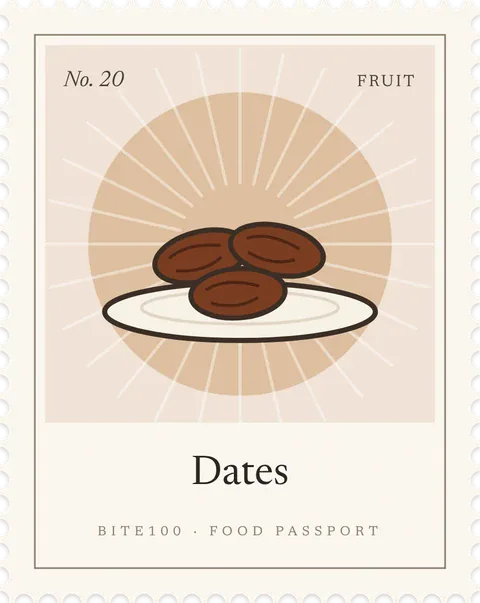
No. 20 · Fruit Passport food
When can babies have dates?
Can babies eat dates?
Babies can have dates from about 6 months, as long as the pit is removed and the date is mashed, blended or very finely chopped. Whole dates are sticky and chewy and are a choking hazard, so keep cutting them small until your child is a confident chewer.
How to serve dates by age
Shapes and textures change as your baby’s grasp and chewing grow.

6 months
Remove the pit, soak the date in hot water for about 10 minutes until very soft, then blend it smooth with a little of the soaking water. Stir a small amount into oatmeal, plain yogurt or mashed vegetables and offer it on a spoon.

7–8 months
Mash soaked dates into a thicker paste and mix it into lumpier foods like fork-mashed banana or oatmeal, or spread a thin layer on a soft toast strip for your baby to hold. Do not offer whole dates or large sticky bits of date.

9–12 months
Keep mashing soaked dates, or chop them very finely into tiny bits and mix them into soft foods like oatmeal, pancakes or muffins. Large sticky pieces can glue to the roof of the mouth, so avoid them for now.

12 months +
Offer pitted dates cut into thin strips or very small pieces, served with a meal and with water nearby. Keep cutting dates small until about age 4, and avoid stuffed dates or whole dates as on-the-go snacks.
Why it’s good
Dates give babies fiber, potassium, magnesium, copper and natural sugars for energy. Mashed dates are a handy way to sweeten baking and oatmeal without added sugar. Dates are very sweet and energy-dense, so small amounts mixed into other foods are best.
Safety notes
- Always remove the hard pit. Check every date, including ones labeled pitted, since pits and pit fragments are sometimes missed.
- Whole dates and large pieces are sticky, chewy and a high choking risk. Soak, mash, blend or chop very finely.
- Date syrup and date sugar still count as added sugar. Keep them out of your baby's food before 2 years and use mashed whole dates in small amounts instead.
- Look over dates before serving and throw away any that look moldy or have insects, which can happen in older dried fruit.
- Sticky dried fruit clings to teeth. Brush your baby's teeth twice a day and offer water after eating dates.
A low-allergy food, still worth watching
Dates are not a common allergen, but reactions have been reported, including in people with pollen allergies. Call your pediatrician if you see hives, swelling, itchy mouth or vomiting after dates.
Dates for babies: questions parents ask
Quick answers about dates for babies and toddlers.
When can babies have dates?
Babies can have dates from about 6 months, once they are ready for solids. Dates must be pitted and soaked, then mashed, blended or very finely chopped, because whole dates are a choking hazard.
Can babies eat dates?
Yes, babies can eat dates from around 6 months when they are prepared safely. Dates are best served mashed or blended into oatmeal, yogurt or baking, which also adds natural sweetness.
Are dates a choking hazard for babies?
Yes, dates are a high choking hazard for babies when served whole or in large pieces. Dates are sticky and chewy, and the pit is hard, so always remove the pit and mash, blend or finely chop dates until about age 4.
Are dates a common allergen?
No, dates are not one of the Top 9 common food allergens. Date allergy is uncommon, but it can happen, especially in people with pollen allergies, so watch for itching, hives or swelling.
How do I serve dates to a 6 month old?
To serve dates to a 6 month old, remove the pit, soak the date in hot water until soft, and blend it smooth. Mix a teaspoon of the date paste into oatmeal or plain yogurt and offer it on a spoon. A thin spread of date paste on a soft toast strip can follow at 7–8 months.
Do dates help with baby constipation?
Dates can help with baby constipation because they are high in fiber. A little mashed date in oatmeal or yogurt, with water offered in a cup, can help soften poop, though too many dates at once may cause gas.
Can babies eat date syrup?
Date syrup is best avoided for babies under 2 because it counts as added sugar, like honey or maple syrup. Date syrup is safe for babies in terms of botulism, unlike honey, but mashed whole dates are a better way to add sweetness.
Which dates are best for babies?
Soft, moist dates such as Medjool are easiest for babies because they mash easily once pitted. Drier dates like Deglet Noor work too but need a longer soak in hot water before mashing or blending.
Can I use dates to sweeten baby food?
Yes, mashed or blended dates are a good way to sweeten baby food like oatmeal, muffins and pancakes without added sugar. Use small amounts so your baby still learns to enjoy foods that are not sweet.
Can toddlers eat whole dates?
Toddlers should not eat whole dates until they are skilled chewers, usually around age 4. Until then, pit dates and cut them into thin strips or small pieces, and make sure your toddler sits down while eating them.
Are dates good for toddlers?
Yes, dates can be a healthy food for toddlers 12 months and older, giving fiber, potassium and natural energy. Serve pitted dates cut into thin strips or very small pieces with a meal, and keep cutting them small until about age 4. Brush teeth afterward, since dates are sticky and sweet.
Are dates good for babies?
Yes, dates can be good for babies from about 6 months when they are pitted, soaked and mashed or blended. A little date paste adds fiber, potassium and natural sweetness to oatmeal or yogurt without added sugar. Keep portions small, since dates are very sweet, and never serve them whole.
The takeaway
- Babies can have dates from about 6 months, as long as the pit is removed and the date is mashed, blended or very finely chopped.
- Remove the pit, soak the date in hot water for about 10 minutes until very soft, then blend it smooth with a little of the soaking water.
- Choking risk is high. Not a Top 9 allergen, but offer a small amount first and watch for any reaction.
Read next


Sources
This guide follows current advice from these organizations.
- Starting Solid Foods American Academy of Pediatrics (HealthyChildren.org)
- When, What, and How to Introduce Solid Foods Centers for Disease Control and Prevention
- Choking Hazards Centers for Disease Control and Prevention
- Choking Prevention American Academy of Pediatrics (HealthyChildren.org)
- Foods and Drinks to Avoid or Limit Centers for Disease Control and Prevention
- Dietary Guidelines for Americans, 2020-2025 U.S. Department of Agriculture and HHS
- Botulism Prevention Centers for Disease Control and Prevention
Stamp dates in your baby’s passport
Track the first 100 foods and the Top 9 allergens. 7 days free.
More fruit for babies
Updated November 2026. Reviewed by our dietitians. Based on AAP, CDC and NIAID guidance. Written for healthy, full-term babies; not a substitute for your pediatrician. If your baby was born early, has a medical condition, feeding difficulties or a known allergy, check with them first (medical disclaimer). Always stay with your baby while they eat.