
Veggies Food Library
When can babies have maitake mushrooms?
Can babies have maitake mushrooms?
Babies can have maitake mushrooms from about 6 months when they are fully cooked and soft. Remove or finely chop the firm central stem, which is a choking risk, and never serve raw or foraged maitake. Maitake is not a common allergen.
How to serve maitake mushrooms by age
Shapes and textures change as your baby’s grasp and chewing grow.

6 months
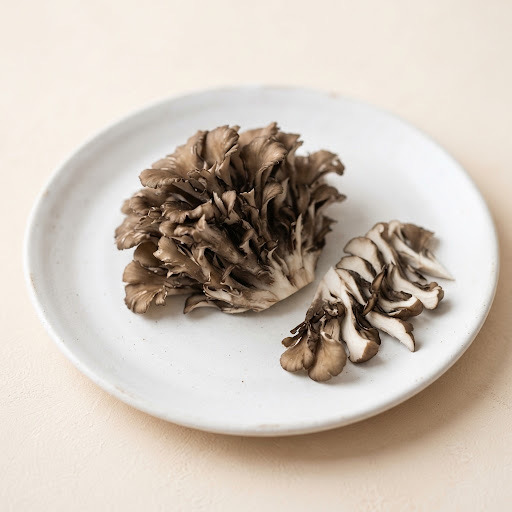
Saute or roast maitake fronds until soft, trim away the firm core, then blend them with a little water into potato, risotto or vegetable puree until smooth. Offer it on a spoon.

7–8 months
Finely chop well-cooked maitake and stir it into eggs, risotto or mashed potato. You can also offer large, tender clusters of the soft, frilly fronds that baby can hold and munch.

9–12 months
Tear cooked maitake fronds into small, bite-size pieces for pincer practice, or mix finely chopped maitake into pasta, rice or meatballs. Trim away the firm core.

12 months +
Toddlers can eat cooked maitake pieces in stir-fries, soups, omelets and tacos. Keep cutting the firm base into small pieces or remove it.
Why it’s good
Maitake mushrooms give babies B vitamins such as niacin and riboflavin, fiber, potassium, zinc and vitamin D, especially when the mushrooms have been exposed to UV light. Maitake has a savory, rich flavor that adds depth to meals without salt.
Safety notes
- Always cook maitake mushrooms well. Raw mushrooms are harder to digest and can upset the stomach.
- The firm central stem and core are tough and chewy. Remove them or chop them very finely.
- Never serve foraged wild mushrooms unless identified by an expert. Buy maitake from a grocery store or trusted farm.
- Maitake supplements and extracts are not food and are not recommended for babies or toddlers.
- Clean maitake by brushing off dirt and checking between fronds for debris.
A low-allergy food, still worth watching
Maitake mushrooms are not a common food allergen, though mushroom allergies are possible. Start with a small amount of cooked maitake and watch for hives, vomiting or swelling.
Maitake mushrooms for babies: questions parents ask
Quick answers about maitake mushrooms for babies and toddlers.
When can babies have maitake mushrooms?
Babies can have maitake mushrooms from about 6 months, once they are ready for solids. Maitake should be fully cooked and soft, with the firm stem removed or finely chopped.
Can babies have maitake mushrooms?
Yes, babies can eat cooked maitake mushrooms. Maitake has tender, frilly fronds and a savory flavor that make it a good mushroom for babies.
Are maitake mushrooms a choking hazard for babies?
Maitake mushrooms can be a choking hazard for babies, especially the firm, chewy stem. Cook maitake until soft, remove the core, blend it for young babies, then offer large soft fronds or finely chopped pieces, and always stay close during meals.
Are maitake mushrooms a common allergen?
No, maitake mushrooms are not a common allergen and are not one of the Top 9 food allergens. Introduce maitake in a small amount and watch for any reaction.
How do I serve maitake mushrooms to a 6 month old?
To serve maitake mushrooms to a 6 month old, saute or roast the fronds until soft, remove the tough central stem, and blend the cooked maitake into a smooth puree with potato or other vegetables. Offer it on a spoon. Large soft clusters to hold can follow at 7–8 months.
Can babies have raw maitake mushrooms?
No, babies should not have raw maitake mushrooms. Cooking maitake makes it softer, easier to digest and safer to eat.
Can babies have foraged maitake?
Babies should only eat maitake from a store or trusted grower. Wild mushrooms can be mistaken for toxic species, so never serve foraged mushrooms unless an expert has identified them.
Can babies take maitake supplements?
Babies and toddlers should not be given maitake supplements or extracts. Cooked maitake mushrooms as food are fine, but supplements have not been studied for safety in young children.
The takeaway
- Babies can have maitake mushrooms from about 6 months when they are fully cooked and soft.
- Saute or roast maitake fronds until soft, trim away the firm core, then blend them with a little water into potato, risotto or vegetable puree until smooth.
- Choking risk is medium. Not a Top 9 allergen, but offer a small amount first and watch for any reaction.
Read next



Sources
This guide follows current advice from these organizations.
- Starting Solid Foods American Academy of Pediatrics (HealthyChildren.org)
- When, What, and How to Introduce Solid Foods Centers for Disease Control and Prevention
- Choking Hazards Centers for Disease Control and Prevention
- Choking Prevention American Academy of Pediatrics (HealthyChildren.org)
Track every new food in your baby’s passport
Track the first 100 foods and the Top 9 allergens. 7 days free.
More vegetables for babies
Updated November 2026. Reviewed by our dietitians. Based on AAP, CDC and NIAID guidance. Written for healthy, full-term babies; not a substitute for your pediatrician. If your baby was born early, has a medical condition, feeding difficulties or a known allergy, check with them first (medical disclaimer). Always stay with your baby while they eat.