
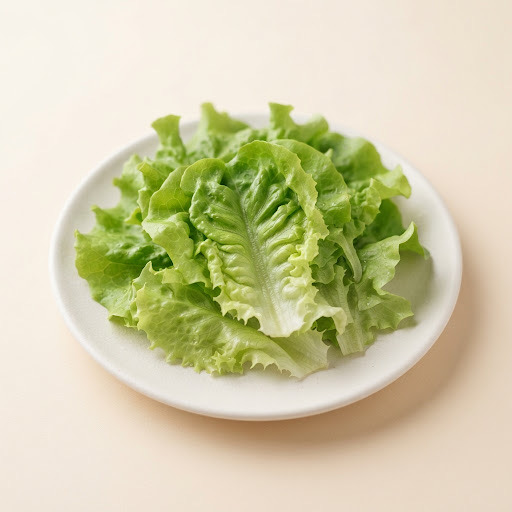
Veggies Food Library
When can babies eat lettuce?
Can babies have lettuce?
Babies can have lettuce from 6 months, blended into smooth foods at first, then wilted and finely chopped into other foods from 7–8 months. Lettuce is thin and can stick to the roof of the mouth, so gagging is common, but it is not a common choking hazard. Lettuce is not a common allergen.
How to serve lettuce by age
Shapes and textures change as your baby’s grasp and chewing grow.

6 months
Blend soft lettuce like butter lettuce or romaine leaf tops into smooth foods such as mashed avocado, pea puree or a smoothie-style puree, and offer it on a spoon. Do not offer whole leaves or shreds at this age.

7–8 months
Wilt soft lettuce like butter lettuce in a pan or soup until floppy, then chop it very finely and stir it into lumpier moist mashes like avocado, egg or peas. Raw leaves to hold and suck are best saved for later.

9–12 months
Finely chop lettuce and mix it into moist foods like egg salad, yogurt dips, rice or pasta so it holds together. Small dry shreds can be hard to swallow, so keep them mixed in.

12 months +
Toddlers can try simple salads with finely chopped lettuce and soft toppings, or lettuce in wraps and sandwiches. Pair it with a dressing or dip, as plain lettuce is hard to move around the mouth.
Why it’s good
Lettuce is mostly water, with some vitamin K, vitamin A (especially in darker leaves like romaine), folate and fiber. It is not a big source of calories or iron, but it helps babies explore new textures. Darker green and red leaves have more nutrients than iceberg.
Safety notes
- Small dry shreds of lettuce can stick to the roof of the mouth or throat and cause gagging or coughing. Offer finely chopped lettuce mixed into moist foods.
- Wash lettuce well under running water, even if bagged, and remove outer leaves. Lettuce is sometimes linked to food poisoning outbreaks, so check for recalls.
- Avoid hard, thick lettuce ribs and stems for young babies, as they are crunchy and harder to manage.
- Store lettuce in the fridge and throw out slimy or wilted leaves.
A low-allergy food, still worth watching
Lettuce is not a common allergen, but rare and sometimes serious reactions have been reported, often in people with other plant or pollen allergies. Offer a small amount first and watch for hives, swelling or vomiting.
Lettuce for babies: questions parents ask
Quick answers about lettuce for babies and toddlers.
When can babies eat lettuce?
Babies can have lettuce from 6 months, when they start solids. Lettuce can be blended into smooth foods at first, then wilted and finely chopped into other foods from 7–8 months.
Can babies have lettuce?
Yes, babies can eat lettuce, though many will mostly suck and chew on it at first. Lettuce is a good way for babies to practice new textures and tastes.
Is lettuce a choking hazard for babies?
Lettuce is not a common choking hazard, but thin pieces can stick to the roof of the mouth and cause gagging or coughing. Offer finely chopped lettuce mixed into moist foods, and always stay close during meals.
Is lettuce a common allergen?
No, lettuce is not a common allergen and is not one of the Top 9 food allergens. Rare reactions can happen, so watch the first few times lettuce is served.
How do I serve lettuce to a 6 month old?
To serve lettuce to a 6 month old, wash a soft leaf like butter lettuce and blend it into mashed avocado or a vegetable puree, then offer it on a spoon. Wilted, finely chopped lettuce mixed into lumpier mashes can follow at 7–8 months.
Which type of lettuce is best for babies?
Soft, leafy types like butter lettuce, green leaf and red leaf lettuce are easiest for babies. Romaine is also good and more nutritious than iceberg, which is crunchy and mostly water.
Can lettuce help babies poop?
Lettuce contains water and a little fiber, which can help with regular stools as part of a varied diet. Lettuce alone is not enough to relieve constipation, so also offer foods like pears, prunes and oats.
Do I need to wash bagged lettuce for my baby?
Bagged lettuce labeled triple washed or ready to eat does not need washing again, according to food safety guidance. Unwashed lettuce should be rinsed well under running water before serving to your baby.
Why does my baby gag on lettuce?
Babies often gag on lettuce because the thin leaves are hard to move with the tongue and can stick to the mouth. Gagging is a normal reflex, but chopping lettuce finely and mixing it with moist foods helps.
The takeaway
- Babies can have lettuce from 6 months, blended into smooth foods at first, then wilted and finely chopped into other foods from 7–8 months.
- Blend soft lettuce like butter lettuce or romaine leaf tops into smooth foods such as mashed avocado, pea puree or a smoothie-style puree, and offer it on a spoon.
- Choking risk is low. Not a Top 9 allergen, but offer a small amount first and watch for any reaction.
Read next



Sources
This guide follows current advice from these organizations.
- Starting Solid Foods American Academy of Pediatrics (HealthyChildren.org)
- When, What, and How to Introduce Solid Foods Centers for Disease Control and Prevention
- Choking Hazards Centers for Disease Control and Prevention
Track every new food in your baby’s passport
Track the first 100 foods and the Top 9 allergens. 7 days free.
More vegetables for babies
Updated November 2026. Reviewed by our dietitians. Based on AAP, CDC and NIAID guidance. Written for healthy, full-term babies; not a substitute for your pediatrician. If your baby was born early, has a medical condition, feeding difficulties or a known allergy, check with them first (medical disclaimer). Always stay with your baby while they eat.