
Veggies Food Library
When can babies have lotus root?
Can babies have lotus root?
Babies can have lotus root from about 6 months when it is cooked until very soft. Raw or crisp lotus root is firm and crunchy, which makes it a choking hazard, so simmer or steam it until tender or mash it. Lotus root is not a common allergen.
How to serve lotus root by age
Shapes and textures change as your baby’s grasp and chewing grow.

6 months
Peel lotus root and simmer it in water or unsalted broth until very soft, often 30 minutes or more. Blend or mash it until smooth with potato or squash and a little cooking water, and offer it on a spoon.

7–8 months
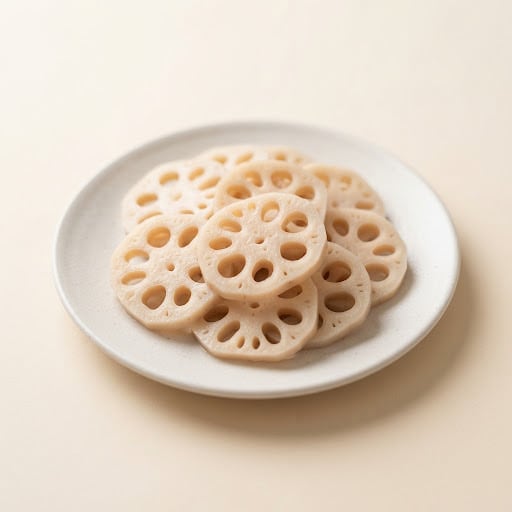
Mash very soft cooked lotus root more roughly into potato or squash, or offer thick wedges or whole slices simmered until they squash easily between your thumb and finger.

9–12 months
Cut very soft cooked lotus root into small pieces, or grate it and mix it into patties, meatballs or congee. Test each batch for softness before serving.

12 months +
Toddlers can have tender braised or stewed lotus root slices in soups and stir-fries. Crunchy stir-fried or raw lotus root is best saved until your child is chewing well, usually around age 2 or later.
Why it’s good
Lotus root gives babies fiber, vitamin C, potassium, copper and B vitamins such as B6. The vitamin C helps the body absorb iron from plant foods eaten at the same meal, and the fiber supports healthy digestion.
Safety notes
- Raw and lightly cooked lotus root stays crisp and firm. Cook it until it squashes easily between your thumb and finger.
- Do not serve raw lotus root. It grows in mud and can carry bacteria and parasites, so wash, peel and cook it well.
- Thin crisp slices or chips can break into hard shards. Offer thick, soft pieces or mash instead.
- Packaged lotus root chips and sweetened candied lotus root are salty or sugary and hard. Skip them for babies.
A low-allergy food, still worth watching
Lotus root is not a common food allergen, though rare reactions have been reported. Start with a small amount and watch for hives, vomiting or swelling.
Lotus root for babies: questions parents ask
Quick answers about lotus root for babies and toddlers.
When can babies have lotus root?
Babies can have lotus root from about 6 months, once they are ready for solids. Lotus root must be peeled and cooked until very soft before serving to babies.
Can babies have lotus root?
Yes, babies can eat lotus root when it is well cooked and soft. Lotus root has a mild, slightly sweet flavor that works well in soups, mashes and patties.
Is lotus root a choking hazard for babies?
Lotus root is a choking hazard for babies when raw or crisp because it is firm and hard to chew. Cook lotus root until soft, mash or grate it for younger babies, and always stay close during meals.
Is lotus root a common allergen?
No, lotus root is not a common allergen and is not one of the Top 9 food allergens. Reactions are rare, but introduce lotus root in a small amount and watch closely.
How do I serve lotus root to a 6 month old?
To serve lotus root to a 6 month old, peel it, slice it thickly, and simmer it until very soft, then blend or mash it smooth with potato or squash and offer it on a spoon. Soft thick slices to hold can follow at 7–8 months.
How long should I cook lotus root for babies?
Lotus root usually needs to simmer for about 30 to 45 minutes to become soft enough for babies, depending on thickness. Pressure cooking speeds this up, and a fork should slide through with no crunch.
Can babies have raw lotus root?
No, babies should not eat raw lotus root. Raw lotus root is crunchy and hard to chew, and it grows in mud, so cooking it thoroughly makes it safer.
Can lotus root help babies poop?
Lotus root contains fiber, which can help keep a baby's poops soft and regular. Offer water with meals and plenty of fruits and vegetables for the best effect.
The takeaway
- Babies can have lotus root from about 6 months when it is cooked until very soft.
- Peel lotus root and simmer it in water or unsalted broth until very soft, often 30 minutes or more.
- Choking risk is medium. Not a Top 9 allergen, but offer a small amount first and watch for any reaction.
Read next



Sources
This guide follows current advice from these organizations.
- Starting Solid Foods American Academy of Pediatrics (HealthyChildren.org)
- When, What, and How to Introduce Solid Foods Centers for Disease Control and Prevention
- Choking Hazards Centers for Disease Control and Prevention
- Choking Prevention American Academy of Pediatrics (HealthyChildren.org)
Track every new food in your baby’s passport
Track the first 100 foods and the Top 9 allergens. 7 days free.
More vegetables for babies
Updated November 2026. Reviewed by our dietitians. Based on AAP, CDC and NIAID guidance. Written for healthy, full-term babies; not a substitute for your pediatrician. If your baby was born early, has a medical condition, feeding difficulties or a known allergy, check with them first (medical disclaimer). Always stay with your baby while they eat.