
Herbs & spices Food Library
When can babies have horseradish?
Can babies have horseradish?
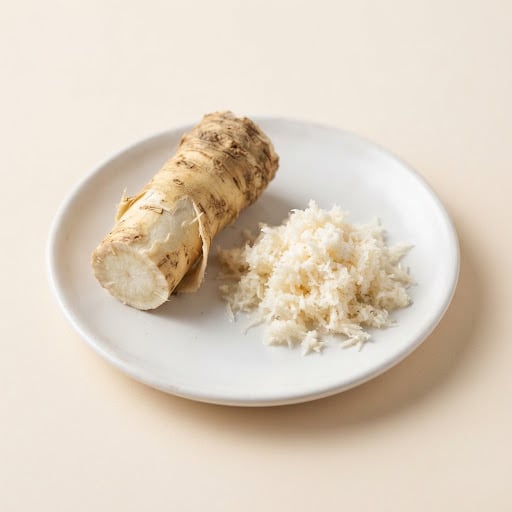
Babies can have horseradish from about 6 months, as a tiny amount of finely grated root cooked into or mixed through food. Horseradish is very pungent and can make babies cough or tear up, so a little goes a long way. Thick pieces of raw root are hard and fibrous and can be a choking hazard.
How to serve horseradish by age
Shapes and textures change as your baby’s grasp and chewing grow.

6 months
Finely grate a very small amount of fresh horseradish root and cook it into a big portion of smooth mashed potato, beet puree or stir it into plain yogurt. Cooking softens the heat, so start with a pinch, taste the dish yourself, and offer it on a spoon.

7–8 months
Keep mixing a pinch of finely grated horseradish into thicker, lumpier foods like fork-mashed potato, beets or flaked soft fish. Never offer pieces or sticks of the raw root.

9–12 months
Keep mixing finely grated horseradish into mashed vegetables, soft fish cakes, braised beef or yogurt dips. Never offer pieces or sticks of the raw root.

12 months +
Toddlers can have a thin smear of mild horseradish sauce on roast beef, fish or sandwiches. Choose prepared horseradish with simple ingredients and use only a small amount, since it can be salty and very strong.
Why it’s good
Horseradish provides small amounts of vitamin C, folate and fiber, plus sulfur compounds that give it its sharp bite. Babies eat it in tiny amounts, so its main value is flavor. Learning to enjoy bold flavors early can make family meals easier later.
Safety notes
- Raw horseradish root is hard and fibrous. Grate it finely and never serve sticks, chunks or slices to babies or toddlers.
- Horseradish fumes and heat can make babies cough, sneeze or tear up. Start with a tiny pinch, cook it into food, and taste the dish first.
- Prepared horseradish and horseradish sauces can contain salt, sugar, egg (in creamy sauces) or dairy. Read labels, use small amounts, and check for allergens.
- Wash hands after handling horseradish and keep it away from your baby's eyes and skin, as it can sting.
- Wasabi sold in tubes is often made mostly from horseradish and mustard. Treat it the same way, in tiny amounts after 12 months.
A low-allergy food, still worth watching
Horseradish is not a common food allergen, though it is related to mustard, which some people react to. Coughing or watery eyes from the fumes is not an allergy, but hives, swelling, vomiting or wheezing need medical attention.
Horseradish for babies: questions parents ask
Quick answers about horseradish for babies and toddlers.
When can babies have horseradish?
Babies can have horseradish from about 6 months, as a tiny amount of finely grated root mixed into food. Horseradish is very strong, so start with just a pinch.
Can babies have horseradish?
Yes, babies can eat horseradish in very small amounts, finely grated and mixed into other foods. Babies should not eat pieces of raw horseradish root, which are hard and fibrous.
Is horseradish a choking hazard for babies?
Horseradish can be a choking hazard if it is served in thick raw pieces, because the root is hard and fibrous. Finely grated horseradish mixed into food is low risk.
Is horseradish a common allergen?
No, horseradish is not a common allergen and is not one of the Top 9 food allergens. Horseradish is related to mustard, so watch closely if your baby has a mustard allergy.
How do I serve horseradish to a 6 month old?
To serve horseradish to a 6 month old, finely grate a tiny amount of fresh root and stir it into a large portion of mashed potato, beets or yogurt. Taste the food first to make sure the heat is mild.
Is prepared horseradish safe for babies?
Prepared horseradish is safe for babies in tiny amounts if the ingredients are simple, usually horseradish, vinegar and salt. Creamy horseradish sauces may contain egg, dairy and added sugar, so check the label.
Why does horseradish make my baby cough?
Horseradish releases strong vapors when grated or chewed that can tickle the nose and throat and cause coughing or watery eyes. Cooking horseradish into food and using less usually prevents this.
Is wasabi the same as horseradish?
True wasabi is a different plant, but most wasabi paste sold in stores is made from horseradish, mustard and coloring. Wasabi paste is very hot, so save it for older toddlers and use only a tiny dab.
The takeaway
- Babies can have horseradish from about 6 months, as a tiny amount of finely grated root cooked into or mixed through food.
- Finely grate a very small amount of fresh horseradish root and cook it into a big portion of smooth mashed potato, beet puree or stir it into plain yogurt.
- Choking risk is medium. Not a Top 9 allergen, but offer a small amount first and watch for any reaction.
Read next



Sources
This guide follows current advice from these organizations.
- Starting Solid Foods American Academy of Pediatrics (HealthyChildren.org)
- When, What, and How to Introduce Solid Foods Centers for Disease Control and Prevention
- Choking Hazards Centers for Disease Control and Prevention
- Choking Prevention American Academy of Pediatrics (HealthyChildren.org)
Track every new food in your baby’s passport
Track the first 100 foods and the Top 9 allergens. 7 days free.
More herbs and spices for babies
Updated November 2026. Reviewed by our dietitians. Based on AAP, CDC and NIAID guidance. Written for healthy, full-term babies; not a substitute for your pediatrician. If your baby was born early, has a medical condition, feeding difficulties or a known allergy, check with them first (medical disclaimer). Always stay with your baby while they eat.