
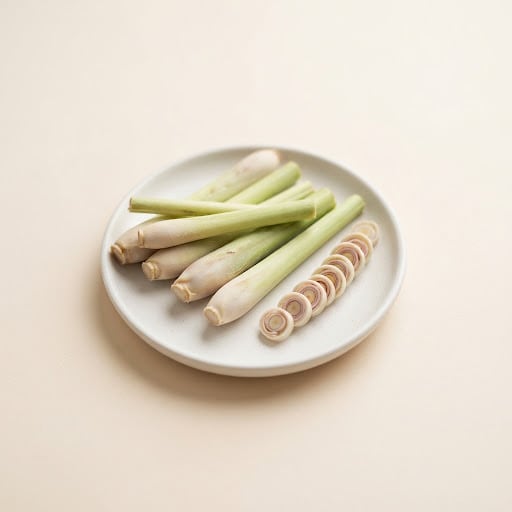
Herbs & spices Food Library
When can babies have lemongrass?
Can babies have lemongrass?
Babies can have lemongrass from 6 months as a flavoring in cooked food. Lemongrass stalks are tough and fibrous, so remove large pieces before serving, or use finely minced or ground lemongrass. Lemongrass is not a common allergen.
How to serve lemongrass by age
Shapes and textures change as your baby’s grasp and chewing grow.

6 months
Bruise a lemongrass stalk and simmer it in soups, rice, lentils or coconut milk to add flavor, then remove the stalk and blend the food smooth. You can also stir a small amount of smooth lemongrass paste into a puree and offer it on a spoon.

7–8 months
Keep simmering bruised lemongrass in lentils, rice or soups and removing the stalk, then mash the food more roughly for a lumpier texture. Very finely minced inner core can go into soft fish or chicken patties that squash easily for your baby to hold.

9–12 months
Add finely minced tender lemongrass core to soft foods like fish cakes, meatballs or curries. Keep removing any tough outer layers and woody pieces.

12 months +
Toddlers can have lemongrass in family dishes like curries, soups and stir-fries. Fish out large pieces before serving, since even older kids cannot chew through the fibrous stalks.
Why it’s good
Lemongrass is used for flavor rather than nutrition, and only small amounts end up in a baby's food. It adds a bright, citrusy taste that lets you skip salt. The foods cooked with lemongrass, like fish, chicken and lentils, bring the main nutrients.
Safety notes
- Remove large pieces of lemongrass before serving. The stalks are very fibrous and cannot be chewed into a safe size.
- Use only the tender inner core when mincing, and chop it very finely or use a smooth paste.
- Check jarred lemongrass pastes for salt, sugar and other allergens like fish sauce or shrimp paste.
- Do not give lemongrass tea or lemongrass essential oil to babies. Babies under 12 months should only drink breast milk, formula and small sips of water.
A low-allergy food, still worth watching
Lemongrass is not a common allergen, but rare reactions, often from skin contact, have been reported. Watch for hives, swelling or vomiting the first few times, and check pastes for hidden fish or shellfish.
Lemongrass for babies: questions parents ask
Quick answers about lemongrass for babies and toddlers.
When can babies have lemongrass?
Babies can have lemongrass from 6 months, used as a flavoring in cooked food. Simmer lemongrass in soups or rice and remove the stalk, or use finely minced or pasted lemongrass.
Can babies have lemongrass?
Yes, babies can eat lemongrass in small amounts as a seasoning. Lemongrass should be finely minced, ground into paste or removed after cooking, because the stalks are tough.
Is lemongrass a choking hazard for babies?
Yes, lemongrass can be a choking hazard when it is served in thick or woody pieces, because the fibers do not break down when chewed. Finely minced or pasted lemongrass is lower risk, and you should always supervise meals.
Is lemongrass a common allergen?
No, lemongrass is not a common allergen and is not one of the Top 9 food allergens. Allergic reactions to lemongrass are rare.
How do I serve lemongrass to a 6 month old?
To serve lemongrass to a 6 month old, bruise a stalk and simmer it in coconut milk, soup or lentils, then remove it before mashing the food. You can also stir in a tiny amount of smooth lemongrass paste.
When can babies drink lemongrass tea?
Babies should not drink lemongrass tea before 12 months. After that, check with your pediatrician before offering herbal teas, and keep any tea weak, unsweetened and in small amounts.
How do I prepare fresh lemongrass?
To prepare fresh lemongrass, trim the root end and the dry top, peel off the tough outer layers, and use the pale inner core. Bruise it with the back of a knife to release flavor, or mince it very finely.
Is lemongrass paste okay for babies?
Plain lemongrass paste is fine for babies in small amounts if it has little or no added salt. Some pastes contain fish sauce, shrimp or sugar, so read the label first.
What foods go well with lemongrass for babies?
Lemongrass goes well with coconut milk, chicken, fish, rice, sweet potato and lentils. These pairings make mild, fragrant meals that babies often enjoy.
The takeaway
- Babies can have lemongrass from 6 months as a flavoring in cooked food.
- Bruise a lemongrass stalk and simmer it in soups, rice, lentils or coconut milk to add flavor, then remove the stalk and blend the food smooth.
- Choking risk is medium. Not a Top 9 allergen, but offer a small amount first and watch for any reaction.
Read next



Sources
This guide follows current advice from these organizations.
- Starting Solid Foods American Academy of Pediatrics (HealthyChildren.org)
- When, What, and How to Introduce Solid Foods Centers for Disease Control and Prevention
- Choking Hazards Centers for Disease Control and Prevention
- Choking Prevention American Academy of Pediatrics (HealthyChildren.org)
Track every new food in your baby’s passport
Track the first 100 foods and the Top 9 allergens. 7 days free.
More herbs and spices for babies
Updated November 2026. Reviewed by our dietitians. Based on AAP, CDC and NIAID guidance. Written for healthy, full-term babies; not a substitute for your pediatrician. If your baby was born early, has a medical condition, feeding difficulties or a known allergy, check with them first (medical disclaimer). Always stay with your baby while they eat.