
Herbs & spices Food Library
When can babies have fenugreek?
Can babies have fenugreek?
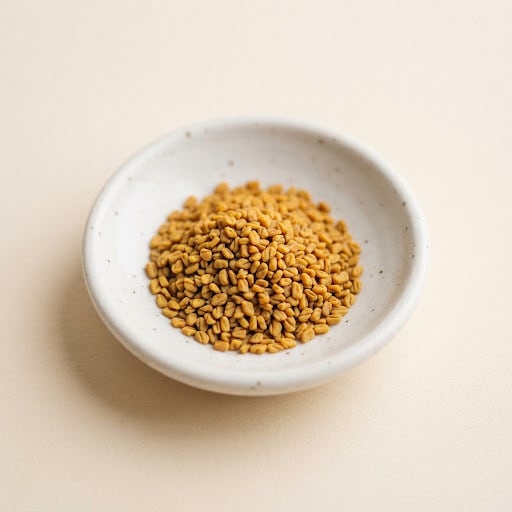
Babies can have fenugreek from about 6 months as a ground spice or cooked, chopped leaves (methi) in family food. Whole fenugreek seeds are tiny and very hard, so grind them or soak and cook them until soft. Fenugreek is a legume, so children with peanut or chickpea allergy may react to it.
How to serve fenugreek by age
Shapes and textures change as your baby’s grasp and chewing grow.

6 months
Stir a small pinch of ground fenugreek into smooth dal, pureed vegetables or a mild blended curry. Fresh or dried fenugreek leaves can be cooked until soft and blended into potato or lentil puree, then offered on a spoon.

7–8 months
Use a pinch of ground fenugreek or finely chopped cooked leaves in thicker, lumpier foods like fork-mashed dal, potato or vegetables. A soft strip of paratha or flatbread made with fenugreek leaves can be offered for your baby to hold.

9–12 months
Keep using ground fenugreek and finely chopped cooked leaves in family dishes like dal, thepla or vegetable stews. Babies can pick up soft pieces of flatbread made with fenugreek leaves.

12 months +
Toddlers can eat fenugreek in curries, flatbreads and spice blends. Whole seeds that have been soaked and cooked until soft are fine in small amounts, but avoid dry, hard whole seeds.
Why it’s good
Fenugreek seeds and leaves contain iron, fiber, folate and some protein, and the leaves add vitamin C and vitamin K. In the small amounts used in cooking, fenugreek adds iron and flavor to a meal rather than being a main source. Fenugreek's warm, slightly bitter flavor helps babies enjoy spiced family food.
Safety notes
- Dry whole fenugreek seeds are small and very hard. Grind them, or soak and cook them until fully soft, before serving to young children.
- Do not give babies fenugreek supplements, capsules or teas. These are concentrated and can affect blood sugar and digestion; use only culinary amounts in food.
- Fenugreek can make urine and sweat smell like maple syrup. This is harmless, but tell your pediatrician you used fenugreek if the smell worries you, since a maple syrup smell can be a sign of a rare metabolic condition.
- Fenugreek is a legume. If your child has a peanut, chickpea or other legume allergy, talk to your pediatrician before offering it.
- Read labels on curry powders and spice blends, which may contain fenugreek, salt or other allergens like mustard.
A low-allergy food, still worth watching
Fenugreek is not a common allergen, but it is a legume and can cross-react in children allergic to peanut or chickpea. Offer a small amount first and watch for hives, swelling, vomiting, coughing or wheezing.
Fenugreek for babies: questions parents ask
Quick answers about fenugreek for babies and toddlers.
When can babies have fenugreek?
Babies can have fenugreek from about 6 months of age, as a ground spice or as cooked, finely chopped leaves in food. Fenugreek supplements and teas are not recommended for babies.
Can babies have fenugreek?
Yes, babies can eat fenugreek in small culinary amounts mixed into food. Fenugreek is common in South Asian, Middle Eastern and North African cooking and is a good way to share family flavors.
Is fenugreek a choking hazard for babies?
Dry whole fenugreek seeds are a choking hazard for babies because they are tiny and very hard. Use ground fenugreek or seeds that are soaked and cooked until soft, and stay with your baby during meals.
Is fenugreek a common allergen?
No, fenugreek is not a common allergen, but fenugreek is a legume and may cause reactions in children allergic to peanut or chickpea. Introduce fenugreek in a small amount and watch for any signs of allergy.
How do I serve fenugreek to a 6 month old?
To serve fenugreek to a 6 month old, stir a small pinch of ground fenugreek into a soft food like dal or mashed sweet potato. Cooked fenugreek leaves can be chopped finely and mixed into lentils or potatoes.
Can babies have fenugreek leaves (methi)?
Yes, babies can have fenugreek leaves, called methi, when they are cooked until soft and chopped finely. Methi leaves are slightly bitter, so mix them with mild foods like potato or lentils.
Why does my baby smell like maple syrup after fenugreek?
Fenugreek contains a compound that can make urine, sweat and sometimes breast milk smell like maple syrup, and this is harmless. Mention fenugreek to your pediatrician if they ask about the smell, because a maple syrup odor can also be a sign of a rare condition that doctors check for.
Can breastfeeding parents take fenugreek?
Some breastfeeding parents use fenugreek to try to increase milk supply, but evidence is limited and it can cause side effects in parent and baby. Talk to your doctor or a lactation consultant before taking fenugreek supplements.
Does fenugreek help babies with digestion?
Fenugreek is a traditional digestive remedy, but there is not enough evidence to use fenugreek as a treatment for babies. Offer fenugreek as a food spice and talk to your pediatrician about tummy troubles.
The takeaway
- Babies can have fenugreek from about 6 months as a ground spice or cooked, chopped leaves (methi) in family food.
- Stir a small pinch of ground fenugreek into smooth dal, pureed vegetables or a mild blended curry.
- Choking risk is medium. Not a Top 9 allergen, but offer a small amount first and watch for any reaction.
Read next


Sources
This guide follows current advice from these organizations.
- Starting Solid Foods American Academy of Pediatrics (HealthyChildren.org)
- When, What, and How to Introduce Solid Foods Centers for Disease Control and Prevention
- Choking Hazards Centers for Disease Control and Prevention
- Choking Prevention American Academy of Pediatrics (HealthyChildren.org)
- Iron Centers for Disease Control and Prevention
Track every new food in your baby’s passport
Track the first 100 foods and the Top 9 allergens. 7 days free.
More herbs and spices for babies
Updated November 2026. Reviewed by our dietitians. Based on AAP, CDC and NIAID guidance. Written for healthy, full-term babies; not a substitute for your pediatrician. If your baby was born early, has a medical condition, feeding difficulties or a known allergy, check with them first (medical disclaimer). Always stay with your baby while they eat.