
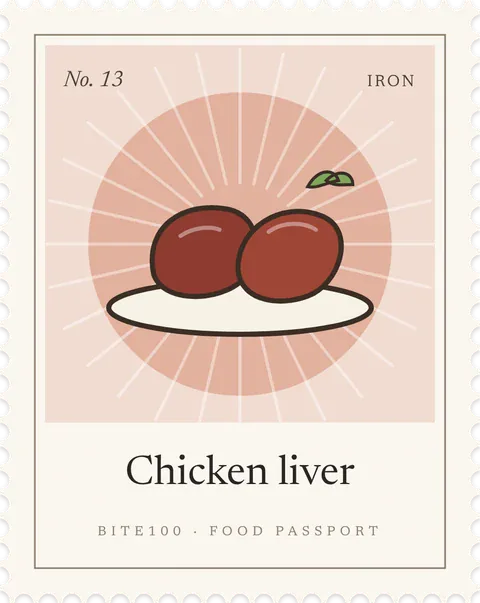
No. 13 · Protein Passport food
When can babies have chicken liver?
Can babies eat chicken liver?
Babies can have chicken liver from about 6 months, as soon as they are ready for solids. Chicken liver is one of the richest food sources of iron and vitamin B12, but it is also very high in vitamin A, so offer a small portion about once a week and always cook it all the way through.
How to serve chicken liver by age
Shapes and textures change as your baby’s grasp and chewing grow.

6 months
Cook chicken liver until no pink remains in the center, then blend it with a little water, breast milk or formula into a smooth puree. Stir a teaspoon or two into smooth vegetable puree, lentils or potato and offer it on a spoon.

7–8 months
Mash cooked liver or homemade unsalted pate into potato, lentils or rice for a lumpier texture, or spread a thin layer on soft toast strips about the width of two adult fingers. A small portion of one or two teaspoons is plenty.

9–12 months
Offer finely chopped or crumbled cooked liver mixed into soft foods, or make soft mini meatballs or patties by blending liver with ground beef or chicken. Small pieces should be soft and moist, not dry and rubbery.

12 months +
Serve small, tender pieces of cooked liver with family meals, or use homemade pate on toast or crackers. Keep portions small and liver to about once a week, and balance it with other iron-rich foods like beef, beans and fortified cereals.
Why it’s good
Chicken liver is packed with easy-to-absorb heme iron, vitamin B12, zinc, folate, riboflavin and protein, all key for a baby's growth and brain development from 6 months, when iron stores from birth start to run low. Chicken liver is also extremely high in vitamin A, which is why small, occasional portions are best. A little goes a long way.
Safety notes
- Limit chicken liver to a small portion about once a week. Liver is very high in vitamin A, and too much vitamin A over time can be harmful to babies. Avoid giving cod liver oil or vitamin A supplements on top unless your pediatrician advises it.
- Cook chicken liver until it reaches 165F (74C) and no pink remains inside. Undercooked chicken liver can carry Campylobacter and Salmonella, even when the outside looks browned.
- Overcooked liver turns firm and rubbery, which raises the choking risk. Blend, mash or chop it finely, or mix it with a moist food.
- Skip store-bought pate and liver spreads for babies. Many are high in salt, may contain alcohol, and chilled pates carry a listeria risk.
- Handle raw liver like raw chicken: keep it apart from other foods, wash hands, boards and knives in hot soapy water after use.
A low-allergy food, still worth watching
Chicken liver is not a common allergen, and reactions are rare. Offer it like any new food and watch for hives, swelling or vomiting; babies with a known poultry allergy should check with their pediatrician first.
Chicken liver for babies: questions parents ask
Quick answers about chicken liver for babies and toddlers.
When can babies have chicken liver?
Babies can have chicken liver from about 6 months, once they are ready for solids. Chicken liver should be fully cooked, blended or finely chopped, and offered in small amounts about once a week because of its very high vitamin A content.
Can babies eat chicken liver?
Yes, babies can eat chicken liver from around 6 months. Chicken liver is a great source of iron and vitamin B12, but it should be served in small portions and no more than about once a week.
Is chicken liver a choking hazard for babies?
Chicken liver is a medium choking risk because it can become firm, dry and rubbery when overcooked. Blending it into a spread, mashing it into other foods, or chopping it finely and keeping it moist lowers the risk.
Is chicken liver a common allergen?
No, chicken liver is not one of the Top 9 common food allergens. Poultry allergy is uncommon, but watch for hives, swelling or vomiting the first few times you offer it.
How do I serve chicken liver to a 6 month old?
To serve chicken liver to a 6 month old, cook it through until no pink remains, then blend it smooth with a little water, breast milk or formula. Stir a teaspoon or two into smooth vegetables or lentils and offer it on a spoon. A thin layer on soft toast strips can follow at 7–8 months.
How much chicken liver can a baby eat?
A baby only needs a small amount of chicken liver, about one or two teaspoons at a time, around once a week. Chicken liver is so rich in vitamin A that larger or more frequent portions are not recommended for babies.
How do I cook chicken liver for a baby?
To cook chicken liver for a baby, trim off any white sinew and green spots, then simmer or saute it until it reaches 165F (74C) and no pink remains in the middle, usually 5 to 8 minutes. Blend or mash it while still warm so it stays soft and smooth.
Can babies eat liver pate?
Babies can eat homemade chicken liver pate made without salt or alcohol and cooked through. Store-bought pate is best avoided for babies because it is often salty, may contain wine or brandy, and chilled pates carry a listeria risk.
Is chicken liver better than beef liver for babies?
Chicken liver and beef liver are both rich in iron and vitamin B12, and both are very high in vitamin A. Chicken liver has a milder taste and softer texture that many babies accept more easily, but either can be offered in small portions about once a week.
Can I freeze chicken liver for my baby?
Yes, cooked and blended chicken liver freezes well in ice cube trays for up to about 2 months. Thaw a cube in the fridge overnight and use it within a day, which also makes it easy to keep portions small.
Is chicken liver good for babies?
Yes, chicken liver is very nutritious for babies from about 6 months, packed with easy-to-absorb iron, vitamin B12, zinc and folate. It is also extremely high in vitamin A, so offer only a small portion of one or two teaspoons about once a week, always fully cooked.
The takeaway
- Babies can have chicken liver from about 6 months, as soon as they are ready for solids.
- Cook chicken liver until no pink remains in the center, then blend it with a little water, breast milk or formula into a smooth puree.
- Choking risk is medium. Not a Top 9 allergen, but offer a small amount first and watch for any reaction.
Read next


Sources
This guide follows current advice from these organizations.
- Starting Solid Foods American Academy of Pediatrics (HealthyChildren.org)
- When, What, and How to Introduce Solid Foods Centers for Disease Control and Prevention
- Choking Hazards Centers for Disease Control and Prevention
- Choking Prevention American Academy of Pediatrics (HealthyChildren.org)
- Preventing Listeria Infection Centers for Disease Control and Prevention
- Iron Centers for Disease Control and Prevention
Stamp chicken liver in your baby’s passport
Track the first 100 foods and the Top 9 allergens. 7 days free.
More protein foods for babies
Updated November 2026. Reviewed by our dietitians. Based on AAP, CDC and NIAID guidance. Written for healthy, full-term babies; not a substitute for your pediatrician. If your baby was born early, has a medical condition, feeding difficulties or a known allergy, check with them first (medical disclaimer). Always stay with your baby while they eat.