
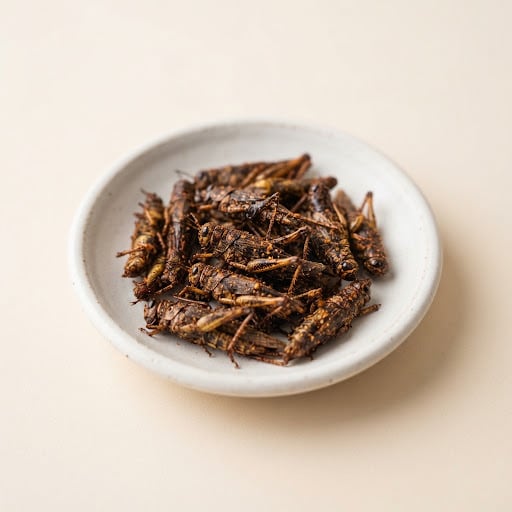
Protein Food Library
When can babies have grasshoppers?
Can babies have grasshoppers?
Babies can have chapulines (grasshoppers) from about 6 months when they are fully cooked and ground into a powder or very fine crumbs. Whole grasshoppers are crunchy with stiff legs and wings, so save them for older children. Babies with a shellfish allergy may also react to grasshoppers, so talk to your pediatrician first.
How to serve grasshoppers by age
Shapes and textures change as your baby’s grasp and chewing grow.

6 months
Grind plain, cooked chapulines into a fine powder and stir a small pinch into smooth foods like mashed avocado, bean puree, porridge or yogurt, then offer it on a spoon. Use plain grasshoppers or rinse seasoned ones, and avoid salty, chili-coated versions.

7–8 months
Keep using finely ground chapulines, stirred into thicker, lumpier foods like fork-mashed beans, soft scrambled eggs or chunky guacamole. Never offer whole or roughly chopped grasshoppers at this age.

9–12 months
Keep serving ground or very finely chopped chapulines mixed into soft foods like refried beans, scrambled eggs or guacamole. Remove legs and wings if you are chopping rather than grinding, since these parts are stiff and scratchy.

12 months +
Toddlers can have finely chopped chapulines sprinkled on tacos, quesadillas or eggs. Wait until your child chews very well, usually past age 4, before offering whole crunchy grasshoppers.
Why it’s good
Chapulines are rich in protein and give babies iron, zinc, B vitamins and healthy fats, all important for growth and brain development. Grasshoppers are a traditional food in Mexico and other places, and a small amount adds a big nutrient boost. Pairing them with a vitamin C food helps iron absorption.
Safety notes
- Whole grasshoppers are a choking hazard. The crunchy body, stiff legs and wings are hard for babies to manage, so grind or finely chop them for children under 4.
- Some chapulines sold in the US, especially imported ones, have been found to contain high levels of lead. Buy from a trusted source, check for any health advisories, and keep portions small and occasional.
- Chapulines are often seasoned with salt, chili and lime. Choose plain ones for babies, or rinse and dry seasoned ones to remove some salt and spice.
- Only serve fully cooked grasshoppers. Never give babies insects caught outdoors, which may carry parasites or pesticides.
- Insects share proteins with shellfish and dust mites, so babies with a shellfish allergy may react to grasshoppers.
A low-allergy food, still worth watching
Grasshoppers are not one of the Top 9 allergens, but people with shellfish or dust mite allergy can react to insects because of shared proteins. If your baby has a shellfish allergy, ask your pediatrician before offering chapulines, and watch any baby for hives, vomiting, swelling or wheezing.
Grasshoppers for babies: questions parents ask
Quick answers about grasshoppers for babies and toddlers.
When can babies have grasshoppers?
Babies can have grasshoppers, or chapulines, from about 6 months when they are fully cooked and ground into a fine powder. Whole grasshoppers should wait until children are older and chew very well.
Can babies have chapulines?
Yes, babies can eat chapulines when they are plain, cooked, ground and bought from a trusted source. Chapulines are high in protein and iron, but salty or chili-coated versions are not a good fit for babies.
Are grasshoppers a choking hazard for babies?
Yes, whole grasshoppers are a choking hazard for babies and young children because they are crunchy with stiff legs and wings. Grinding chapulines into a powder or very fine crumbs and mixing them into soft food makes them safer.
Are grasshoppers a common allergen?
Grasshoppers are not one of the Top 9 allergens, but they can trigger reactions in people allergic to shellfish or dust mites. Talk to your pediatrician before serving chapulines to a baby with a known shellfish allergy.
How do I serve grasshoppers to a 6 month old?
To serve grasshoppers to a 6 month old, grind plain cooked chapulines into a powder and stir a small pinch into a soft food like mashed avocado, beans or porridge. Start with a tiny amount and slowly increase if your baby tolerates it.
Are chapulines safe because of lead?
Some chapulines, especially imported ones, have tested high in lead, so sourcing matters. Buy chapulines from a trusted seller, check for local health advisories and keep them as an occasional food rather than a daily one.
Are grasshoppers healthy for babies?
Grasshoppers are a nutritious food for babies, rich in protein, iron, zinc and B vitamins. A small pinch of ground chapulines can boost the iron in a meal, which is helpful from 6 months when iron needs rise.
Can babies have seasoned chapulines with chili and lime?
Seasoned chapulines with chili, lime and salt are usually too salty for babies. Choose plain grasshoppers, or rinse seasoned chapulines in water and pat them dry before grinding them for your baby.
The takeaway
- Babies can have chapulines (grasshoppers) from about 6 months when they are fully cooked and ground into a powder or very fine crumbs.
- Grind plain, cooked chapulines into a fine powder and stir a small pinch into smooth foods like mashed avocado, bean puree, porridge or yogurt, then offer it on a spoon.
- Choking risk is medium. Not a Top 9 allergen, but offer a small amount first and watch for any reaction.
Read next


Sources
This guide follows current advice from these organizations.
- Starting Solid Foods American Academy of Pediatrics (HealthyChildren.org)
- When, What, and How to Introduce Solid Foods Centers for Disease Control and Prevention
- Choking Hazards Centers for Disease Control and Prevention
- Choking Prevention American Academy of Pediatrics (HealthyChildren.org)
- Iron Centers for Disease Control and Prevention
Track every new food in your baby’s passport
Track the first 100 foods and the Top 9 allergens. 7 days free.
More protein foods for babies
Updated November 2026. Reviewed by our dietitians. Based on AAP, CDC and NIAID guidance. Written for healthy, full-term babies; not a substitute for your pediatrician. If your baby was born early, has a medical condition, feeding difficulties or a known allergy, check with them first (medical disclaimer). Always stay with your baby while they eat.