
Protein Food Library
When can babies have chorizo?
Can babies eat chorizo?
Chorizo is best saved until about 12 months, and then served only now and then in small, well-cooked amounts. Chorizo is a processed sausage that is very high in salt and often spicy, and firm sausage slices are a choking hazard. Fresh Mexican chorizo must be fully cooked, and cured Spanish chorizo should be cooked until steaming before serving to young children.
How to serve chorizo by age
Shapes and textures change as your baby’s grasp and chewing grow.

6 months
Hold off on chorizo at this age because it is high in sodium and spice. For a similar mild flavor, cook plain ground pork or beef with a pinch of paprika and garlic and blend it smooth into bean or vegetable puree.

7–8 months
Chorizo is still best skipped. Instead, mince plain cooked ground pork seasoned with paprika, cumin and garlic into mashed beans or soft rice, or make soft unsalted meatballs that squash easily between your fingers.

9–12 months
Chorizo is still best skipped. If it is in a family meal, rinse off a small amount of fully cooked crumbled chorizo and mix a few tiny pieces into a big portion of eggs, potatoes or beans so it is a seasoning, not the main food.

12 months +
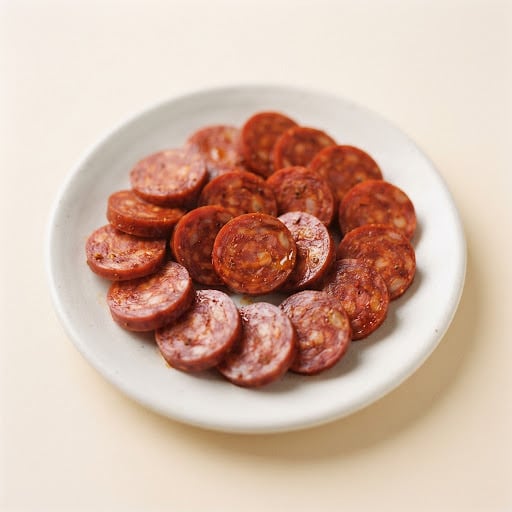
Offer a small amount of fully cooked, crumbled Mexican chorizo mixed into scrambled egg, beans or potatoes. For cured Spanish chorizo, remove the casing, cook it until hot, and chop it into small, thin pieces. Never serve chorizo in coins or rounds.
Why it’s good
Chorizo provides protein, heme iron, zinc and vitamin B12, which support growth and brain development. Chorizo is also high in sodium and saturated fat and is a processed meat, so it works best as a flavor in a dish rather than a regular protein. Unprocessed meats, beans and fish are better everyday iron sources.
Safety notes
- Chorizo links and slices are firm, round and springy, a classic choking shape. Remove the casing and crumble or finely chop chorizo, and never serve rounds or coins.
- Fresh Mexican chorizo is raw meat and must be cooked all the way through to 160°F (71°C). Cured Spanish chorizo is not cooked, so heat it until steaming for babies and toddlers to reduce the risk of Listeria.
- Chorizo is very high in sodium. Wait until about 12 months, keep portions to a spoonful mixed with plain foods, and do not add any extra salt to the meal.
- Chorizo is often spicy and may contain paprika, chili, garlic and vinegar. Taste it first and dilute spicy chorizo with mild foods.
- Processed meats with added nitrates or nitrites are best kept occasional for children. Check labels for allergens such as soy, wheat or milk, which some brands add.
A low-allergy food, still worth watching
Chorizo is not a common allergen, but some brands contain soy, wheat, milk or other allergens, and soy chorizo is made from soy. Read the label and watch for hives, swelling or vomiting the first time you serve it.
Chorizo for babies: questions parents ask
Quick answers about chorizo for babies and toddlers.
When can babies have chorizo?
Babies can have chorizo from about 12 months, in small, fully cooked amounts as an occasional food. Before that, chorizo is best skipped because it is high in salt and spice and is a processed meat.
Can babies eat chorizo?
Babies under 12 months are better off without chorizo, because it is very salty and processed. Toddlers can eat a little crumbled, well-cooked chorizo mixed into eggs, beans or potatoes now and then.
Is chorizo a choking hazard for babies?
Yes, chorizo is a choking hazard because sausage links and slices are firm, round and springy and can block a small airway. Remove the casing and crumble or finely chop chorizo, and never serve it in rounds.
Is chorizo a common allergen?
Chorizo itself is not a common allergen, but some recipes and brands include soy, wheat or milk, and soy chorizo contains soy. Check the ingredient list before serving chorizo to a toddler.
How do I serve chorizo to a 6 month old?
Chorizo is not recommended for a 6 month old because of its high sodium and spice. Instead, cook plain ground meat with mild paprika and garlic for a similar flavor, and save real chorizo for after 12 months.
What is the difference between Mexican and Spanish chorizo?
Mexican chorizo is a fresh, raw ground pork sausage that must be cooked before eating. Spanish chorizo is a cured, dried sausage that is often sliced and eaten without cooking, but for babies and toddlers, cook Spanish chorizo until steaming hot.
Is chorizo too spicy for babies?
Chorizo can be quite spicy depending on the brand and type. Choose a mild chorizo, taste it first, and mix a small amount into plain foods so the dish is gently flavored for your toddler.
Is soy chorizo better for babies?
Soy chorizo has no nitrates from cured meat, but it is still high in sodium and often spicy, and it contains soy, a common allergen. Treat soy chorizo like regular chorizo: an occasional food in small amounts after 12 months.
How can I make chorizo less salty for a toddler?
To make chorizo less salty, cook it, drain the fat, and blot it on paper towels, then mix a small spoonful into a large amount of unsalted eggs, beans, rice or potatoes. Do not add extra salt to the rest of the meal.
The takeaway
- Chorizo is best saved until about 12 months, and then served only now and then in small, well-cooked amounts.
- Offer a small amount of fully cooked, crumbled Mexican chorizo mixed into scrambled egg, beans or potatoes.
- Choking risk is high. Not a Top 9 allergen, but offer a small amount first and watch for any reaction.
Read next

Sources
This guide follows current advice from these organizations.
- Starting Solid Foods American Academy of Pediatrics (HealthyChildren.org)
- When, What, and How to Introduce Solid Foods Centers for Disease Control and Prevention
- Choking Hazards Centers for Disease Control and Prevention
- Choking Prevention American Academy of Pediatrics (HealthyChildren.org)
- Foods and Drinks to Avoid or Limit Centers for Disease Control and Prevention
- Preventing Listeria Infection Centers for Disease Control and Prevention
- Iron Centers for Disease Control and Prevention
Track every new food in your baby’s passport
Track the first 100 foods and the Top 9 allergens. 7 days free.
More protein foods for babies
Updated November 2026. Reviewed by our dietitians. Based on AAP, CDC and NIAID guidance. Written for healthy, full-term babies; not a substitute for your pediatrician. If your baby was born early, has a medical condition, feeding difficulties or a known allergy, check with them first (medical disclaimer). Always stay with your baby while they eat.