
Protein Food Library
When can babies have bone marrow?
Can babies eat bone marrow?
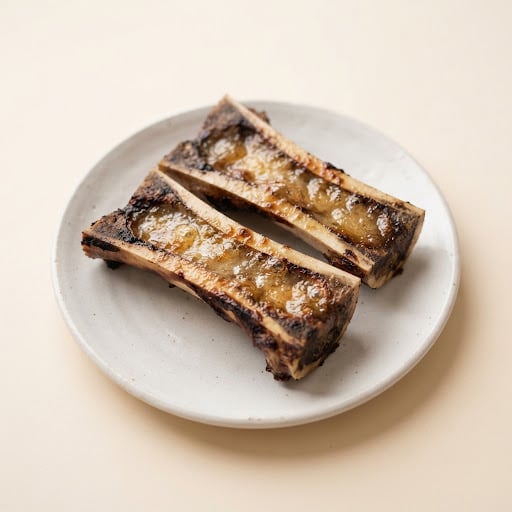
Babies can have cooked bone marrow from about 6 months. Roast the bones until the marrow is soft and fully cooked, then scoop it out and spread it thinly or mix it into other foods. Bone marrow is rich in fat and energy, and it adds iron and flavor to a baby's meals.
How to serve bone marrow by age
Shapes and textures change as your baby’s grasp and chewing grow.

6 months
Roast marrow bones until the marrow is soft and bubbling, let it cool, then scoop it out and stir a small amount into smooth purees like sweet potato, lentils or pureed vegetables. Mix it in well so the fat does not form a slippery glob, and offer it on a spoon.

7–8 months
Stir cooked bone marrow into lumpier mashes like potato, lentils or minced meat, or spread a thin layer on a soft toast strip your baby can hold. Keep the fat mixed in or spread thin so it never forms a slippery glob.

9–12 months
Keep spreading cooked bone marrow thinly on toast or mixing it into rice, pasta and soft vegetables. You can also use the melted marrow fat to cook eggs or roast vegetables for your baby.

12 months +
Toddlers can scoop cooked bone marrow with a small spoon and spread it on bread themselves, with you watching. Keep the bone on your plate rather than theirs, since cut bones can have sharp edges and loose fragments.
Why it’s good
Bone marrow is mostly fat, which gives babies concentrated energy for fast growth and brain development. Bone marrow also provides some iron, protein, collagen and vitamin B12, and it makes plain foods richer and more filling. Pair it with vegetables and lean meats so the meal is balanced, not all fat.
Safety notes
- Cook bone marrow fully until it is soft, hot and pulling away from the bone. Do not serve raw or pink marrow.
- Melted or cooled marrow can form slippery globs that are hard for babies to control. Spread it thinly or mix it into other foods rather than offering spoonfuls of plain marrow.
- Do not give marrow bones to babies to hold or gnaw. Cut bones can have sharp edges and small fragments that break off, so scoop the marrow out and check it for bone bits.
- Bone marrow is very rich. A teaspoon or two at a meal is plenty, and large amounts of fat can cause loose stools in some babies.
- Buy marrow bones from a trusted butcher, keep them refrigerated and cook them within 1 to 2 days, or freeze them.
A low-allergy food, still worth watching
Bone marrow is not a common allergen and is not one of the Top 9 allergens. A rare tick-related allergy called alpha-gal can cause delayed reactions to beef and other red meat, including marrow, so call your pediatrician if hives or vomiting appear a few hours after eating.
Bone marrow for babies: questions parents ask
Quick answers about bone marrow for babies and toddlers.
When can babies have bone marrow?
Babies can have bone marrow from about 6 months, once they are ready for solids. Bone marrow should be roasted or simmered until fully cooked, then spread thinly or mixed into other foods.
Can babies eat bone marrow?
Yes, babies can eat cooked bone marrow. Bone marrow is soft, rich in fat and flavorful, and it can make vegetables, grains and lentils more appealing and more filling.
Is bone marrow a choking hazard for babies?
Bone marrow can be a choking hazard when it forms firm or slippery globs, and the bone itself can have sharp fragments. Spread bone marrow thinly or mix it into food, keep bones away from your baby and always stay close during meals.
Is bone marrow a common allergen?
Bone marrow is not a common allergen. Very rarely, children with alpha-gal syndrome react to red meat products like beef bone marrow, often several hours after eating.
How do I serve bone marrow to a 6 month old?
To serve bone marrow to a 6 month old, roast the bones until the marrow is soft and cooked through, then scoop it out and stir a small amount into a smooth puree like sweet potato or lentils, offered on a spoon. Spreading it thinly on a soft toast strip can wait until 7–8 months.
How do you cook bone marrow for a baby?
To cook bone marrow for a baby, roast beef marrow bones cut side up in a hot oven, around 220 C or 425 F, for about 15 to 20 minutes, until the marrow is soft and bubbling. Skip the salt, let the bone marrow cool and scoop it out with a small spoon.
Is bone marrow good for babies' brains?
Bone marrow is rich in fat, and babies need plenty of dietary fat for brain growth in the first years. Bone marrow is one good option among many, alongside foods like avocado, eggs, fish and full-fat dairy.
Can babies chew on a marrow bone?
Babies should not chew on marrow bones. Marrow bones can have sharp cut edges and small bone fragments that can break off, so it is safer to scoop the marrow out and serve it on its own or mixed into food.
How much bone marrow can a baby have?
A baby only needs a teaspoon or two of bone marrow at a meal. Bone marrow is very rich, so larger amounts can crowd out other foods or cause loose stools.
The takeaway
- Babies can have cooked bone marrow from about 6 months.
- Roast marrow bones until the marrow is soft and bubbling, let it cool, then scoop it out and stir a small amount into smooth purees like sweet potato, lentils or pureed vegetables.
- Choking risk is medium. Not a Top 9 allergen, but offer a small amount first and watch for any reaction.
Read next


Sources
This guide follows current advice from these organizations.
- Starting Solid Foods American Academy of Pediatrics (HealthyChildren.org)
- When, What, and How to Introduce Solid Foods Centers for Disease Control and Prevention
- Choking Hazards Centers for Disease Control and Prevention
- Choking Prevention American Academy of Pediatrics (HealthyChildren.org)
- Iron Centers for Disease Control and Prevention
Track every new food in your baby’s passport
Track the first 100 foods and the Top 9 allergens. 7 days free.
More protein foods for babies
Updated November 2026. Reviewed by our dietitians. Based on AAP, CDC and NIAID guidance. Written for healthy, full-term babies; not a substitute for your pediatrician. If your baby was born early, has a medical condition, feeding difficulties or a known allergy, check with them first (medical disclaimer). Always stay with your baby while they eat.