
Protein Food Library
When can babies have blood sausage?
Can babies have blood sausage?
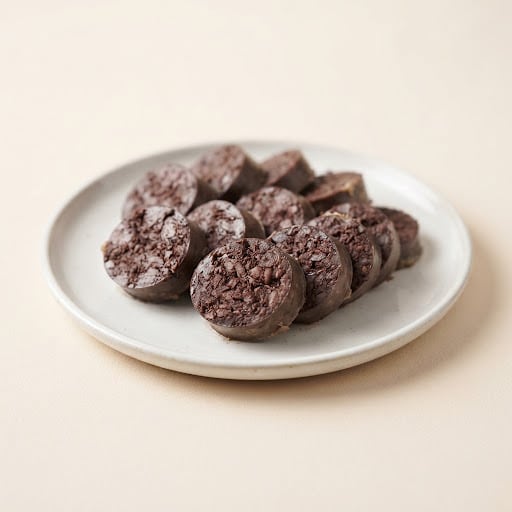
Babies can have small tastes of fully cooked blood sausage from about 12 months, but it is very salty, so keep it an occasional food rather than a regular one. Remove the casing, crumble or mash the filling, and never serve it in round slices. Blood sausage is very rich in iron.
How to serve blood sausage by age
Shapes and textures change as your baby’s grasp and chewing grow.

6 months
Skip blood sausage for now: it is a salty processed meat. Offer unprocessed iron-rich foods instead, like blended beef, lamb, chicken thigh or lentils on a spoon.

7–8 months
Keep skipping blood sausage. Offer minced, well-cooked beef or lamb, or mashed lentils, for iron.

9–12 months
Still skip blood sausage before 12 months. Small pieces of tender home-cooked meat or soft beans are better iron sources.

12 months +
Toddlers can have thin half-moon or quartered pieces of cooked blood sausage with the casing removed, as part of a shared family meal. Keep cutting it lengthwise, never into round coins, and keep it to an occasional food.
Why it’s good
Blood sausage gives babies a lot of easily absorbed heme iron, plus protein, zinc and vitamin B12, which support brain development and growth. It is also high in sodium and saturated fat, so a small amount once in a while is enough to get the benefit. Leaner fresh meats, fish, beans and lentils are better everyday iron sources.
Safety notes
- Blood sausage must be fully cooked and steaming hot throughout before you serve it, even if the package says it is precooked. Never serve it raw or lukewarm from the package.
- Never cut blood sausage into round coins. The cylinder shape and springy texture can block a small airway, so remove the casing and mash or crumble it for babies, and cut it lengthwise into thin pieces only for toddlers.
- Blood sausage is high in salt. Keep portions to a spoonful or two, serve it only occasionally, and do not add salt to the rest of the meal.
- Check the ingredients. Many recipes include oats, barley, wheat flour, breadcrumbs, milk or onion, so look out for allergens and gluten your baby has not tried yet.
- Buy from a trusted source, keep it refrigerated and use it by the date on the label. Leftovers should be eaten within 2 to 3 days.
A low-allergy food, still worth watching
Blood sausage itself is not a common allergen, but many versions contain wheat, milk or other Top 9 allergens, so read the label. A rare tick-related allergy called alpha-gal can cause delayed reactions to pork and other red meat products, so call your pediatrician if your baby has hives or vomiting a few hours after eating it.
Blood sausage for babies: questions parents ask
Quick answers about blood sausage for babies and toddlers.
When can babies have blood sausage?
Babies can have small tastes of fully cooked blood sausage from about 12 months. Blood sausage is very salty, so treat it as an occasional food and serve it crumbled or mashed with the casing removed.
Can babies have blood sausage?
Yes, babies can eat blood sausage in small amounts, as long as it is thoroughly cooked and prepared for their age. Blood sausage is a great iron source, but its high salt content means it should not be an everyday food.
Is blood sausage a choking hazard for babies?
Yes, blood sausage can be a choking hazard for babies because it is cylinder shaped and springy, and round slices can block the airway. Always remove the casing, crumble or mash it at first, and cut it lengthwise for toddlers.
Is blood sausage a common allergen?
Blood sausage is not a common allergen on its own. Many blood sausage recipes contain wheat, barley, oats or milk, so check the ingredient list for allergens your baby has not tried yet.
How do I serve blood sausage to a 6 month old?
Blood sausage is not recommended for a 6 month old because it is a salty processed meat. Offer unprocessed iron-rich foods like blended beef, lamb or lentils instead, and wait until about 12 months for an occasional taste.
Does blood sausage need to be cooked before giving it to a baby?
Yes, blood sausage should always be cooked until hot throughout before giving it to a baby, even if it is sold as precooked. Heating it fully kills bacteria like Listeria that can grow in ready-to-eat meats.
Is blood sausage good for babies with low iron?
Blood sausage is very high in iron that the body absorbs easily, so a small amount can help. Because blood sausage is so salty, talk to your pediatrician about low iron and rely mostly on other iron foods like beef, lentils and fortified cereal.
Is black pudding the same as blood sausage?
Black pudding, morcilla, boudin noir and blutwurst are all types of blood sausage. The fillers and salt levels vary a lot between them, so read the label and choose the lowest-sodium option you can find.
How much blood sausage can a baby have?
A baby only needs a spoonful or two of blood sausage at a time, served once in a while. Larger or frequent servings add too much sodium and saturated fat for a small body.
The takeaway
- Babies can have small tastes of fully cooked blood sausage from about 12 months, but it is very salty, so keep it an occasional food rather than a regular one.
- Toddlers can have thin half-moon or quartered pieces of cooked blood sausage with the casing removed, as part of a shared family meal.
- Choking risk is high. Not a Top 9 allergen, but offer a small amount first and watch for any reaction.
Read next

Sources
This guide follows current advice from these organizations.
- Starting Solid Foods American Academy of Pediatrics (HealthyChildren.org)
- When, What, and How to Introduce Solid Foods Centers for Disease Control and Prevention
- Choking Hazards Centers for Disease Control and Prevention
- Choking Prevention American Academy of Pediatrics (HealthyChildren.org)
- Foods and Drinks to Avoid or Limit Centers for Disease Control and Prevention
- Iron Centers for Disease Control and Prevention
Track every new food in your baby’s passport
Track the first 100 foods and the Top 9 allergens. 7 days free.
More protein foods for babies
Updated November 2026. Reviewed by our dietitians. Based on AAP, CDC and NIAID guidance. Written for healthy, full-term babies; not a substitute for your pediatrician. If your baby was born early, has a medical condition, feeding difficulties or a known allergy, check with them first (medical disclaimer). Always stay with your baby while they eat.