
No. 63 · Grains Passport food
When can babies have toast and bread?
Can babies have toast and bread?
Babies can have wheat from about 6 months, starting with bread soaked and mashed into a soft porridge or a smooth wheat cereal on a spoon. Lightly toasted strips of low-sodium bread with a moist spread can follow at 7–8 months, since soft fresh bread can form a sticky ball in the mouth. Most bread contains wheat, a Top 9 allergen, so introduce it in a small amount and keep offering it.
How to serve toast and bread by age
Shapes and textures change as your baby’s grasp and chewing grow.

6 months
Bread is not a spoon food, so at 6 months offer wheat in other ways, such as smooth wheat cereal or a little low-sodium bread soaked in breast milk or formula and mashed into a soft, lump-free porridge. Offer it on a spoon in a small amount, since most bread contains wheat, a Top 9 allergen.

7–8 months
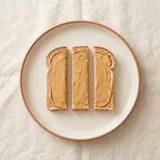
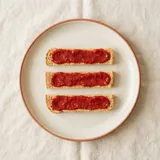
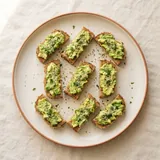
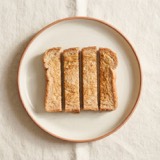
Lightly toast a slice of low-sodium bread so it is dry outside but still soft inside, remove very crunchy crusts and cut it into strips about two adult fingers wide. Spread a thin layer of mashed avocado, thinned nut butter, ricotta or hummus so the strip softens and is easier to gum and swallow.

9–12 months
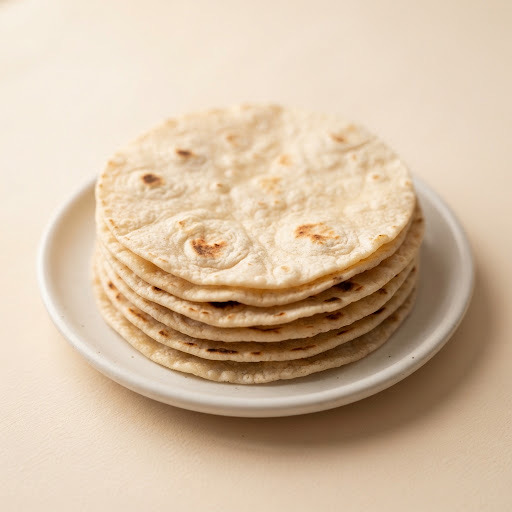
Cut lightly toasted bread into small squares, about the size of a postage stamp, for pincer-grasp practice, or keep offering strips with a thin spread. Babies this age can try soft whole-grain breads, pita or soft tortilla strips as long as they are free of whole seeds and nuts.

12 months +
Toddlers can eat toast and bread with family meals, including small sandwiches cut into strips or squares. Keep choosing lower-sodium whole-grain bread and wait on bagels and very chewy or crusty breads until your child is chewing well.
Why it’s good
Bread gives babies carbohydrates for energy, and whole-grain bread adds fiber, B vitamins, magnesium and zinc. Many breads are enriched or fortified with iron and folic acid, which helps since babies need a lot of iron from 6 months. Toast is also a handy base for spreads like nut butter, egg or avocado that add protein and fat.
Safety notes
- Soft, fresh bread can turn into a gummy ball that sticks to the roof of the mouth. Lightly toasting it makes it easier to manage.
- Avoid breads with whole nuts, large seeds, dried fruit or hard crunchy crusts for babies. Very hard toast, crackers and bagel chips can break into sharp, hard pieces.
- Bread is a sneaky source of sodium. Compare labels and pick breads with lower sodium per slice, and keep bread to a few servings a day.
- Never spread honey on toast before 12 months, and use only a thin layer of nut butter, never a thick glob.
- Gagging on bread is common while babies learn. Sit your baby upright, stay close, and let them work it forward with their tongue.
Introduce toast on its own, then keep it in
Most bread is made from wheat, one of the Top 9 allergens, and many loaves also contain milk, egg, soy or sesame, so read the label and introduce one new allergen at a time. Watch for hives, vomiting, swelling or breathing changes, and talk to your pediatrician if your baby has severe eczema or another food allergy.
Toast and bread for babies: questions parents ask
Quick answers about toast and bread for babies and toddlers.
When can babies have toast?
Babies can have bread from about 6 months, soaked in breast milk or formula and mashed into a soft porridge on a spoon. Lightly toasted strips of low-sodium bread with a thin spread are a good finger food from about 7–8 months.
Can babies have bread?
Yes, babies can eat bread from 6 months. Lightly toasted bread is easier to handle than soft fresh bread, and whole-grain loaves without whole seeds or nuts offer the most nutrition.
Is bread a choking hazard for babies?
Bread is a medium choking risk for babies because soft bread can clump into a sticky ball and very hard toast can break into sharp pieces. Lightly toasted strips with a moist spread, served while your baby sits upright with you close by, lower the risk.
Is bread a common allergen?
Yes, bread is a common allergen because most bread is made from wheat, one of the Top 9 allergens. Bread may also contain milk, egg, soy or sesame, so check the ingredient list before offering a new loaf.
How do I serve toast to a 6 month old?
To serve bread to a 6 month old, soak a small piece of low-sodium bread in breast milk or formula and mash it into a smooth, soft porridge, or offer a smooth wheat cereal on a spoon. Lightly toasted strips with a thin moist spread can follow at 7–8 months.
Is toast or fresh bread better for babies?
Toast is usually better than fresh bread for babies because lightly toasting it firms the surface and stops it from turning into a gummy ball. Toast it just enough to dry it out, not until it is hard and crunchy like a cracker.
What is the best bread for babies?
The best bread for babies is a whole-grain or whole-wheat loaf with lower sodium, no added honey, and no whole seeds, nuts or dried fruit. Sourdough, soft wholemeal bread and plain pita are all good options.
Can babies have gluten?
Yes, most babies can eat gluten from 6 months, and there is no benefit to delaying it. If celiac disease runs in your family, or your baby has ongoing diarrhea, bloating or poor weight gain after eating bread, talk to your pediatrician.
When can babies have bagels?
Bagels are dense and chewy, so many parents wait until around 12 months or later, when a child chews well. For babies from about 9 months, a thin slice of lightly toasted bagel with a soft spread works, but avoid whole frozen bagels for teething because pieces can break off.
How much bread can a baby have?
A baby only needs small amounts of bread, such as a strip or two of toast at a meal, alongside vegetables, fruit and protein foods. Too much bread can crowd out iron-rich foods and add extra sodium, so rotate it with other grains like oats, rice and pasta.
The takeaway
- Babies can have wheat from about 6 months, starting with bread soaked and mashed into a soft porridge or a smooth wheat cereal on a spoon.
- Bread is not a spoon food, so at 6 months offer wheat in other ways, such as smooth wheat cereal or a little low-sodium bread soaked in breast milk or formula and mashed into a soft, lump-free porridge.
- Choking risk is medium. Wheat is one of the Top 9 allergens: offer a small amount first, watch for a reaction, then keep it in the diet regularly.
Read next



Sources
This guide follows current advice from these organizations.
- Starting Solid Foods American Academy of Pediatrics (HealthyChildren.org)
- When, What, and How to Introduce Solid Foods Centers for Disease Control and Prevention
- Choking Hazards Centers for Disease Control and Prevention
- Choking Prevention American Academy of Pediatrics (HealthyChildren.org)
- Foods and Drinks to Avoid or Limit Centers for Disease Control and Prevention
- The Effects of Early Nutritional Interventions on the Development of Atopic Disease in Infants and Children Greer FR, Sicherer SH, Burks AW; American Academy of Pediatrics. Pediatrics. 2019;143(4):e20190281
Recipes with toast
Stamp toast in your baby’s passport
Track the first 100 foods and the Top 9 allergens. 7 days free.
More grains for babies
Updated November 2026. Reviewed by our dietitians. Based on AAP, CDC and NIAID guidance. Written for healthy, full-term babies; not a substitute for your pediatrician. If your baby was born early, has a medical condition, feeding difficulties or a known allergy, check with them first (medical disclaimer). Always stay with your baby while they eat.